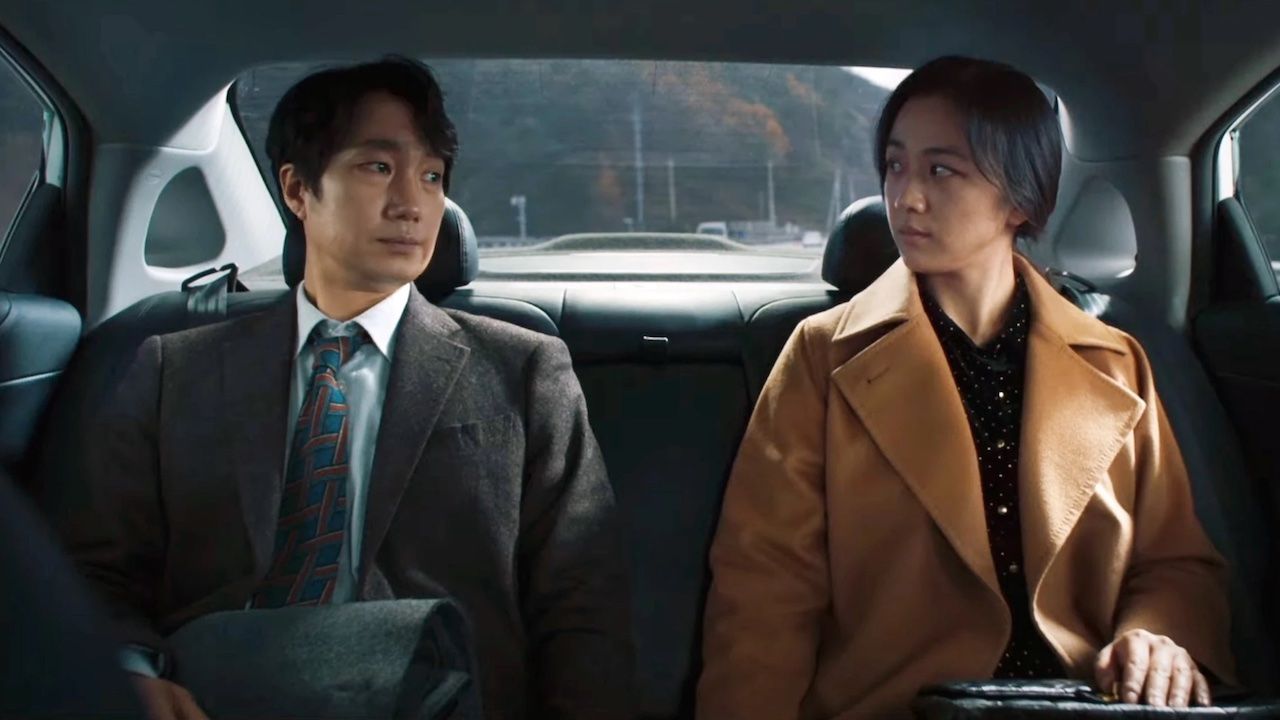
Park Chan-wook is one of today’s most intelligent filmmakers and I always look forward to his latest film. “Decision to Leave” is another masterpiece. It is more restrained than “Oldboy” or “The Handmaiden”, but just as meticulously crafted. Every scene is beautifully shot and brims with suspense. In one of the film’s most erotically charged scenes, the hands of the two main characters touch when they are sitting in the back of a car, their wrists cuffed together.
“Decision to Leave” is a beautifully stylized contemporary film noir with hints of “Vertigo” and “Basic Instinct”. Hae-joon, played by Park Hae-il, is a police detective who suffers from insomnia. He is assigned to investigate the case of a mountain climber who fell to his death. It seems like an accident, but soon the climber’s enigmatic widow, Seo-rae, played by the phenomenal Tang Wei, emerges as a potential suspect. When she is brought in for questioning, the detective and the suspect share lunch in the interrogation room, in what looks like a first date. About an hour into the film the case is solved, but like “Oldboy” and “The Handmaiden”, “Decision to Leave” continues where other films would stop.
“Decision to Leave” shows the power of cinema, unlike so many films where you wouldn’t miss much if you just read the script. As in all of Park Chan-wook’s films, the cinematography is superb. One scene is filmed through the eye of a dead fish at a fish market, while another scene uses a headlamp to great effect. I also loved how Park revealed what really happened.
“Decision to Leave” is steeped in symbolism. The overwhelming power of nature, whether the mountains or the sea, symbolizes the forces of desire that simmer beneath the surface of the self. Food plays an important role as a metaphor for erotic desire. Speaking of which, in another scene Seo-rae searches Hae-joon’s pockets to find a stick of lip balm, which she applies to her own lips and then his. Hae-joon and Seo-rae are often filmed through mirrors, windows, computer screens or binoculars, a visual metaphor for the distance that separates them. “Decision to Leave” is also one of the first movies I’ve seen that use phones, apps and smartwatches as a plot device, without ever feeling contrived. Seo-rae is Chinese and speaks enough Korean to get by, but she often resorts to her phone to translate for her when she cannot find the right words.
The final scene left me reeling. It is highly inventive, exquisitely shot, deeply symbolic and brims with suspense. It also reveals the full meaning of the title.
Links
My review of Oldboy.
My review of I'm a Cyborg but that's OK.
My review of Lady Vengeance.