Who were the "Antwerp Six", exactly? Many people know the nickname, but few can name all six. MoMu, Antwerp's fashion museum, now answers that question with a major retrospective marking forty years since their international breakthrough. The exhibition follows Ann Demeulemeester, Dries Van Noten, Dirk Bikkembergs, Walter Van Beirendonck, Dirk Van Saene, and Marina Yee through their separate careers. It also traces the upheavals that have reshaped the fashion industry since the 1980s, and it argues that independent creativity can still survive in an age ruled by luxury conglomerates.
Instead of repeating the legend of a close-knit Belgian brotherhood, it shows how six gifted young people from a country with no fashion reputation thrived in unusually fertile conditions. Those conditions took shape early. Born in the late 1950s, the six came of age as British punk tore apart aesthetic norms. At the time, they were studying at Antwerp's Royal Academy of Fine Arts, whose fashion department still clung to a conservative aesthetic that looked increasingly outdated beside the daring work of Japanese designers such as Rei Kawakubo of Comme des Garçons and Yohji Yamamoto. Timing mattered just as much. After the oil crises of the 1970s battered Belgium's textile sector, the government acted on a McKinsey report, no less, and set out to steer domestic fashion toward more upmarket design. It organised a design competition that awarded prizes to all six designers and offered subsidies for producing collections. The Belgian press covered these efforts closely and the designers soon became famous in their home country. The first section of the exhibition documents these early years with a wealth of sketches, photographs, newspaper clippings and television footage.
The international breakthrough came in 1986. That year the six travelled to London to exhibit at the British Designer Show. Their debut nearly failed before it began: they had rented a second-floor booth among bridalwear vendors, where buyers never went. After a frantic first day, they spent the night making flyers to steer buyers upstairs. The gamble worked. Barneys New York ordered from every one of them, and the rest of the industry soon followed suit.
Within a year reporters from trendy magazines such as The Face and i-D were travelling to Antwerp to cover the local fashion scene. Reportedly, foreign journalists found the group's Flemish surnames so hard to pronounce that the designers came to be known as the Antwerp Six. However, the six never designed together; they joined forces for logistics, and the notion of a movement mostly gave them an alluring mystique. In reality, they were six fiercely competitive individuals whose careers went in very different directions. Demeulemeester built a label on monochrome, punk-inflected, poetic designs, while Van Noten became known for exuberant clashes of colour, texture and culture. Bikkembergs openly aimed for a fashion empire, moved to Milan and leaned into football aesthetics. Van Beirendonck followed in the footsteps of provocateurs like Jean-Paul Gaultier with loud, colourful, openly queer designs. Sadly, after a few years in the limelight, Dirk Van Saene and Marina Yee, whom I find the most interesting of the six, withdrew from the industry's punishing demands. Note that the greatest Belgian fashion designer, Martin Margiela, was never part of the Antwerp Six.
Dries van Noten (left), Marina Yee (middle), Ann Demeulemeester (right)
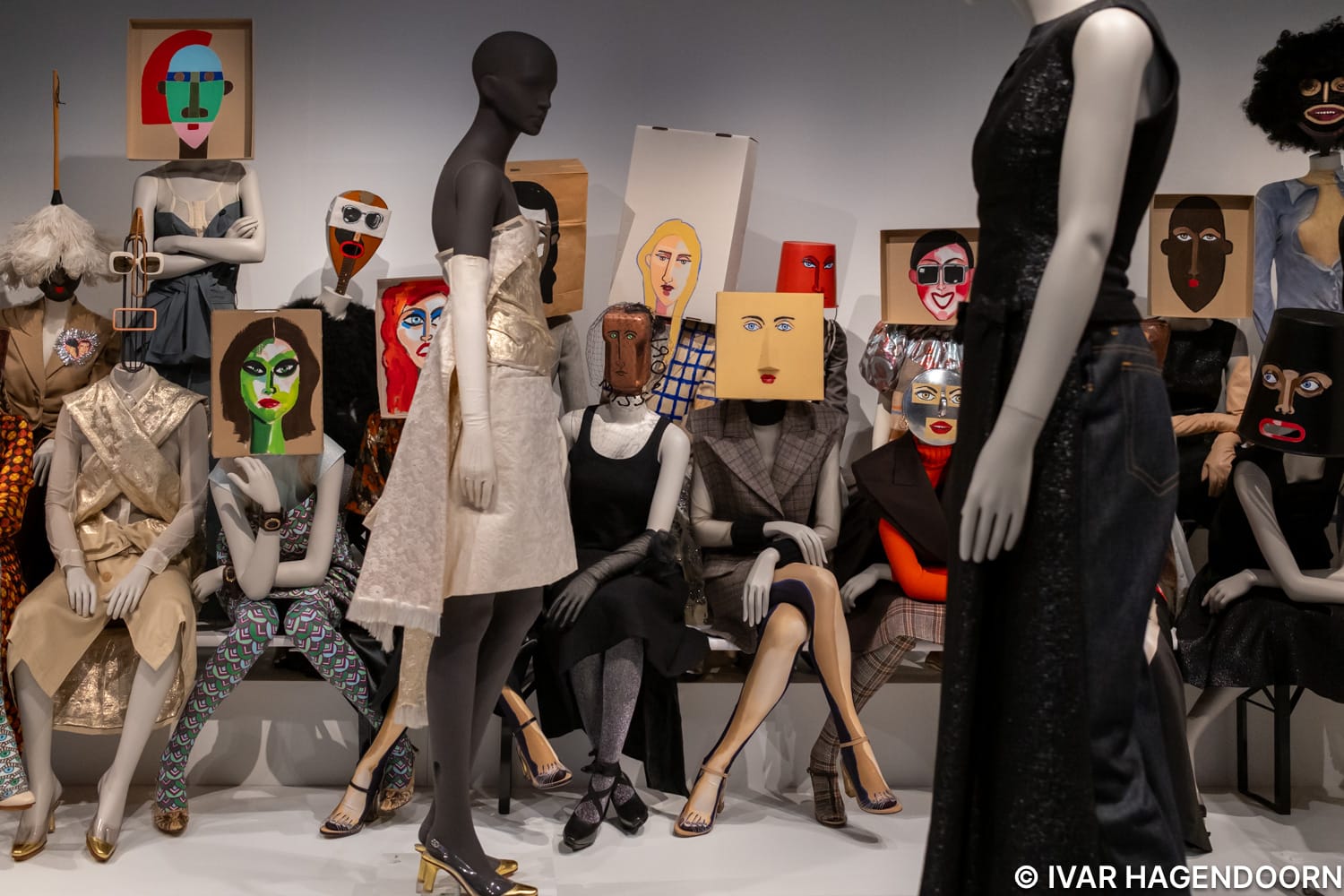
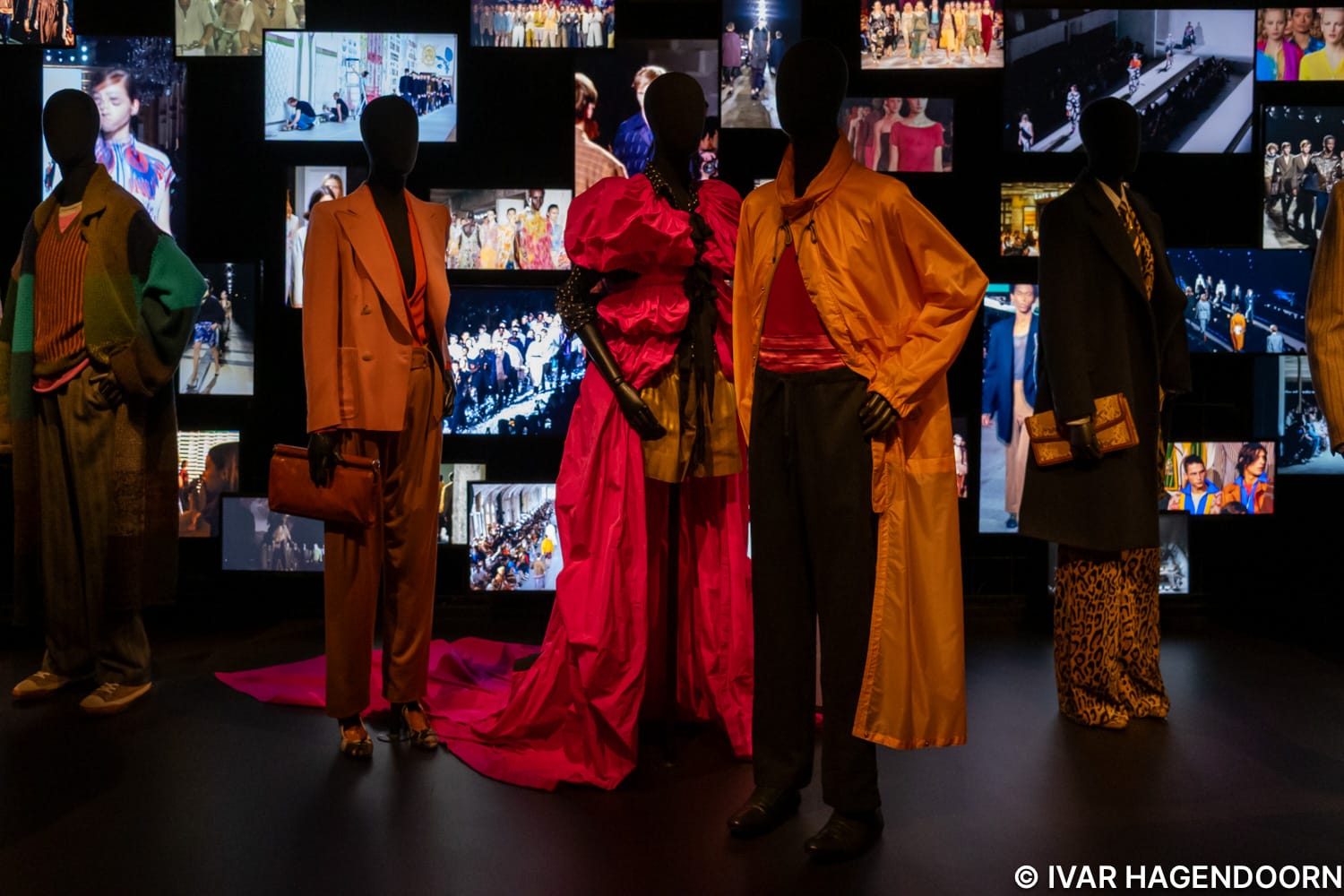
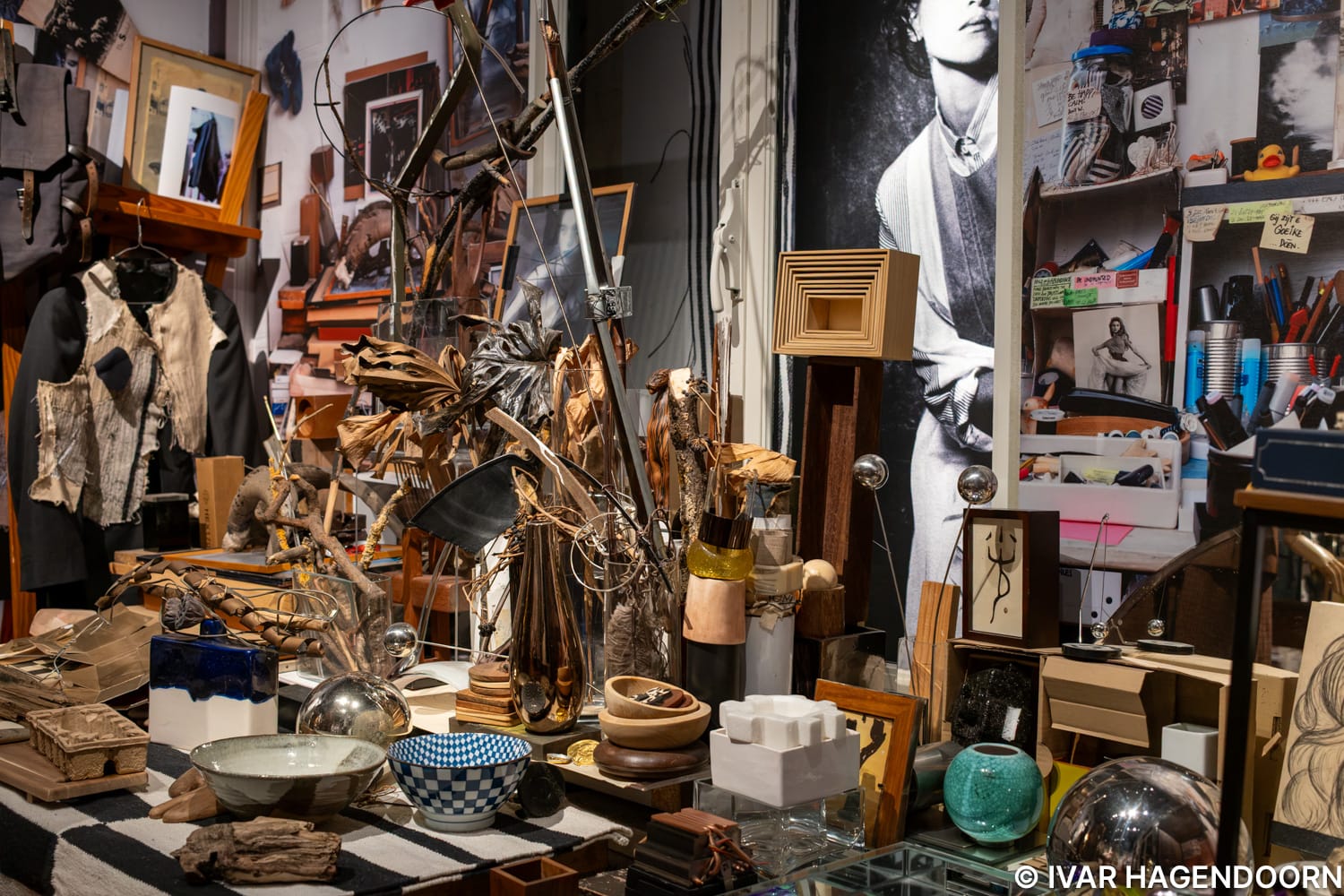
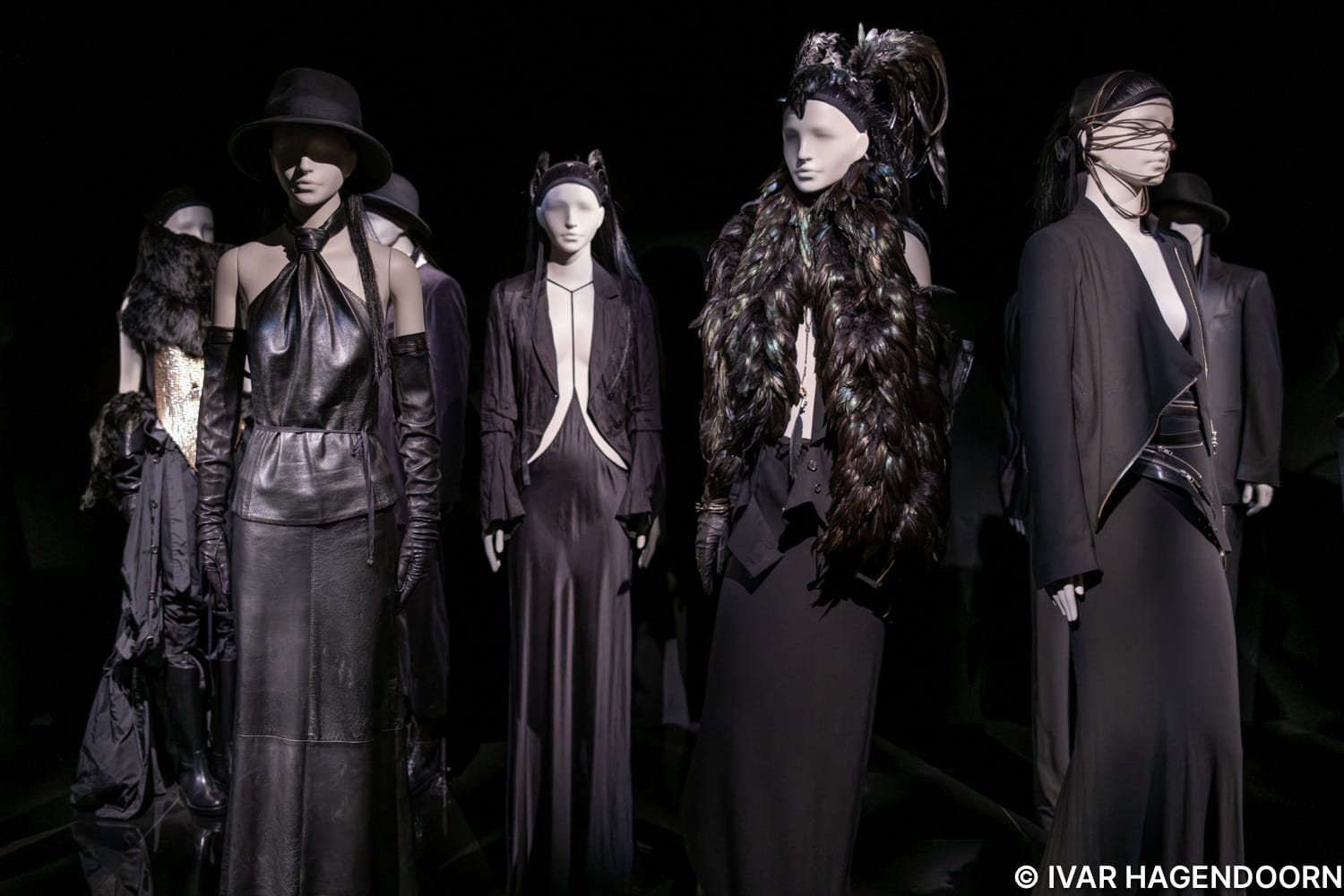
The exhibition's second section makes this independence visible with six separate installations: Dirk Bikkembergs: no garments at all, only huge projections of models and footballers in his sport-minded designs; Walter Van Beirendonck: an imagined conversation with himself, plus roughly thirty mannequins showing his exuberant colour, tailoring and eccentric flourishes; Dirk van Saene: a whimsical miniature runway, where deconstructed outfits glide past a front row of spectators, their faces drawn on paper bags and shoeboxes; Marina Yee: a recreation of her studio, honouring the designer who died in November 2025; Dries Van Noten: sixteen looks shown against a backdrop of runway footage; Ann Demeulemeester: an all-black space with sixteen mannequins dressed in black leather, velvet and silk.
Today Van Beirendonck is the only one still running his own label: the others have sold their businesses. Even so, the myth of the Antwerp Six endures. The exhibition opened at the end of March and I had assumed that by now visitor numbers would have dwindled. But on a Saturday morning in November the exhibition was packed. I was pleased that, going by the conversations that I overheard, many visitors had travelled from across Europe to see the show. There is still a place for independent fashion and people are more adventurous than large labels assume.
The Antwerp Six is at MoMu in Antwerp until 17 January 2027.