The Gilbert and George exhibition currently at the Tate Modern (until 7 May 2007) is the first retrospective covering their career from the very beginning up till now. The exhibition sprawls across an entire floor, including the concourse between two galleries and the espresso bar. That's a lot of Gilbert and George, all the more because the works they have created since the 80s are typical museum or corporate art that doesn't fit into an average living room. I must say that by the time I reached the espresso bar, halfway through the exhibition, I felt like having an espresso, which says something, since I don't drink coffee.
One of the interesting aspects of retrospectives such as this is that you can see the first tentative, sometimes directionless, steps before an artist hits upon his theme – works that are often buried in museum stores and private collections. You also get to see the dead ends, when a theme turns into mannerism, and the burst of creativity when a new theme is found.
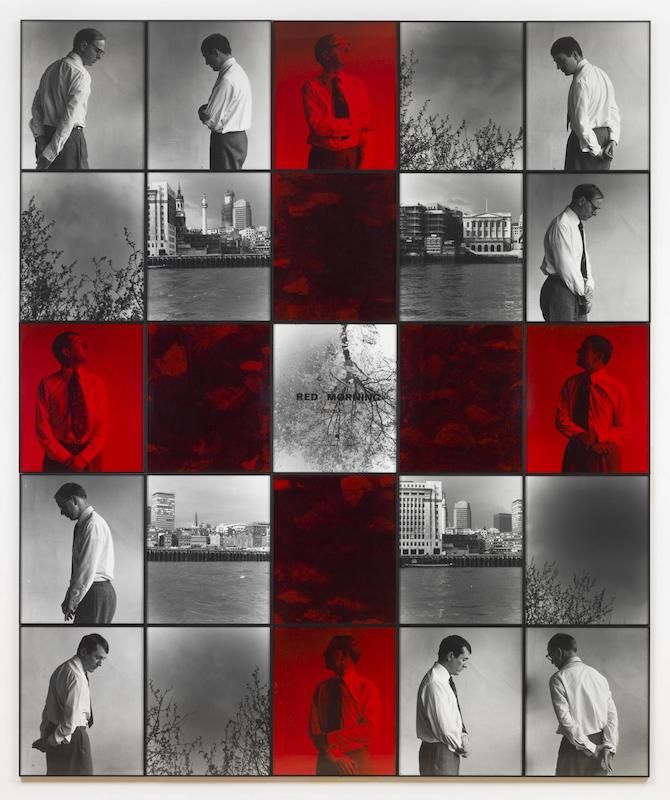
The work for which Gilbert and George are known has a very distinctive signature, and over the past 40 years they have mined every corner of their self-defined aesthetic universe, consisting of photomontages laid out in a rectangular grid.
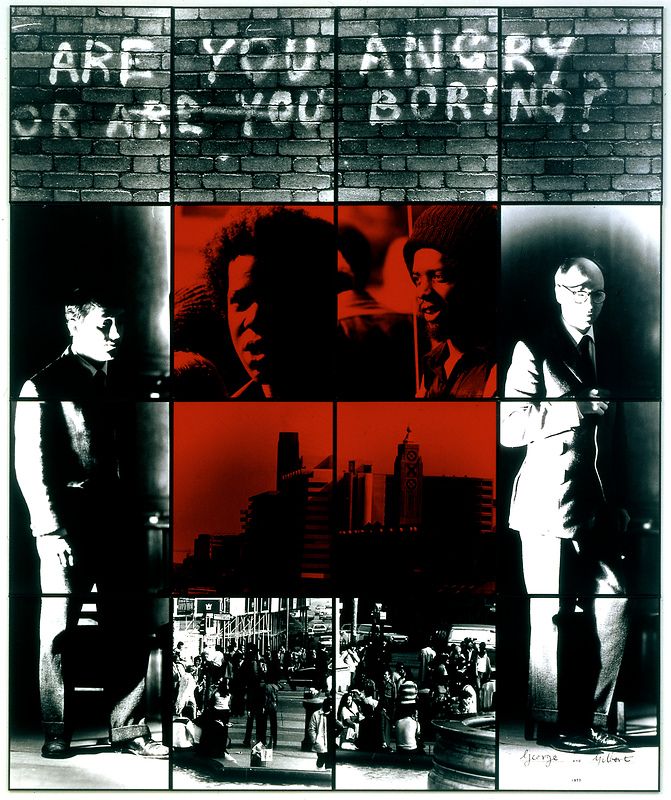
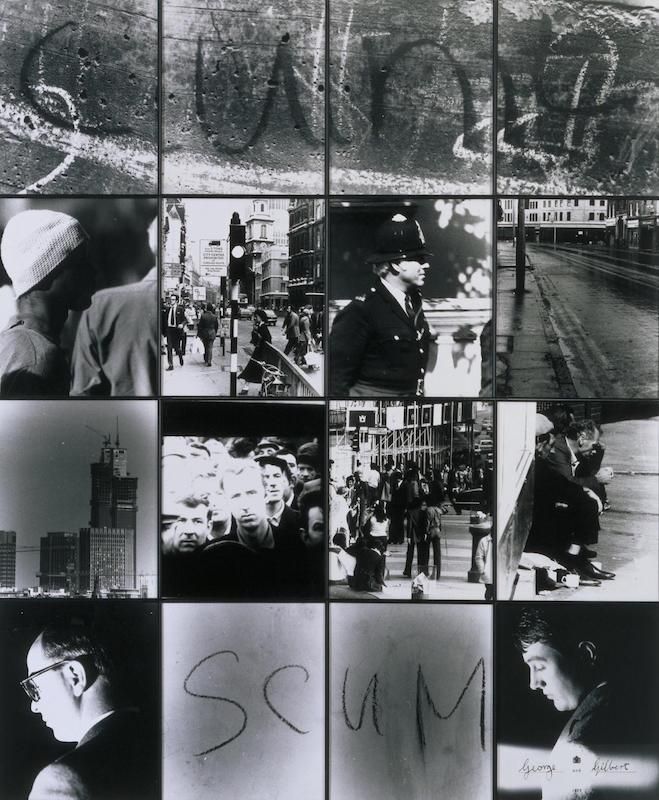
I find their work most interesting when they engage with the city, as in their "Dirty Words Pictures" (1977), one of my favourite works of art. It was a delight to see almost the entire series together in one room. These works have a gritty energy that still feels urgent. They document urban life but also reflect on art and the artist. Their navel-gazing works from the 80s and 90s largely leave me cold, though. They are too big and rather heavy-handed. Strangely, these pieces work much better as reproductions.
Gilbert and George are an institution. For more than 40 years they have performed as Gilbert and George. They act in unison and speak with one voice. They dress identically and play the part of the English gentleman to perfection. There is an irony in this, because Gilbert Proesch is actually Italian. In order to become the Gilbert in Gilbert and George, he had to give up his own identity. I wonder whether he spoke Italian when they were in Venice for the Biennale in 2005.
As I walked across Blackfriars Bridge towards Blackfriars tube station, I also wondered what would happen if one of them died. Would the other continue being either Gilbert or George?
Gilbert and George: Major Exhibition is at Tate Modern, London until 7 May 2007.