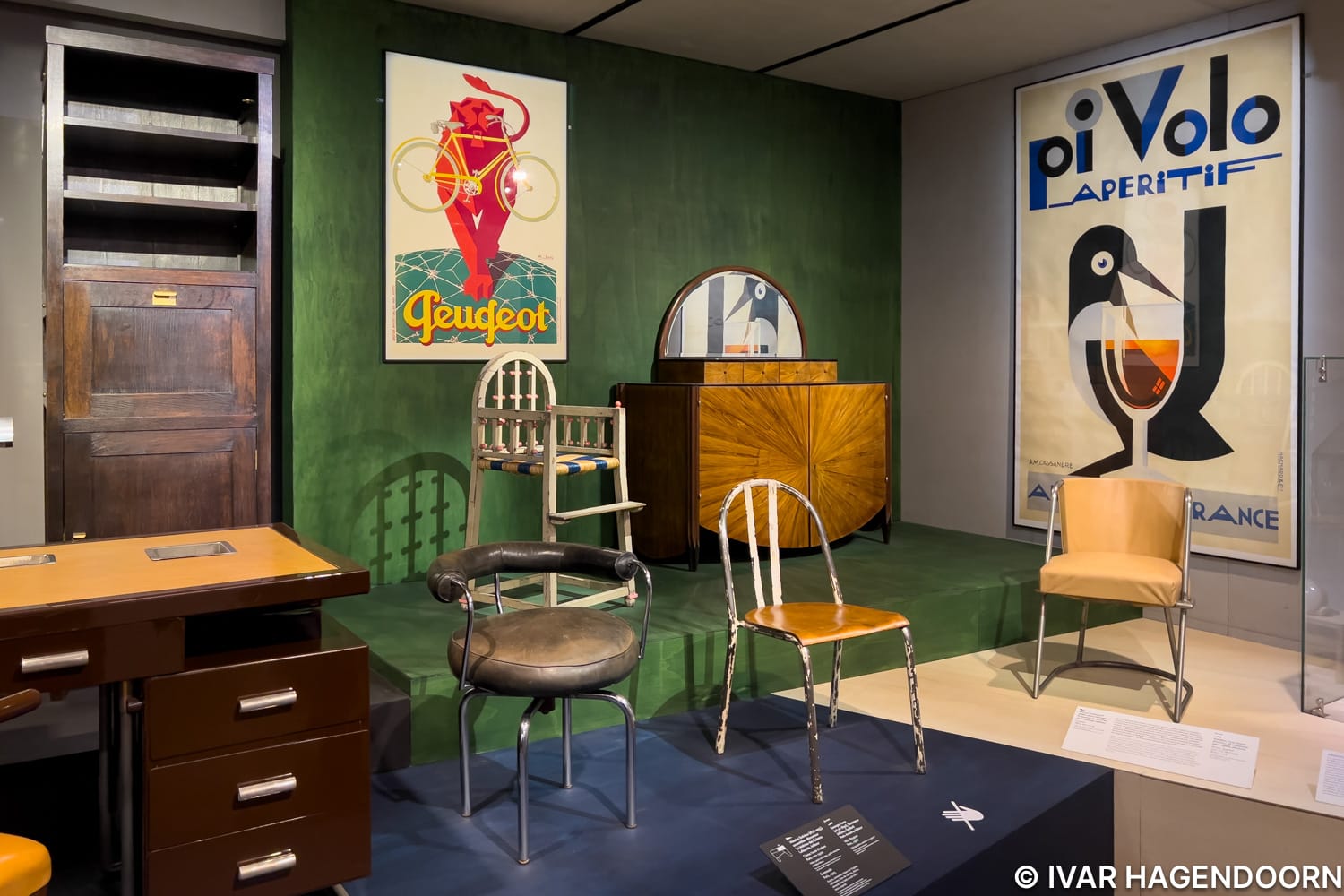
The Musée des Arts Décoratifs in Paris celebrates the centennial of Art Deco through an extensive exhibition, assembling over 1,200 objects across three floors, encompassing furniture, jewelry, fashion, posters, and drawings that collectively document the creative vitality of the Jazz Age. The exhibition takes its name from the 1925 Exposition Internationale des Arts Décoratifs et Industriels Modernes, a watershed event that attracted approximately 15 million visitors and established Art Deco as a globally recognized aesthetic movement. More than 200 pavilions were constructed around the Trocadéro and along the Seine, showcasing innovations in modern decorative and industrial arts while providing evening entertainment enhanced by electric illumination.
Contemporary understanding of Art Deco has been shaped significantly by its representation in popular culture, such as movie adaptations of The Great Gatsby, rather than direct engagement with historical artifacts. The exhibition seeks to rectify this superficial familiarity by demonstrating how designers pursued a shared objective despite aesthetic diversity.
The emergence of Art Deco represented an aesthetic evolution rather than a sudden rupture with preceding styles. According to curator Anne Monier Vanryb, the transition from Art Nouveau began around 1910, marked by a shift from ornamental excess toward more restrained decoration characterized by symmetry and geometric rigor. Within the 1925 exhibition's French Embassy pavilion, diverse artistic approaches coexisted, ranging from exuberant luxurious designs to austere modernist designs. This heterogeneity included Sonia Delaunay's geometric abstractions, Robert Mallet-Stevens' architectural innovations, and the decorative elegance of interior designers such as Clément Mère and Armand-Albert Rateau.
Art Deco's visual grammar drew upon multiple sources while maintaining distinctive characteristics. The style incorporated antique and exotic motifs, including woven wicker designs borrowed from eighteenth-century France, alongside geometric patterns that married modernity with preciousness. Elongated human figures featured prominently in the aesthetic vocabulary, as did animal subjects such as does, antelopes, and peacocks. This formal language permeated all creative disciplines, manifesting in Madeleine Vionnet's neoclassical dresses and Maurice Couët's jade and diamond timepieces for Cartier.
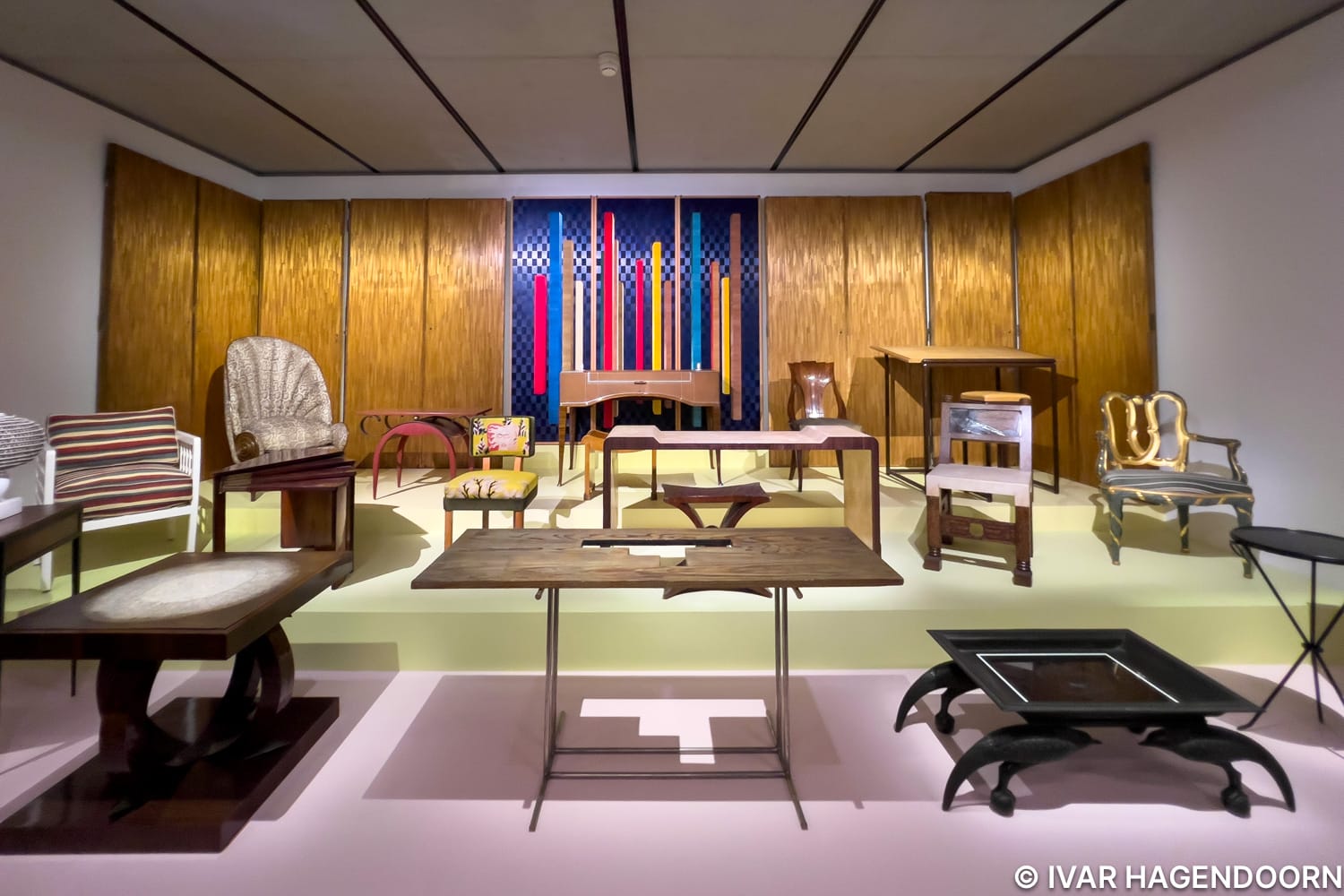
Three designers featured prominently in the exhibition exemplify distinct aspects of Art Deco's multifaceted character. Jacques-Émile Ruhlmann brought together the best designers of the time to create set pieces for his luxury Hôtel du Collectionneur. Jean-Michel Frank championed what Jean Cocteau termed an "aesthetics of simplicity," rehabilitating materials previously considered poor or unfashionable, including mica, parchment, and straw marquetry. Eileen Gray, though absent from the 1925 exposition, has become recognized as an Art Deco icon through works like the lacquered Mermaid chair and sleek metal furnishings that demonstrated her avant-garde sensibility.
Art Deco remained largely inaccessible to the general population despite attempts at democratization by Parisian department stores. While tableware and decorative objects achieved some commercial distribution, most furniture pieces remained prohibitively expensive. The movement's clientele consisted primarily of a newly affluent class of banking millionaires emerging after World War I who could commission luxury items crafted from ebony, ivory, and gemstones.
The primary vehicle for Art Deco's popular dissemination was graphic art rather than decorative objects. Magazines, advertisements, and cinema posters propagated the aesthetic through bold colors and sharp lines that evoked contemporary fascination with speed and modern forms of transportation. The style's international expansion was facilitated by mobile showcases of French taste, particularly the Orient Express and transatlantic ocean liners, which served as rolling ambassadors for what became the first truly global design movement. The exhibition includes both a 1926 train cabin from the museum's collection and life-size interior models of architect Maxime d'Angeac's designs for a new Orient Express scheduled to commence service in 2027.
I'll readily admit that Art Deco is not my favorite style, - I’m more inclined to a Modernist aesthetic -, but I enjoyed strolling through the exhibition. Beware that, like its 1925 predecessor, the exhibition is hugely popular, so choose an unpopular time and book in advance. Don’t go on a Thursday evening like I did.
1925-2025. Cents Ans d’Art Déco is at the Musée des Arts Décoratifs in Paris until 26 April 2026.
Related Posts
4 Museums 1 Modernism at the Pinakothek der Moderne.