The American artist John Singer Sargent (1856-1925) was somewhat of an anachronism. At a time when the art world was in thrall to impressionism, post-impressionism, fauvism, and cubism, he produced paintings in the grand tradition of Diego Vélazquez, Frans Hals and Anthony van Dyck. This may be why I couldn’t recall any of his paintings. During his life he enjoyed considerable success as a society artist, but after his death his work fell into oblivion. From the 1980s onwards there has been a revival of interest in his work and today Sargent is celebrated as one of the greatest American artists of the late 19th and early 20th century alongside James McNeill Whistler.
Born in Florence in 1856 to wealthy American expatriates who divided their time between France, Italy and Switzerland, Sargent received a peripatetic upbringing steeped in art, music, theatre and cosmopolitan culture. Though he would eventually settle in London and maintain enduring connections to Boston and New York, it was Paris that served as the crucible for his artistic formation. The Musée d'Orsay’s exhibition “John Singer Sargent. Éblouir Paris” (Sargent. Dazzling Paris) developed in collaboration with New York’s Metropolitan Museum of Art, traces the decisive decade during which an eighteen-year-old prodigy arrived in the French capital and emerged as one of the most celebrated portraitists of his generation. It marks the first French retrospective dedicated to an artist who remains virtually unknown in the country where he achieved his initial triumphs.
Sargent's Parisian apprenticeship began in 1874 under the tutelage of Carolus-Duran, a realist portraitist so impressed by the young American's virtuosity that he immediately admitted him to his studio. Simultaneously enrolled at the École des Beaux-Arts, Sargent demonstrated precocious talent and strategic acumen. His 1879 portrait of Carolus-Duran—at once homage and declaration of independence—garnered considerable acclaim at the Salon, launching the twenty-three-year-old into the orbit of Parisian high society. Thereafter, he pursued a calculated exhibition strategy, presenting two canvases annually at the Salon, invariably including a portrait that would advance his reputation and attract commissions.
The exhibition reveals Sargent as far more than a successful society portraitist. His Parisian years constituted a period of restless experimentation across genres and formats. Travels to Spain, Morocco, and Italy expanded his visual vocabulary while satisfying the Salon's appetite for exotic subjects. I must admit that his painting of a young woman leaning against the sinewy trunk of an olive tree, while not exactly my style, is pleasing to the eye, as is his largely monochromatic portrait of a Berber woman capturing the smoke of ambergris from an incense burner.
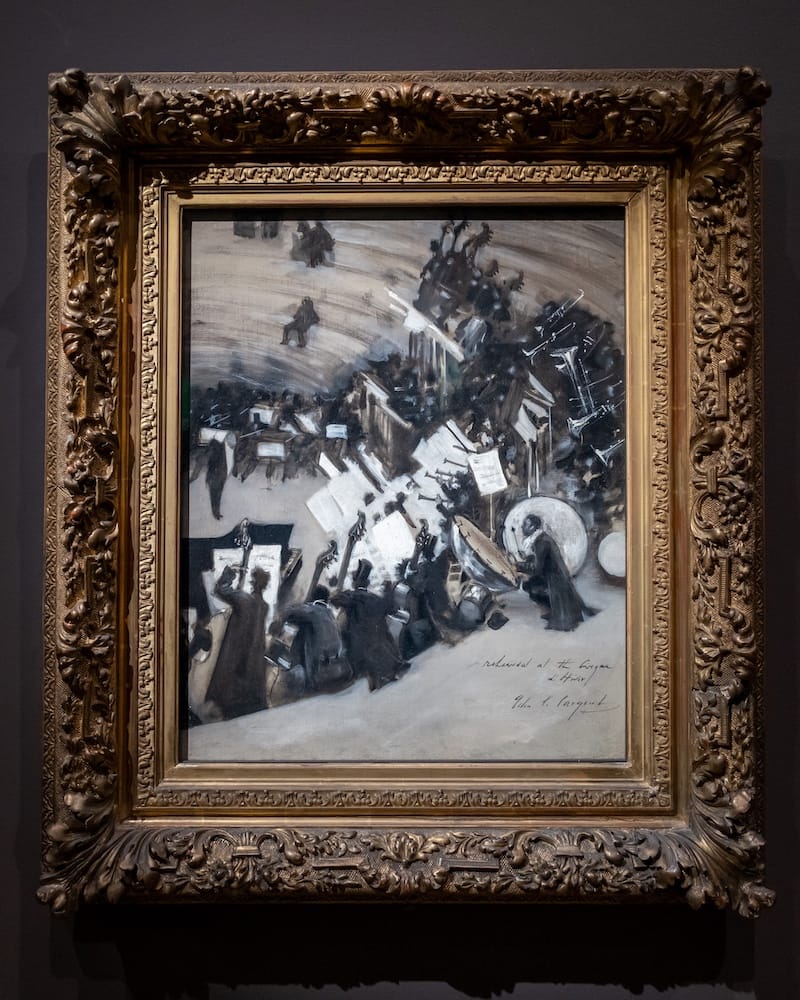
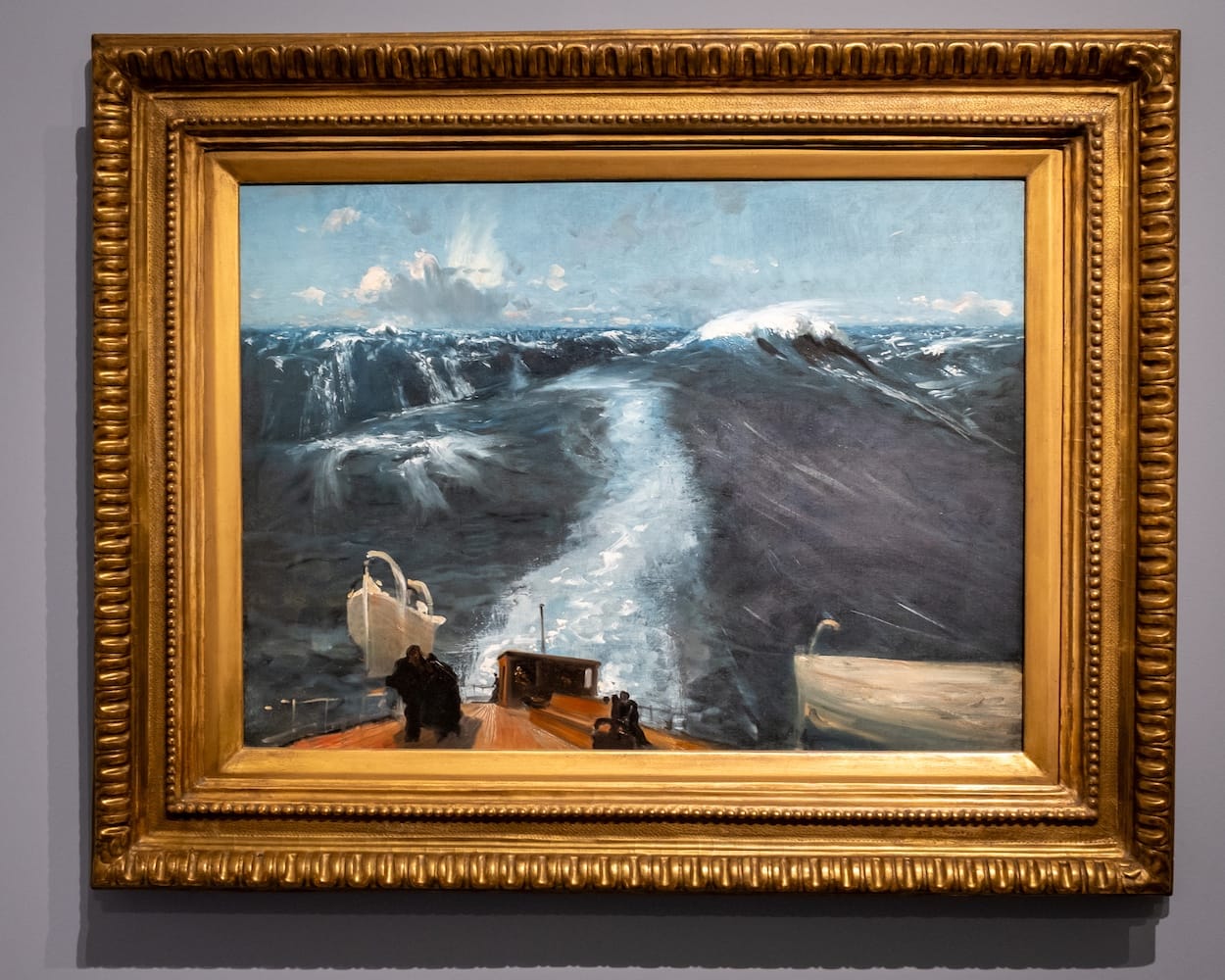
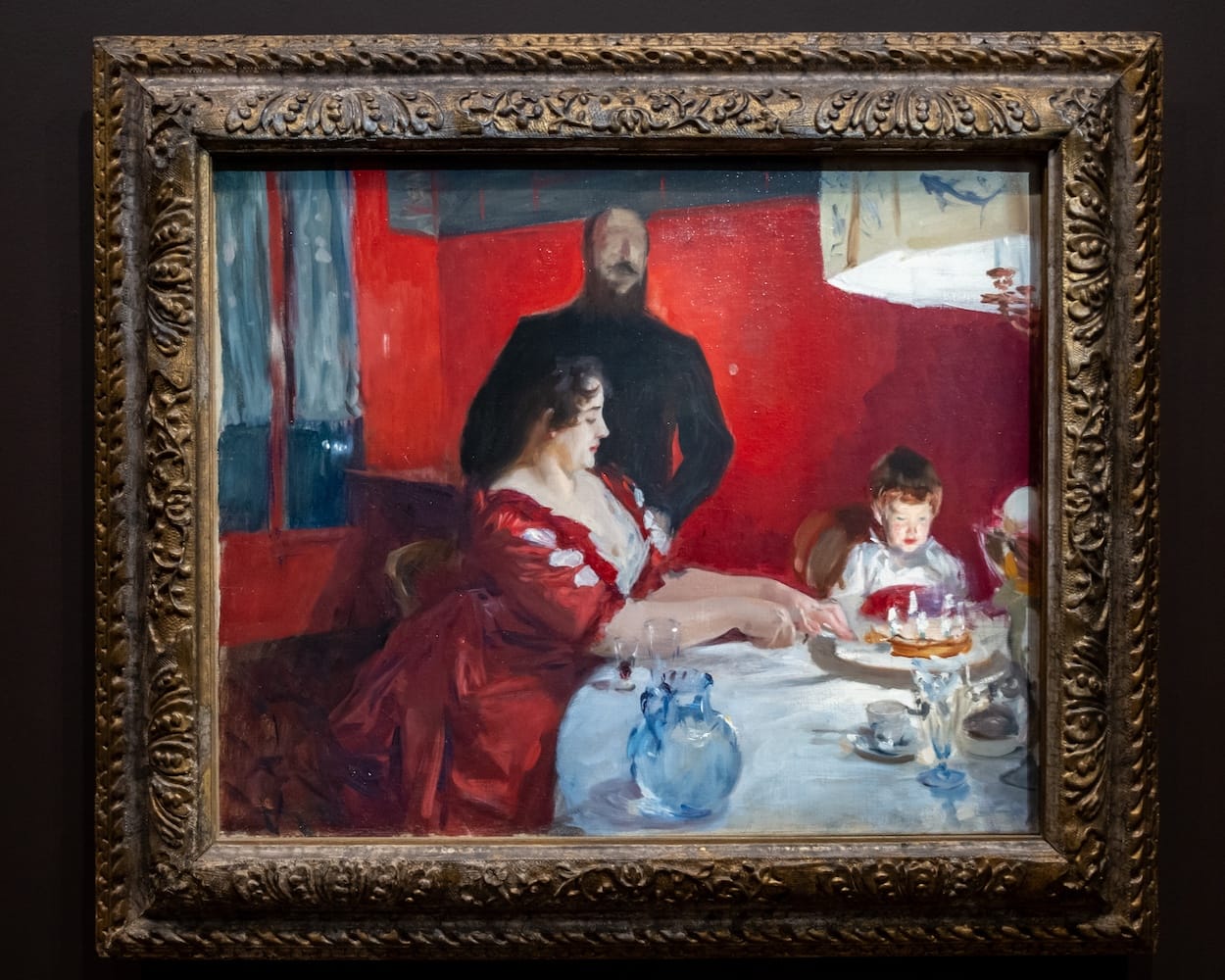
John Singer Sargent, “Rehearsal of the Pasdeloup Orchestra at the Cirque d’Hiver” (left), “Atlantic Storm” (middle), “The Birthday Party” (right)
It’s something of a shame that Sargent’s ambition was to become a successful portraitist and to be part of high society. His autonomous works show that he had a fine eye for composition. A talented pianist himself, his painting of a “Rehearsal of the Pasdeloup Orchestra at the Cirque d’Hiver” (1879-80) still looks fresh due to its unusual viewing angle. With its brilliant off-center composition “Atlantic Storm” (1876), presumably painted on the return journey from his first trip to the United States, challenged the conventions of maritime painting. This is what it’s like to be on a ship during a storm. “The Birthday Party” (1885) similarly has a highly unconventional composition giving the viewer a sense of being at the table.
Sargent's portraits are highly accomplished and demonstrate his capacity to capture both individual character and broader cultural types. His rendering of Madame Subercaseaux at the piano, with its cascading black-and-white ruffles, secured him a Salon award that exempted him from future jury scrutiny. Throughout, Sargent cultivated an extensive network of supporters, many of them formidable creative women whose informal, sketchlike portraits reveal a more intimate dimension of his practice. His artistic milieu intersected with those of Rodin, Monet, and Manet, whose influence permeated his work as he forged a distinctive synthesis of academic tradition and modern techniques, as can be seen in, for example, “The Birthday Party” (1885).
The trajectory of Sargent's Parisian career reached its apex and its crisis with his infamous portrait of the American-born socialite Virginie Gautreau, a painting that would go down into history as “Madame X" (1883–84). Both artist and subject sought a sensational moment, and they achieved it—though not as either had anticipated. When the painting appeared at the 1884 Salon, critics excoriated its audacious composition: the fallen shoulder strap, the heavy cosmetics, the subject's refusal of eye contact with the viewer. The work's classical allusions went unacknowledged; instead, commentators denounced it for its vulgarity. The scandal effectively terminated Sargent's French ambitions, though he retained the painting until selling it to the Metropolitan Museum in 1916, declaring it "the best thing I've done."
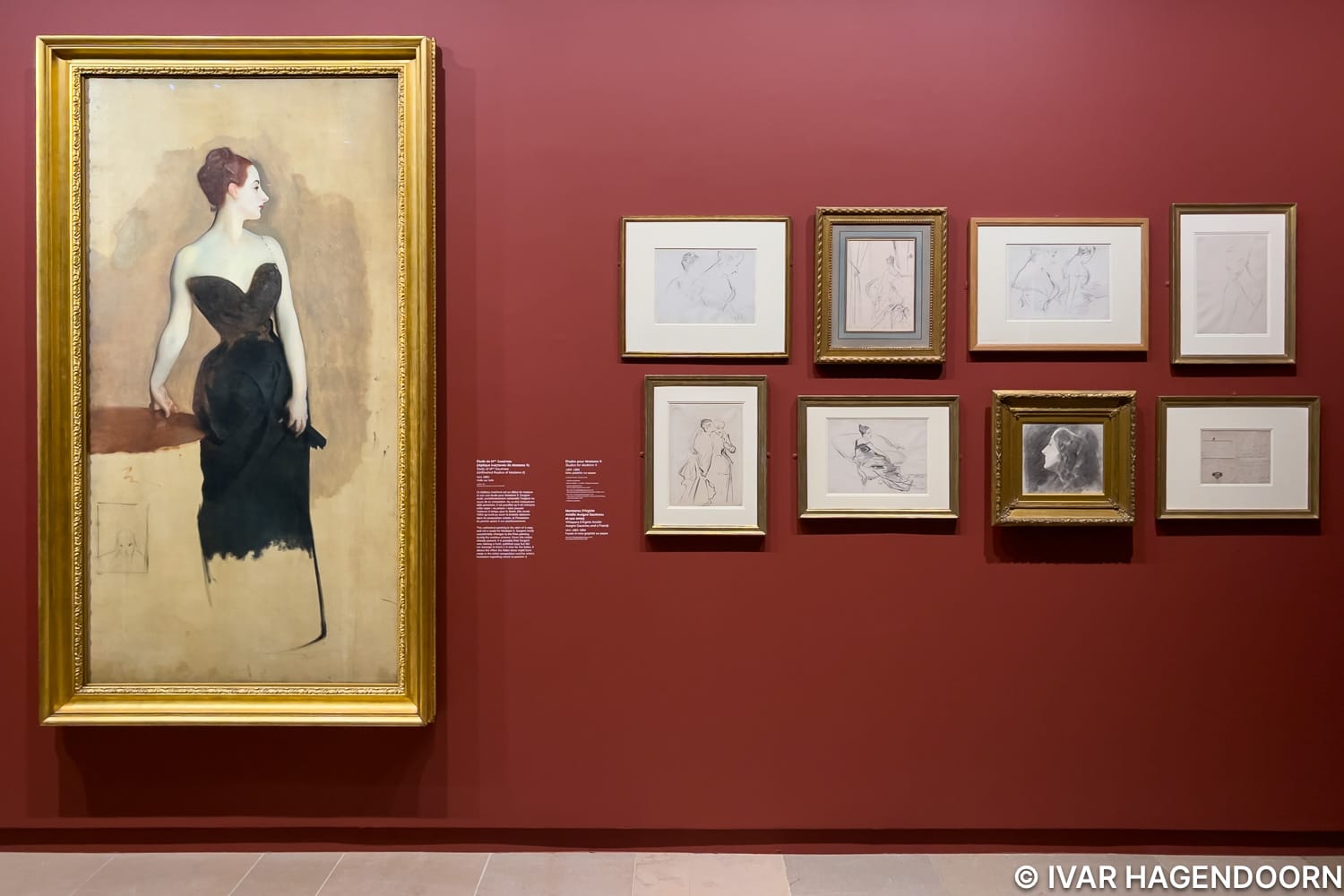
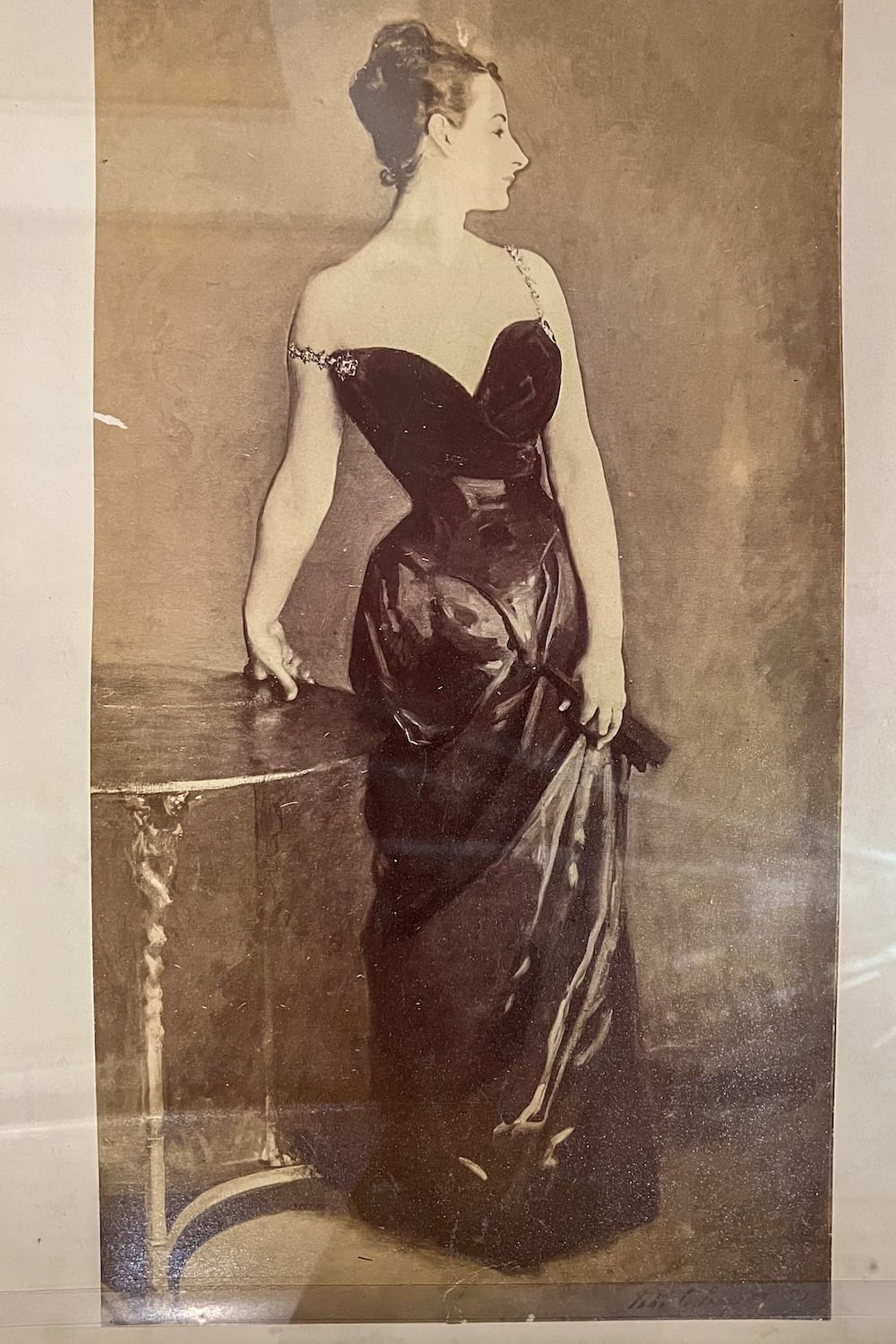
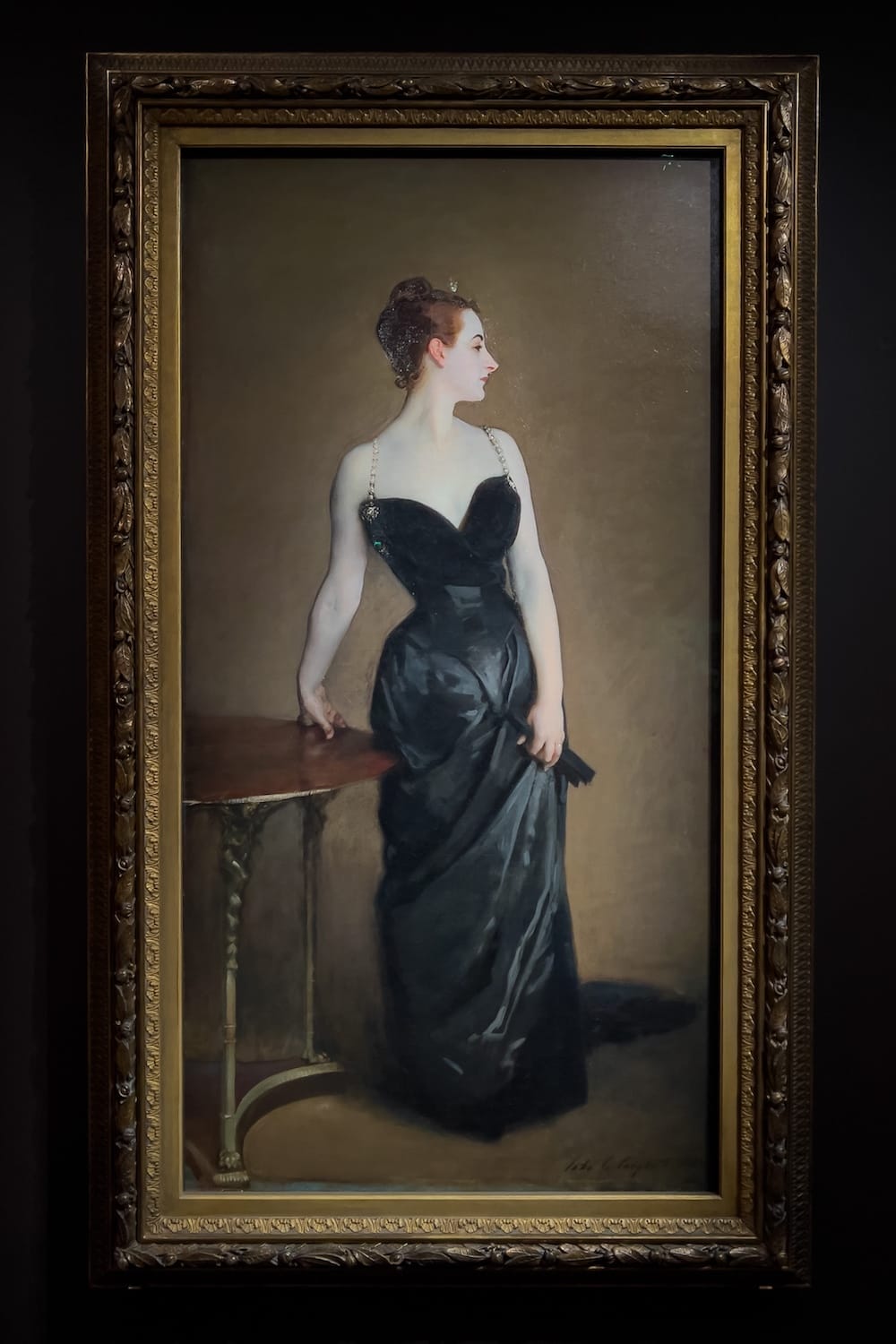
John Singer Sargent, Madame X: sketches (left), first exhibition photo (middle), final version (right)
It’s interesting to note that Sargent later adjusted the shoulder strap as can be seen when comparing reproductions of the painting when it was first exhibited and the version that is now in the Metropolitan Museum of Art. I much prefer the version with the fallen shoulder strap, which looks both more sensual and more natural, and I wish Sargent had had the same guts as Manet, whose Olympia dates back to 1863.
I quite enjoyed the exhibition, not enough to buy the catalogue, but enough to buy the “carnet d’expo”. Afterwards, I took the escalator to the fifth floor to visit the Musée d’Orsay’s permanent collection, like I always do whenever I’m there. I once again realized how dazzling, wonderful and amazing the work of Manet, Renoir, Monet, Degas, Morisot, Van Gogh and Cézanne is.
John Singer Sargent. Eblouir Paris is at the Musée d’Orsay in Paris until 11 January 2026.