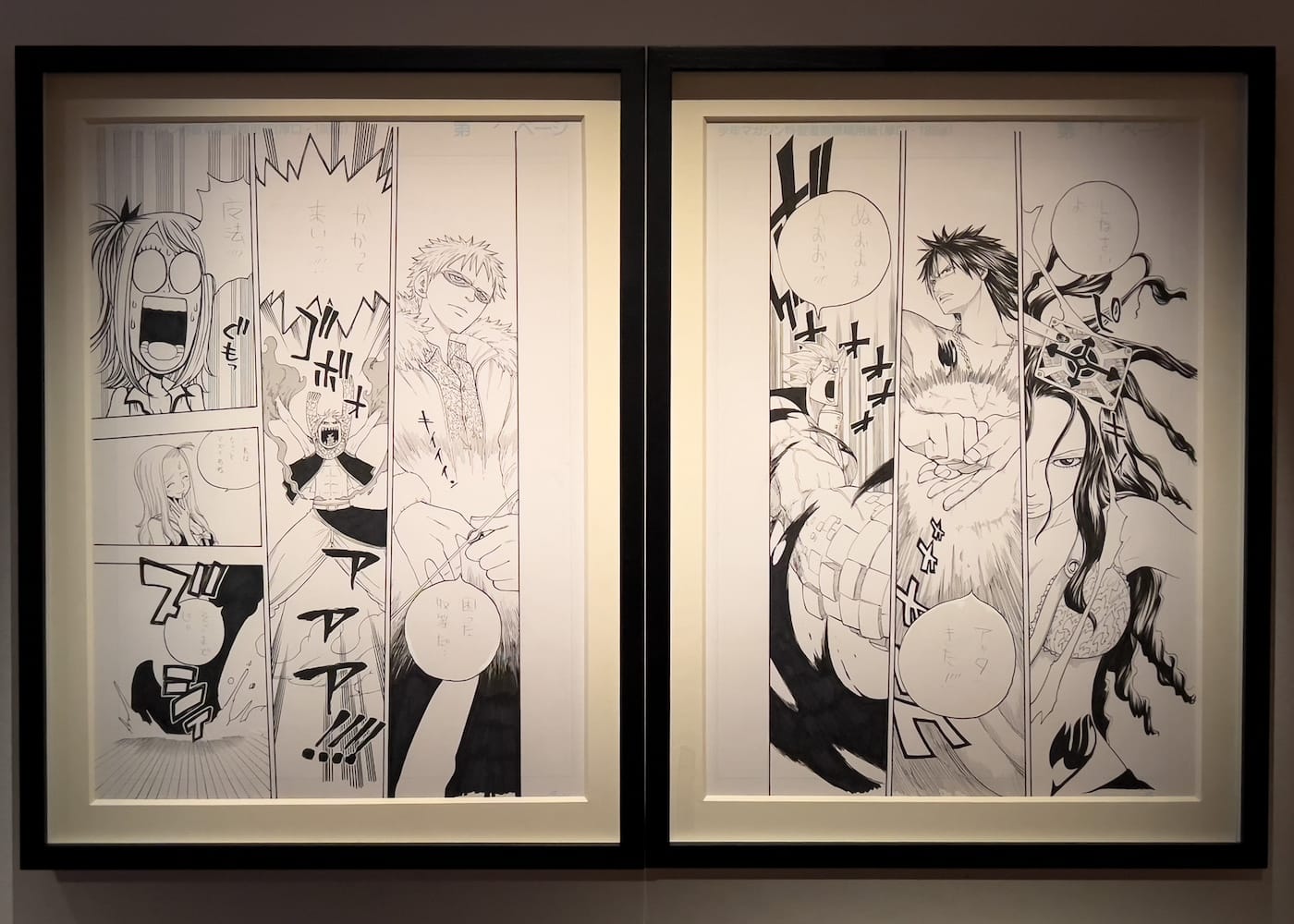
Since visiting Bande Dessinée 1964-2024, last year’s amazing comic book exhibition at the Centre Pompidou, I’ve become increasingly interested in graphic novels and comics. I bought some of the most critically acclaimed graphic novels of the past few years, including the wonderful “My Favorite Thing Is Monsters” by Emil Ferris, which have greatly enriched my life. Eager to learn more about the art of comics I also read Scott McCloud’s “Understanding Comics”, an analytical treatise in the form of a comic book. I particularly enjoyed McCloud’s comparison between the American and European comic book tradition on the one hand and the Japanese manga tradition on the other. As it turns out there are some striking visual differences between both styles. Upon reading this I instantly realized that (some) manga would appeal to me because of its distinctive visual structure.
I have since read two superb one-shot manga, “Goodbye, Eri” and “Look Back” by Tatsuki Fujimoto and I’m currently reading the awesome “Goodnight Punpun” series by Inio Asano. I have also bought three books about Manga, Taschen’s “100 Manga Artists”, “One Thousand Years of Manga” by Brigitte Koyama-Richard, which I highly recommend if you’re into manga, and the catalogue for a manga exhibition at the British Museum.
I rejoiced when I read that the Musée Guimet in Paris has mounted an ambitious exhibition dedicated to manga. The exhibition spans approximately 1,000 square metres across three distinct spaces. The ground floor traces the medium's trajectory from its nineteenth-century origins in satirical press to the golden age of manga, precipitated by the innovative work of Osamu Tezuka, and ending with a room dedicated to manga’s influence on fashion. Approximately one hundred original pages from distinguished manga artists are on display, including works by Osamu Tezuka, Hajime Isayama, Shigeru Mizuki, Riyoko Ikeda, and Sanpei Shirato. Where securing original pages from popular titles such as Dragon Ball, One Piece, or Naruto proved impossible, the curators have supplemented the collection with prints and facsimiles—substitutions that, while potentially captivating to casual visitors like myself, may disappoint those looking for authentic comic art.
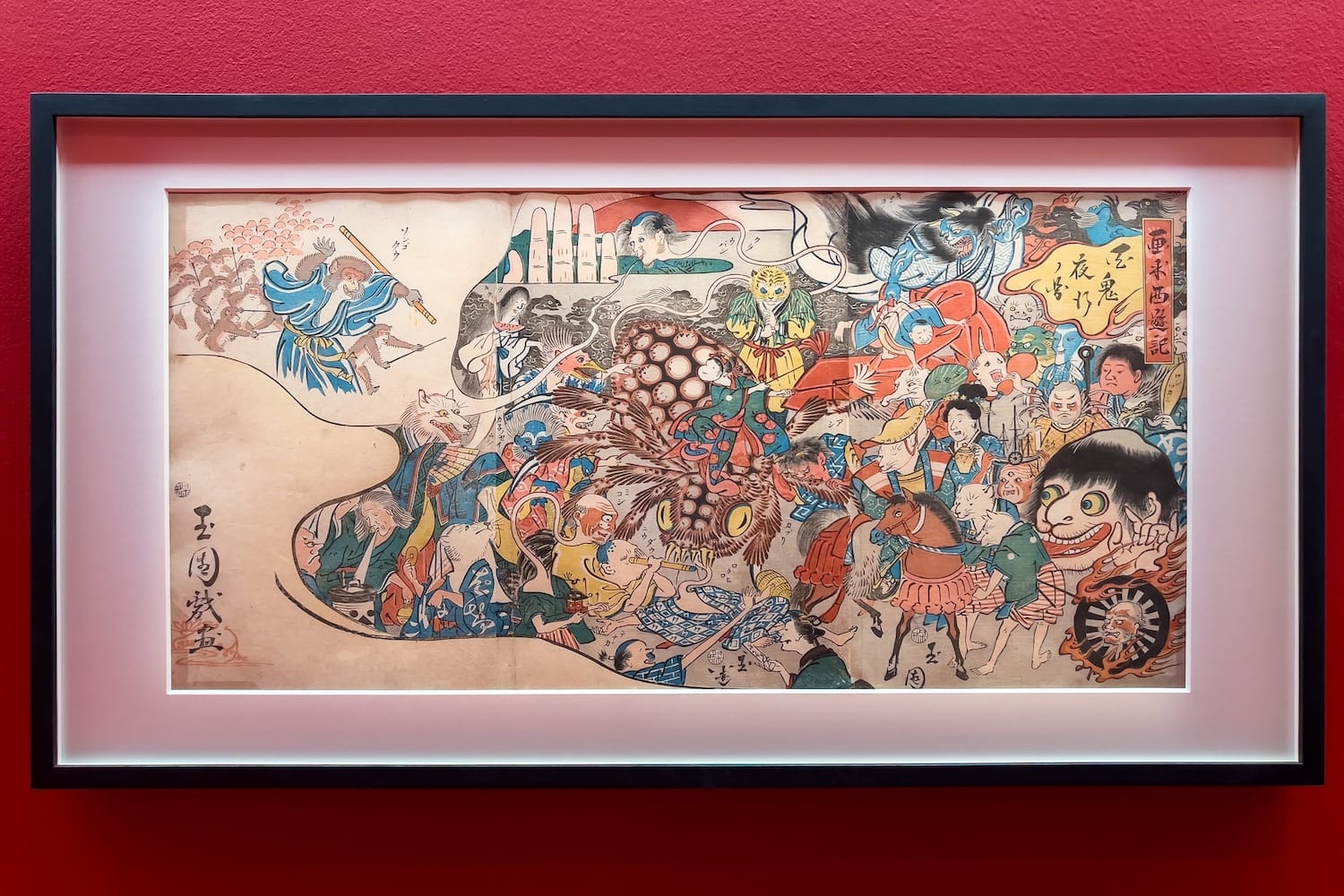
The upper floor offers a more scholarly exploration of Japanese graphic traditions predating modern manga, featuring the museum's exceptional holdings of illustrated scrolls and, notably, previously unexhibited drawings by Kawanabe Kyosai. Adjacent galleries examine the kinship between contemporary manga publishing and the illustrated book industry of the Edo period, while also elucidating the very etymology of the term manga, popularized by Katsushika Hokusai in his celebrated sketchbooks.
The exhibition concludes—provided that you started on the ground floor and not on the second floor, like I did—with Hokusai's iconic “The Great Wave off Kanagawa”, displayed alongside Franco-Belgian comic strips to illuminate the reciprocal artistic influences between Western and Japanese traditions. This juxtaposition offers a fitting meditation on the transnational exchanges that have shaped both graphic traditions.
While I enjoyed visiting the exhibition it was not exactly what I had expected or hoped for. It is neither a comprehensive history of manga nor an exhaustive survey. Regrettably, the exhibition design also eschews explicit visual parallels between heritage works and their contemporary counterparts—a scholarly restraint which, while understandable, means that the exhibition is less lively than it could have been.
Manga. Tout un art! is at the Musée Guimet in Paris until 9 March 2026.