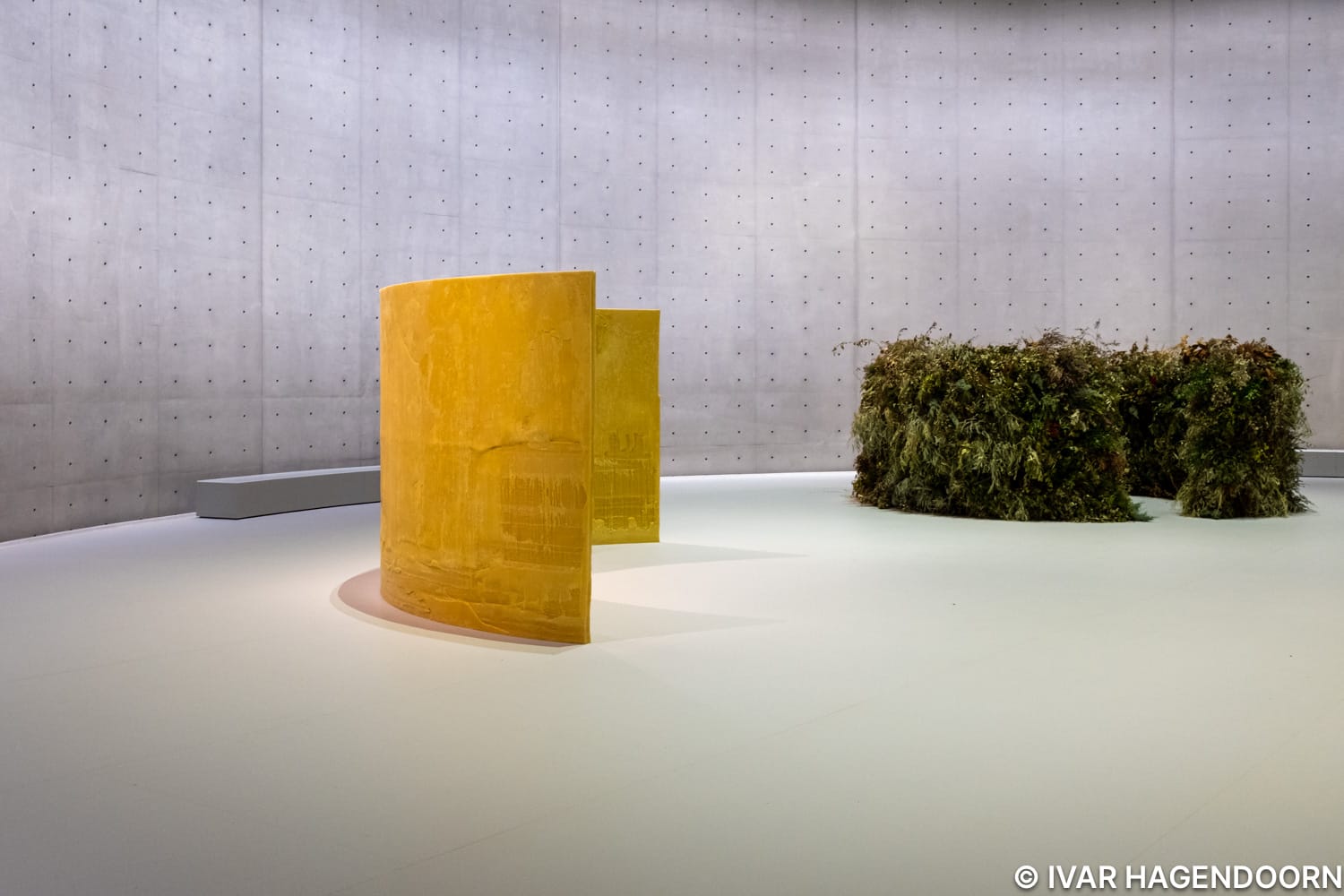
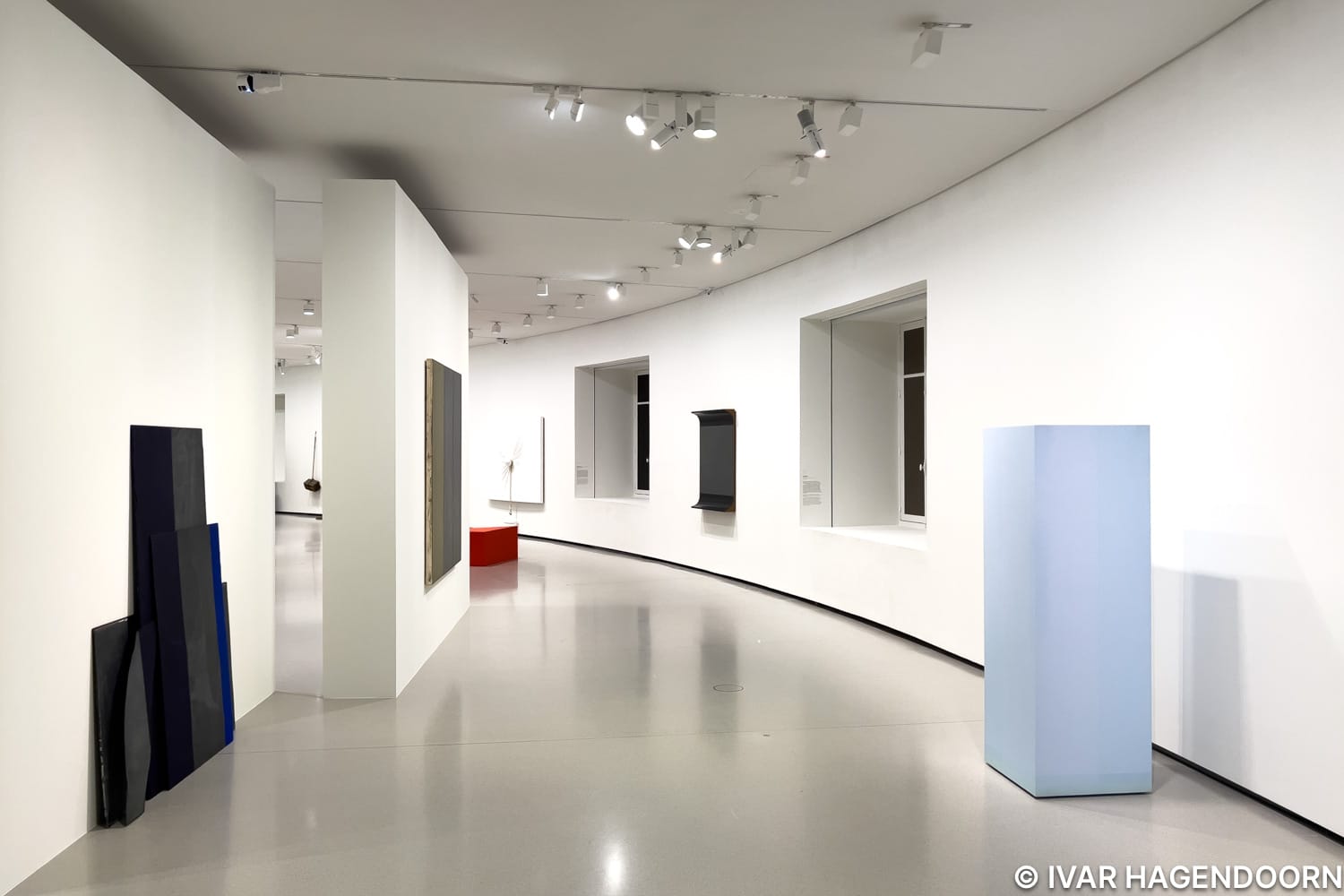
The Bourse de Commerce in Paris has unveiled an intriguing exhibition that reimagines minimalist art, bathing the galleries in natural light and allowing unprecedented freedom of movement between the art works. Eschewing the typical museum conventions of barriers and partition walls, the curators have created an atmosphere of openness that honors the original spirit of these 1960s artists who sought to defy institutional constraints. Visitors encounter sculptures placed directly on the floor, canvases that merge with the walls, and an overall sense of 空間 that feels simultaneously empty and charged with presence.
From the outset, the exhibition challenges preconceptions about minimalism as cold or inaccessible. Felix Gonzalez-Torres's memorial to his father in the form of a carpet of white candies—which visitors may actually consume—serves as a poignant meditation on grief and impermanence, while Anne Truitt's seemingly simple blue column reveals itself gradually as a luminous study in chromatic subtlety. Unfortunately the basement galleries were closed during my visit, so I missed the display of Dan Flavin's and Robert Irwin's light sculptures.
A central argument of the exhibition concerns minimalism's deep entanglement with the natural world and physical experience. Meg Webster's wonderful installations in the rotunda are made out of beeswax, compacted clay and salt, while Dorothea Rockburne's sun-scorched drawings and Michelle Stuart's earth-rubbed works bear the literal imprint of nature. The Japanese mono-ha movement receives particular attention, with artists like Lee Ufan and Nobuo Sekine exploring the inherent properties of stone, wood, and metal to probe the fundamental nature of reality itself.
The exhibition also shows how various artists have taken the language of minimalism into new territories. Senga Nengudi's biomorphic water sculptures, Meg Webster's organic abstractions, and numerous other works demonstrate how these artists engaged with minimalism's formal vocabulary while infusing it with new political meanings.
Perhaps most significantly, the exhibition rectifies decades of historical oversight by centering artists previously marginalized in the minimalist canon. Curated by Jessica Morgan of the Dia Art Foundation, the show draws extensively from François Pinault's collection to construct a more capacious narrative of the movement. Artists from Japan, South America, and Europe who grappled with economy of form, material presence, and spatial interaction now occupy center stage alongside their American contemporaries.
My own attitude towards minimalism has always been somewhat ambivalent, which is perfectly illustrated by the current exhibition. Many of the works on show make for amazing set designs and I instantly felt inspired to create another dance work, and yet I would be hard put to single out a particular work that resonated with me the way some works by, say, Gerhard Richter, Berlinde de Bruyckere and Julie Mehretu do.
Minimal is at the Bourse de Commerce in Paris until 19 January 2026.