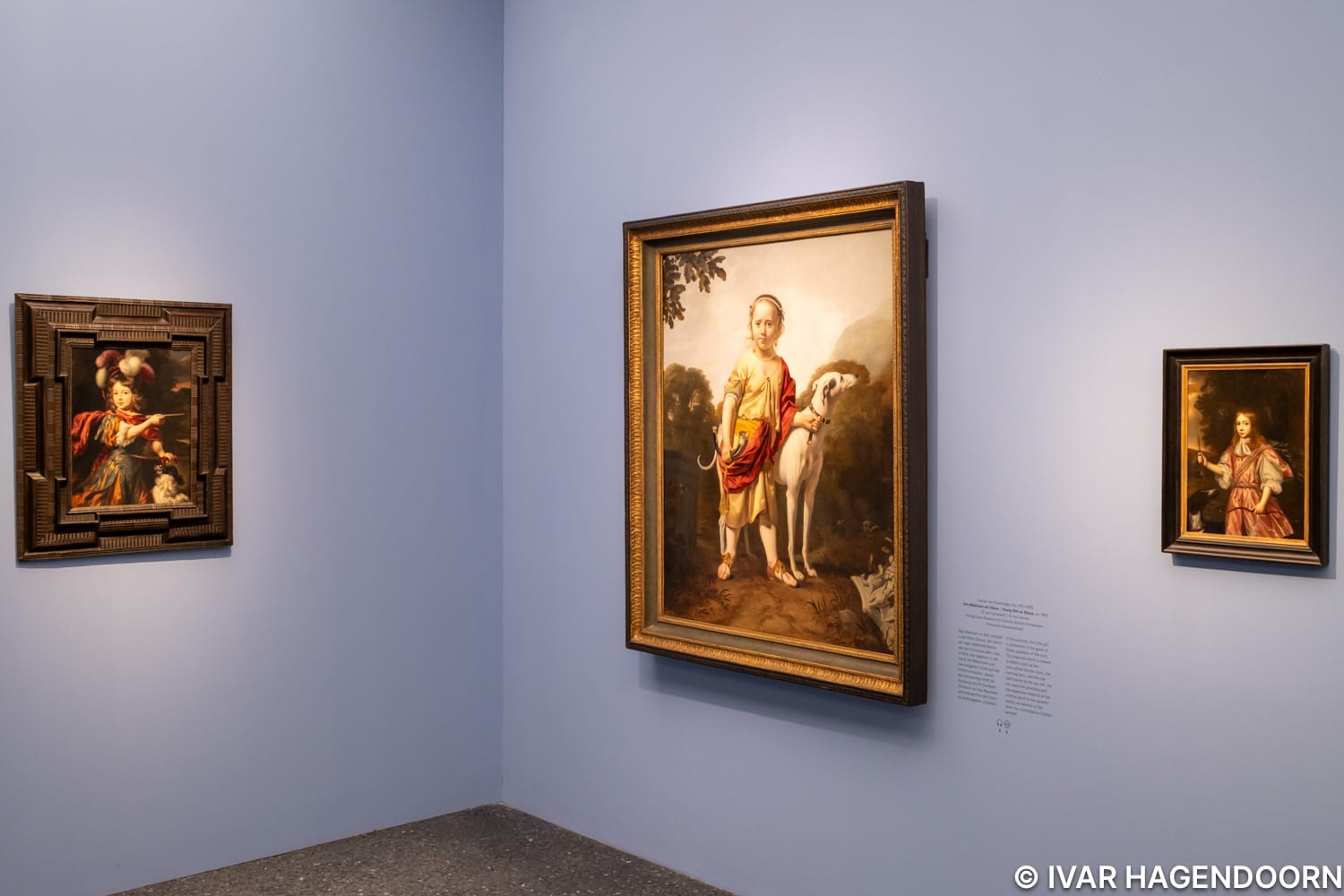
My ICE train to Hamburg was delayed by almost two hours, which is not uncommon these days in Germany. That’s what happens when you don’t invest in railway infrastructure for decades. It derailed my plans for the day of my arrival, but luckily the Bucerius Kunst Forum is open until 19:00 (and 21:00 on Thursday). I had originally planned to go to the Deichtorhallen, which is open until 18:00, but the Bucerius Kunst Forum was closer to my hotel. It so happened that the Bucerius Kunst Forum is currently presenting an exhibition, which I would have added to my to do list had I known about it in advance.
“Kids! Between Representation and Reality" is an ambitious exhibition spanning five centuries of children's portraiture — from Nicolas Maes and Gerrit van Honthorst to Désiree Dolron and Rineke Dijkstra (just me pitching Dutch artists). Curated by Katrin Dyballa, the show assembles some 150 works by over 100 artists, encompassing painting, photography, sculpture, and printmaking. Rather than adopting a chronological framework, Dyballa has orchestrated thematic dialogues across eras, juxtaposing, for instance, an early nineteenth-century girl in a ruffled collar with a contemporary upper-class teenager photographed by Tina Barney. The exhibition's central premise is compelling: the way societies depict their children reveals deep-seated values, aspirations, and anxieties about the human condition.
The journey begins with religious iconography, tracing how the Madonna and Child served as the wellspring for Western representations of childhood. From Antonio Solario's preternaturally wise Christ Child to Oskar Kokoschka's vision of childhood as an Edenic state, these sacred images established enduring visual conventions. In 17th century Protestant Netherlands, images of the Virgin Mary fell out of favor, with genre paintings of virtuous mothers taking their place, embedding bourgeois ideals of chastity and diligence. Meanwhile, dynastic portraiture — pioneered by the Habsburgs — transformed children into political instruments, depicting sons as miniature adults ready to follow in their father’s footsteps and daughters as bejeweled prospects for advantageous marriages (but to see Vélazquez's famous portraits of the Infanta Margarita Teresa you would have to travel to Vienna).
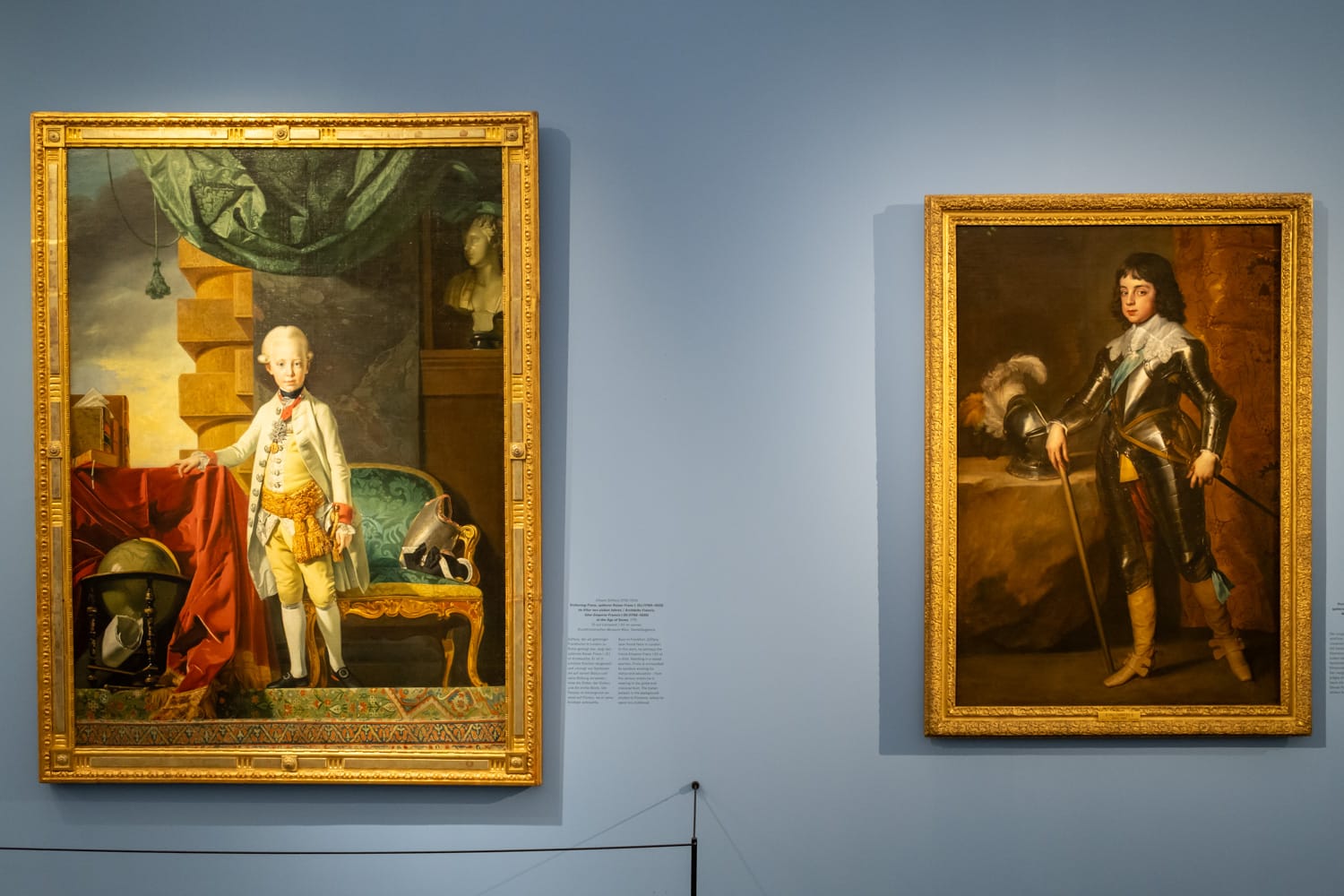
The exhibition also illuminates the lives of children from humbler circumstances including "The Young Beggar" (1645–1650) by Bartolomé Esteban Murillo on loan from the Louvre and a photograph of a child scavenging wood amid wartime rubble by Herbert List.
One room is dedicated to paintings of deceased children, including a wonderful symbolic painting by Nicolas Maes, "Group Portrait with Four Children as Mythological Figures" (1674). Ostensibly showing four children playing it isn't until you notice that one of the children is sitting on the back of a large bird that you realize that the painting is an allusion to one of the myths in Ovid's Metamorphoses (Zeus descending in the shape of an eagle to carry off Ganymede to serve as his cup-bearer).
Alongside these sobering depictions, the show traces the intellectual revolution that reshaped attitudes toward childhood. Thinkers such as Comenius, Locke, and Rousseau progressively championed the notion that children were neither diminutive adults nor mere extensions of parental ambition, but autonomous beings deserving of education tailored to their nature.
This philosophical shift elevated play, imagination, and the child's inner world to subjects worthy of artistic attention. Hobbyhorses, dolls, and puppets began appearing as defining attributes of childhood, from Tischbein's portrait of little Cornelia Amsinck clutching her doll to Floris Arntzenius delightful “Liesje Paints” (1906), which shows a young girl messing around with paint and which reminded me of my own endeavors in that direction which I recently rediscovered in an old box. The exhibition ends, appropriately, with Rineke Dijkstra's 2022 photograph of her daughter Julia, transfixed by a smartphone — an image that encapsulates our own era's values as eloquently as any aristocratic portrait once did.
Kinder, Kinder! Zwischen Repräsentation und Wirklichkeit (Kids! Between Representation and Reality) is at the Bucerius Kunst Forum until 6 April 2026.