The Turner and Constable exhibition at Tate Britain, which marks the 250th year of both artists’ birth, received rave reviews in the British press. I realized too late that it might be immensely popular and by the time I tried to book a ticket on the days I would be in London it had completely sold out. The only way to enter the exhibition was to become a member of Tate at the last minute.
J.M.W. Turner, born in 1775 and known by his initials, and John Constable, born a year later, are both towering figures in British art. The show traces their parallel yet strikingly divergent careers chronologically, from early self-portraits and local scenes to their charged encounters at the Royal Academy's annual exhibitions, where reputations were forged or shattered. Their backgrounds could hardly have differed more: Turner, the son of a Covent Garden barber, entered formal training at fourteen, while Constable, raised among Suffolk corn merchants wary of artistic ambitions, only began his studies at twenty-three. Yet both men defied convention by elevating landscape painting from a marginal genre to the vanguard of English Romanticism.
Turner's genius lay in dissolving the visible world into light, vapor, and elemental fury. His earliest exhibited works already announced his obsession with atmosphere, which decades later would culminate in luminous masterpieces like "The Blue Rigi, Sunrise” (1842) and “Norham Castle, Sunrise” (1842). Over time, his canvases grew ever more diffuse: blazing suns consumed classical ruins, spinning vortexes dwarfed human figures, and translucent veils of fog blurred form into shimmering abstraction. "Atmosphere is my style, indistinctness my fault," Turner famously proclaimed — yet that indistinctness carried paintings to the very threshold of modernity.
Constable pursued a radically different path, rooting himself in the area around Dedham Vale, on the border between Suffolk and Essex, where he would paint idyllic scenes of the English countryside for much of his life. He never ventured outside England and he never travelled further than the Lake District, the solitude of which he is said to have found oppressive. Turner did travel to France, Switzerland, The Netherlands, Denmark, Germany and Italy. Perhaps that is why his work is more adventurous.
I find it hard to believe that at the same time as John Constable (1776-1837) was painting his pastoral scenes of cottages and villages and wheat fields with a cow here and a horse there, Caspar David Friedrich (1774-1840) was exploring the sublime in nature.
Ironically, in a small painting that is totally unrepresentative of everything else he painted, Constable surpassed the German master of the sublime. “Rainstorm over the Sea” (1824-28) is a magnificent painting, bordering on abstraction. For once Constable let go of convention and he instantly created a masterpiece, except that he didn’t think of it that way himself, putting it aside as a mere study. The fierce brush strokes perfectly capture the physical force of the storm. Perhaps because our current sensibility is closer to that of the romantic sublime it was singled out as publicity material and reproduced as a postcard and a poster.
In one of his most daring compositions, “Snow Storm. Steam-Boat off a Harbour’s Mouth” (1842), Turner, too, perfectly rendered a storm at sea. Indeed, Turner painted various amazing seascapes and elsewhere at Tate Britain there are some fine examples of his late style, strikingly all of which unfinished.
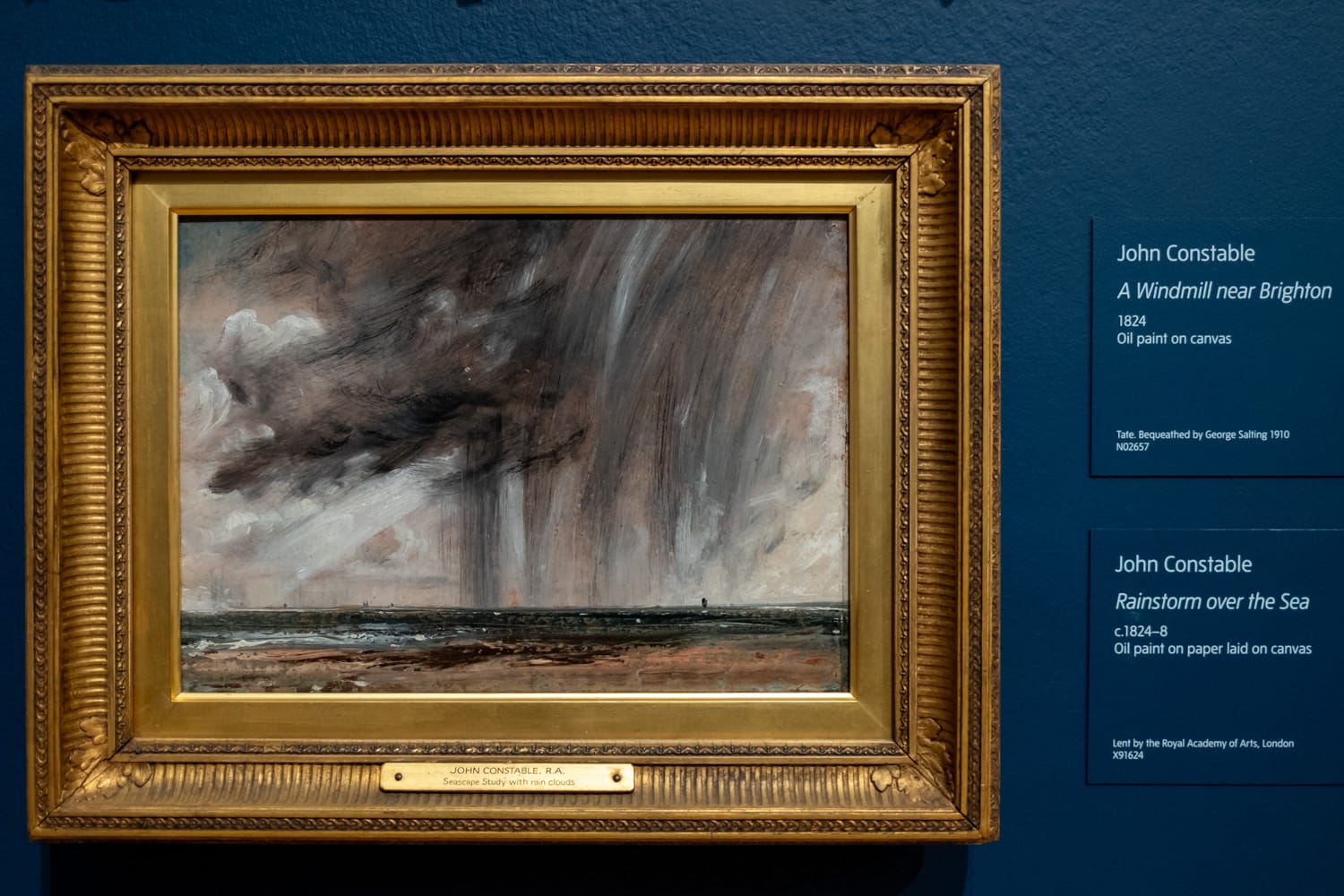
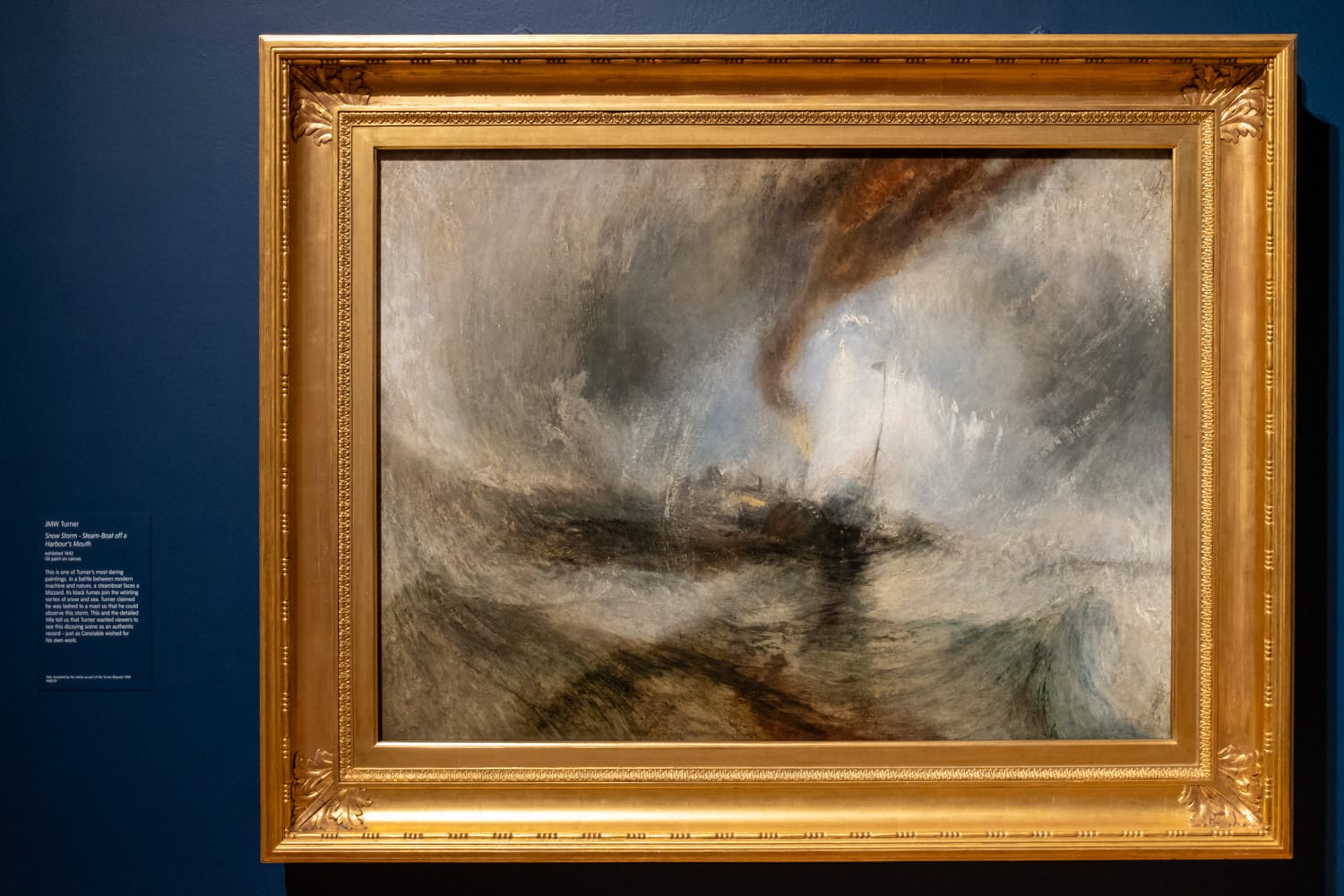
Constable (left) and Turner (right)
The exhibition thrives on juxtaposition, bringing both painters head-to-head in galleries that dramatize their competing visions, Turner's blazing sunlight against Constable's cloudy skies, poetry against truth, as one critic remarked in 1829. Who ultimately triumphs? For me, Turner is the clear winner here, although I will concede that there is something to be said for Constable's naturalism and attentiveness to detail. In the end both of their work is an invitation to look more carefully at the world around us.
Turner and Constable. Rivals and Originals is at Tate Britain, London until 12 April 2026.
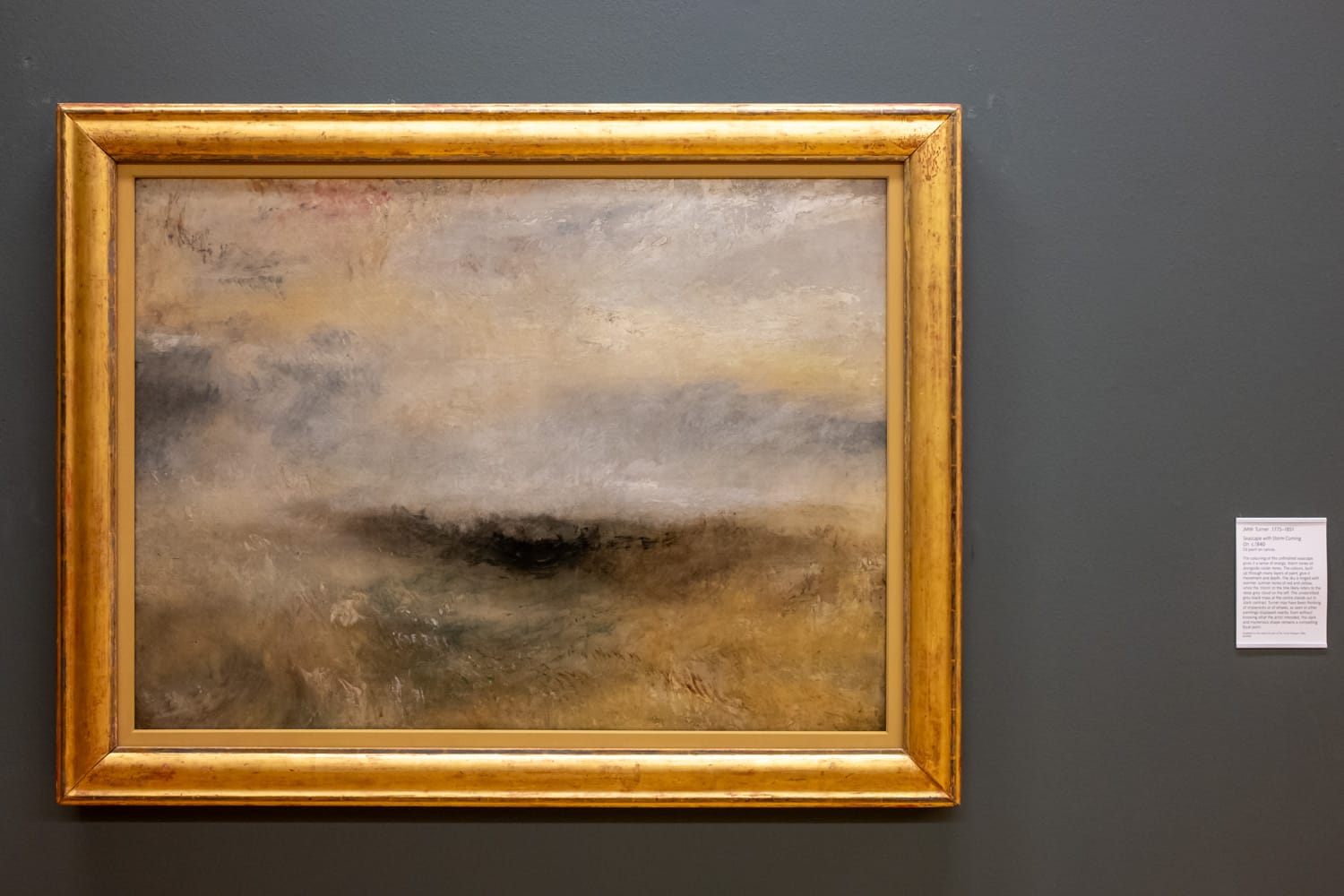
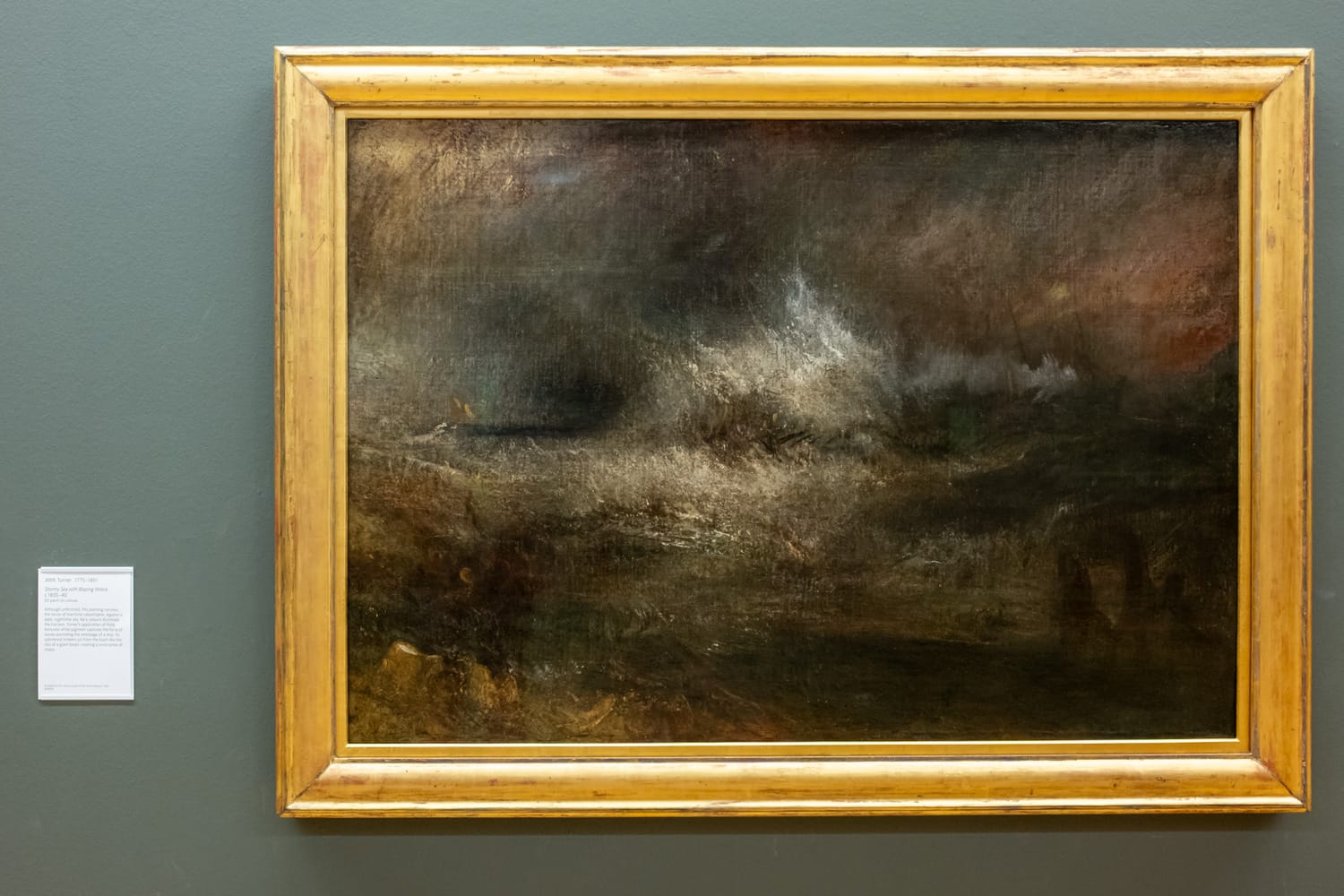
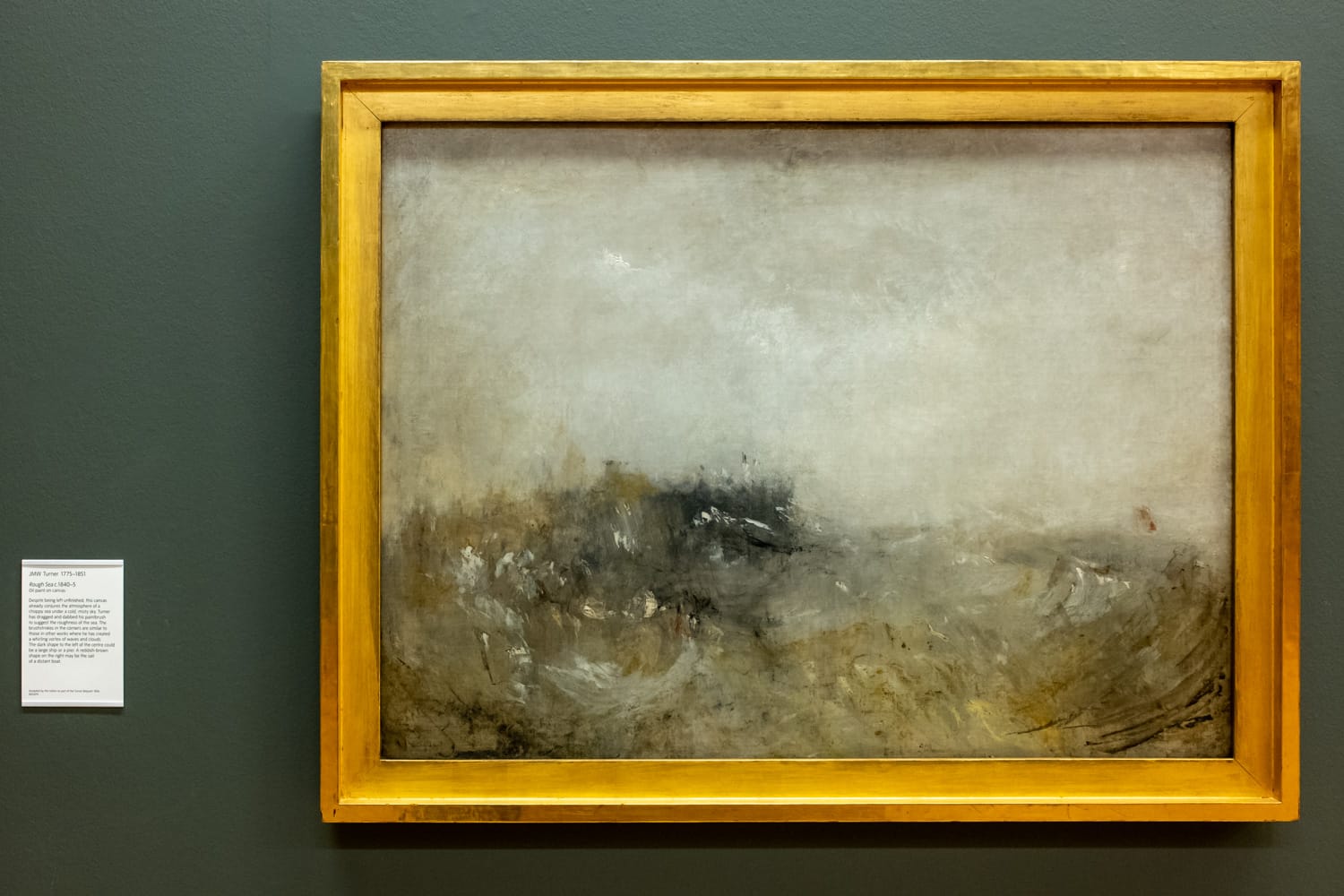
Late Turner elsewhere at Tate Britain