I was surprised when I learned that the Rijksmuseum in Amsterdam would organize a Willem de Kooning retrospective, because modern and contemporary art is the domain of the Stedelijk Museum next door. I was even more surprised that the exhibition would focus on his drawings and not the paintings for which he is famous. I love De Kooning's "Woman I"—a postcard reproduction of which has been sitting on my bookshelf for years—and as I was largely unfamiliar with his drawings this was all the more reason to visit the exhibition.
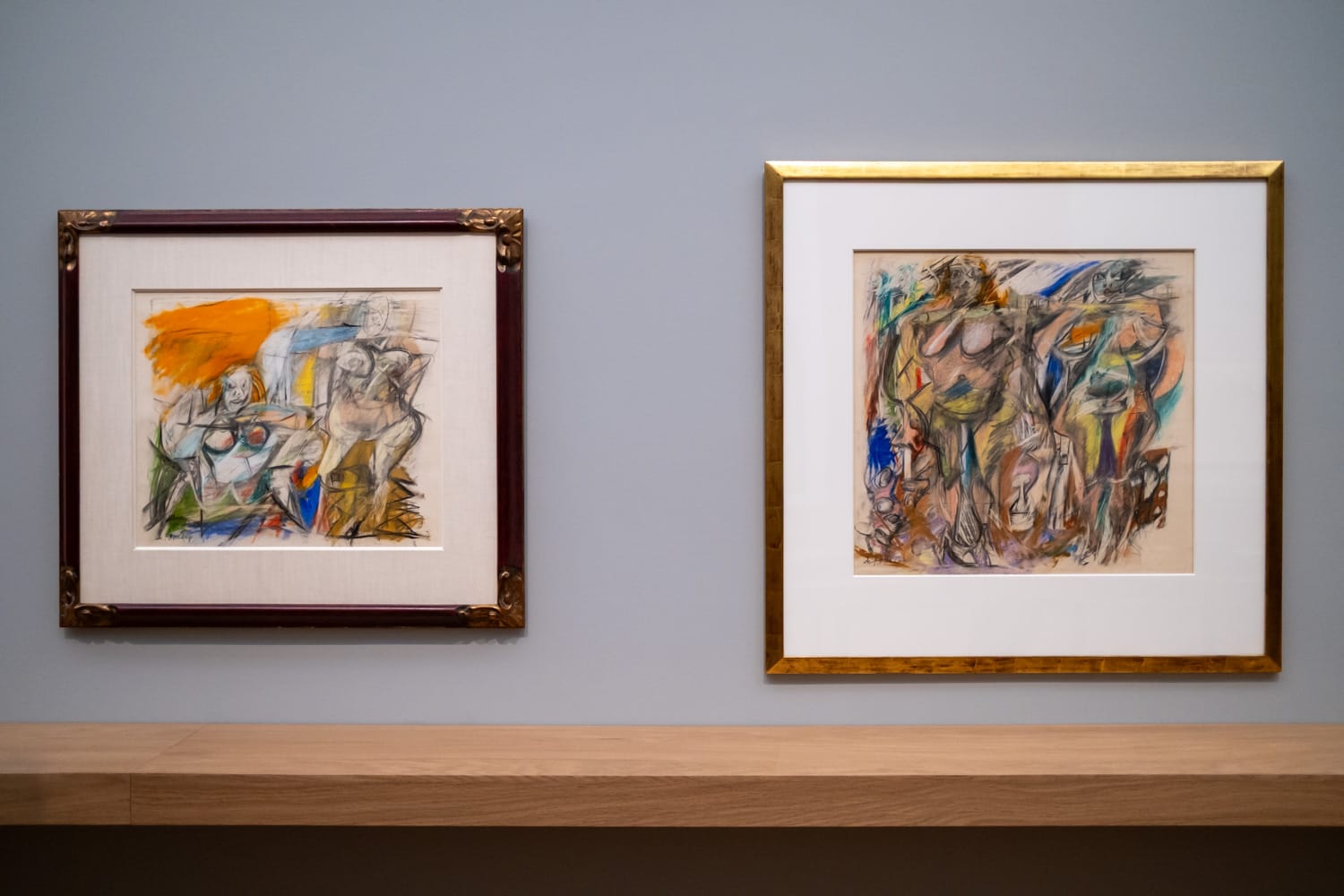
Exactly a century ago, Willem de Kooning, born in Rotterdam in 1904, left his hometown for New York, never to return. The Rijksmuseum is marking that anniversary with more than a hundred of his drawings from six decades, shown alongside selected paintings and sculptures. Why should a giant of American Abstract Expressionism, a painter whose work balanced between figuration and pure abstraction, be celebrated through his drawings? As Kevin Salatino, co-curator of the exhibition, observes, drawing was fundamental to everything he did. De Kooning was constantly drawing, and, as one room at the exhibition shows, he never stopped experimenting, drawing with his untrained left hand or with his eyes closed.
Trained at the Rotterdam Academy of Visual Arts and Technical Sciences—since renamed the Willem de Kooning Academy in his honor—de Kooning considered himself a draftsman rather than an artist. Upon arriving in New York he found work, first as a house painter and window dresser, then as a graphic designer and illustrator. He became fascinated by the graphic language of American comics like Krazy Kat, an influence that is clearly visible in his work, once you notice it. His early works, such as “Dish with Jugs” (1919-21) and "Reclining Nude" (1934), a portrait of Juliet Browner, a trained dancer and De Kooning's partner and muse at the time, reveal his classical training.
In 1942, De Kooning had his first exhibition at the McMillen Gallery, alongside an emerging young artist called Jackson Pollock and established masters such as Picasso, Braque and Matisse. By then, De Kooning had developed an aesthetic of incompletion. He traced, transferred and spliced together fragments of figures, poured industrial paint onto canvas which he then scraped away with a putty knife. That method earned him a place among the emerging “lyrical abstractionists” as they were called at the time.
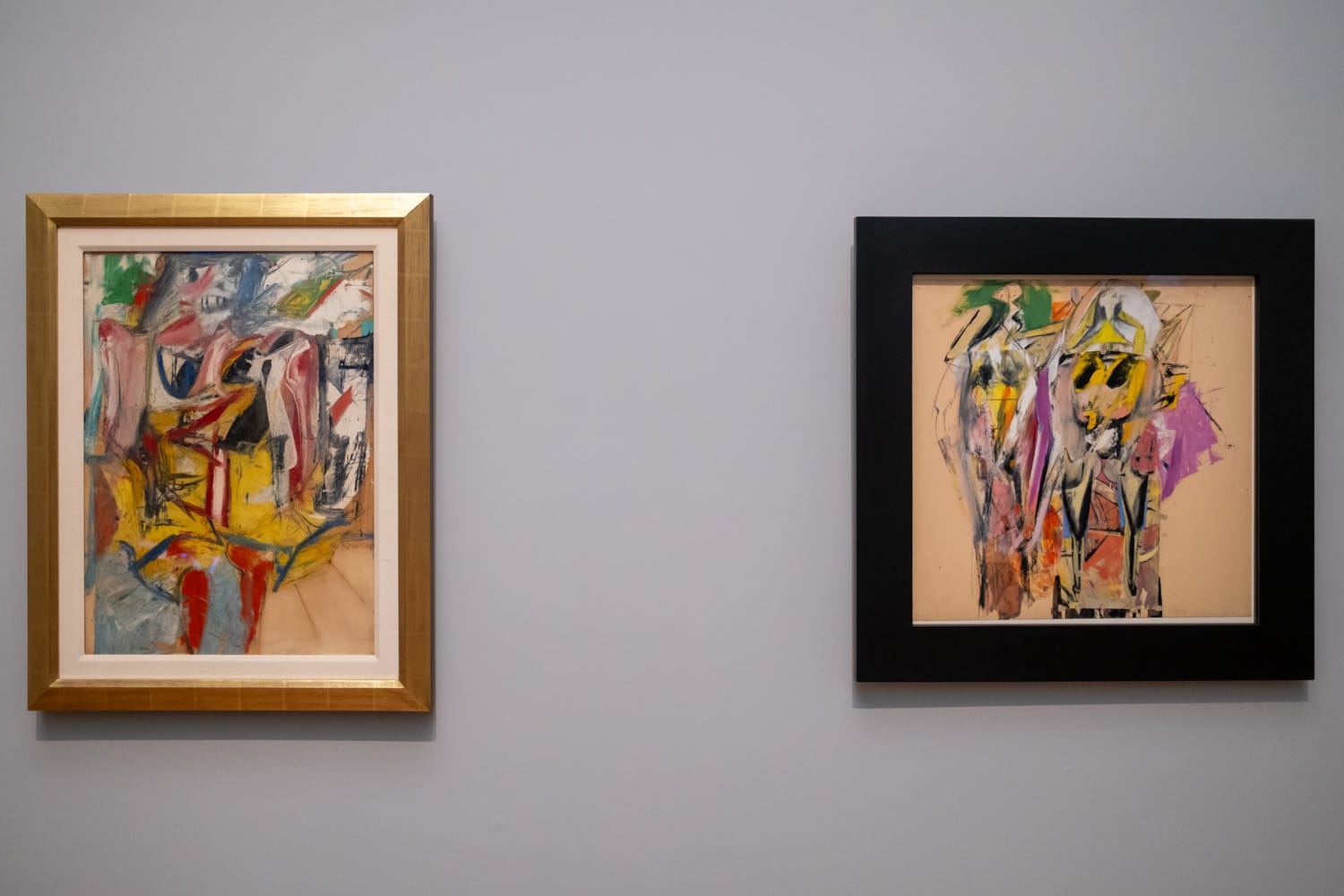
Throughout his six decade career the female figure remained his central subject. Having studied Picasso’s “Les Demoiselles d’Avignon” at MoMA almost daily, he set out to surpass it, splintering his women into Cubist planes that hover between goddess, idol and Madonna.
Some of the drawings in the exhibition could be mistaken for paintings, while in other works the distinction dissolves under layers of graphite, charcoal and paint. De Kooning himself famously said that he didn’t understand the difference between drawing and painting.
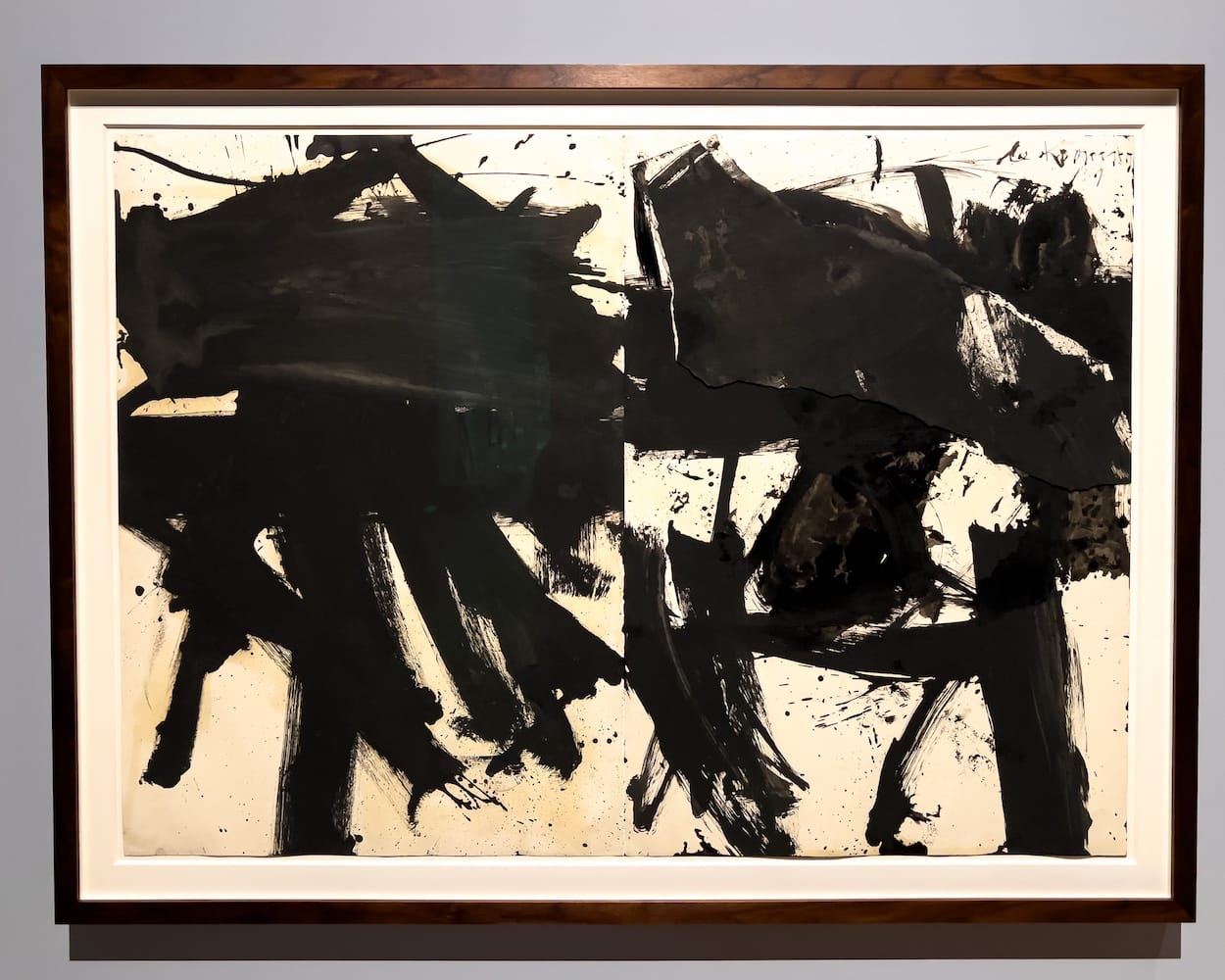
One of the exhibition’s biggest surprises, at least to me and for anyone who associates De Kooning with colorful expressionist paintings, is a room full of black on white canvases that could be mistaken for Pierre Soulages, which he created during a residence in Rome from December 1959 through January 1960.
The exhibition also includes some masterful paintings, such as the marvelous “Excavation” (1950), on loan from the Art Institute of Chicago where the exhibition was previously on show, and the magnificent “Woman I” (1950-52), on loan from the Museum of Modern Art in New York, which has been hung in the Rijksmuseum’s gallery of honor, near Rembrandt and Vermeer. Willem de Kooning would have been proud.
Willem de Kooning at Work is at the Rijksmuseum in Amsterdam until 17 January 2027.