Hot on the heels of this Spring’s Artemisia Gentileschi retrospective the Musée Jacquemart-André in Paris has organized another major exhibition, this one dedicated to Georges de La Tour (1593-1652), a painter who languished in obscurity for nearly three centuries before achieving widespread renown. The exhibition comprises approximately thirty works either by the artist or derived from his compositions. Although some celebrated canvases—notably “The Fortune Teller” (1630s) from the Metropolitan Museum of Art and “The Cheat with the Ace of Diamonds” (1635-38) from the Louvre—could not be secured for loan, the assembled paintings nonetheless provide ample opportunity to explore La Tour's distinctive artistic vision.
Biographical information about La Tour remains frustratingly sparse, rendering him even more enigmatic than Vermeer. Born in Vic-sur-Seille to a family of grain merchants, he married into minor nobility and fathered ten children, seven of whom perished before reaching adulthood. Court records reveal him as a greedy and quarrelsome individual, which stands in sharp contrast with the contemplative nature of his canvases.
Little is known about La Tour's artistic formation. Art scholars have hypothesized journeys to Italy, Spain, or Flanders to account for his evident affinities with Caravaggio, yet no documentary evidence substantiates such journeys. What is certain is that he mastered the dramatic effects of chiaroscuro—the interplay of torchlight and shadow, glowing embers against enveloping darkness—and deployed these techniques with consummate skill. These paintings form the heart of the exhibition.
In the absence of reliable chronological markers, La Tour's oeuvre must be approached through careful visual analysis of individual compositions. His secular subjects—beggars, musicians, peasants—present numerous interpretive puzzles, while his religious paintings demonstrate a revolutionary departure from the elaborate altarpiece tradition. Eschewing halos, angelic hosts, and symbolic clutter, La Tour reduced sacred imagery to its essential elements: solitary figures rendered with geometric clarity, their forms emerging from darkness into pools of candlelight. This austere approach evidently captivated contemporary patrons, generating demand for numerous copies and workshop replicas.
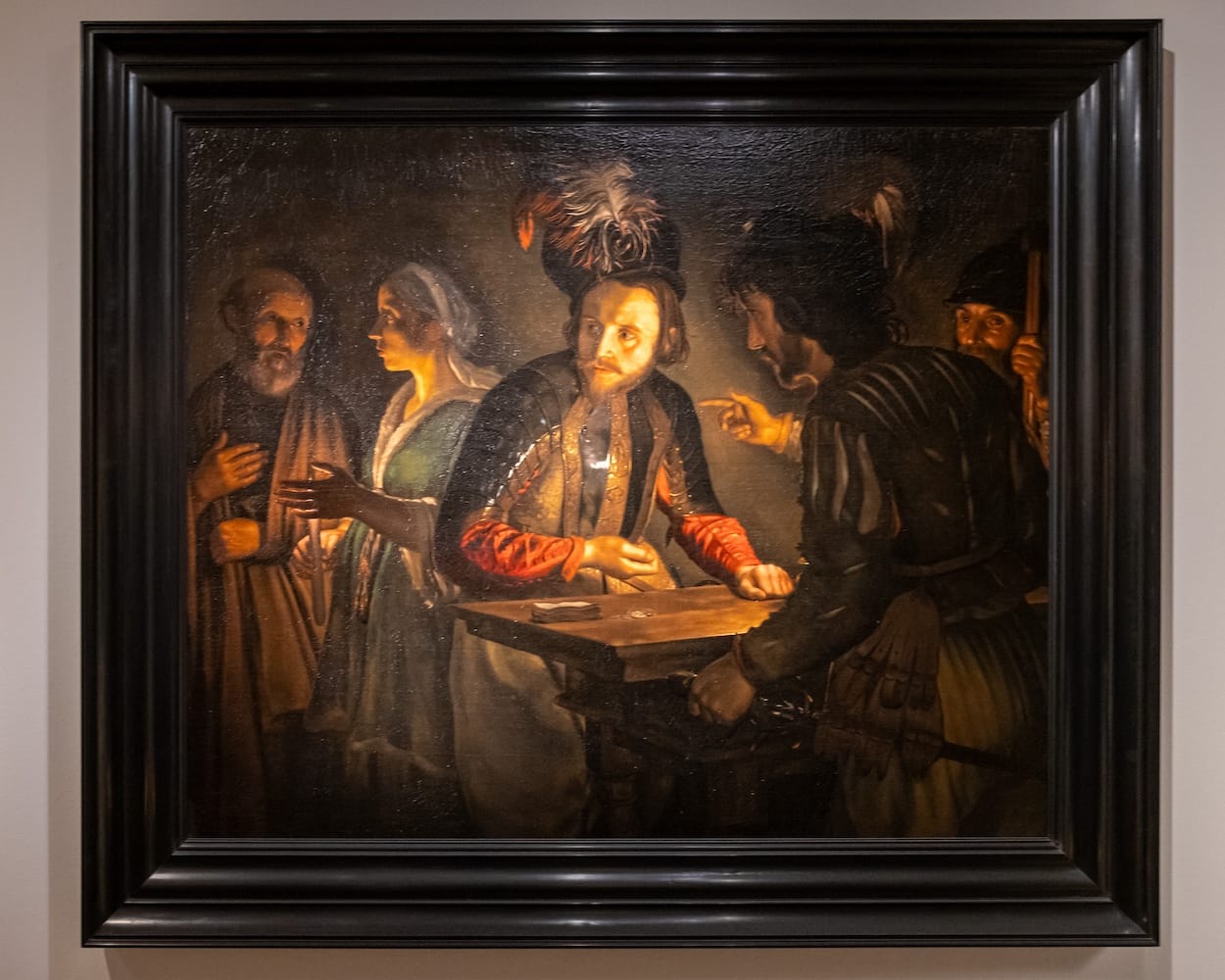
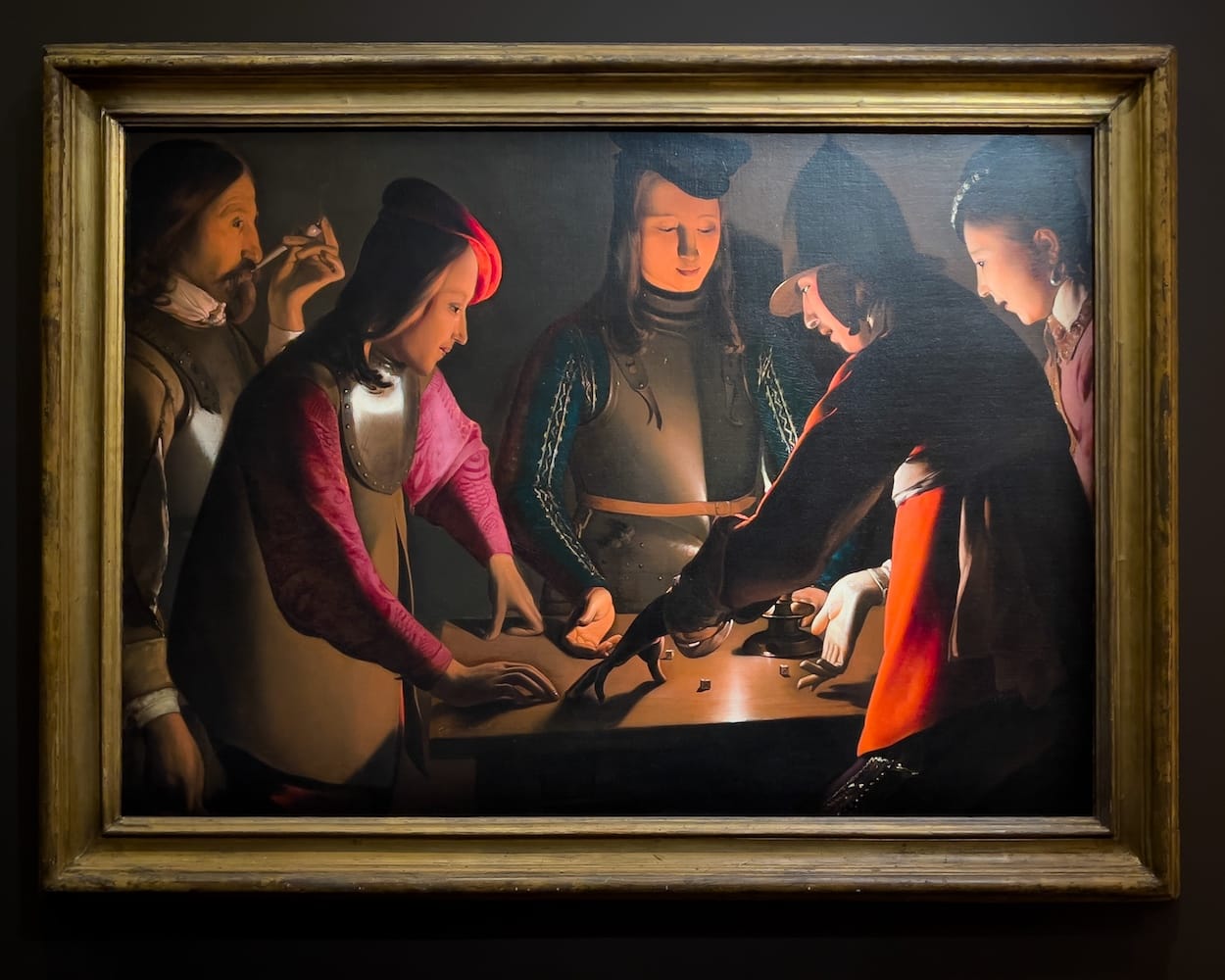
Georges de la Tour, "L’argent versé" (left) and "The Dice Players" (right)
Georges de la Tour excelled in creating carefully choreographed group portraits in which the eyes speak volumes, as in the Louvre’s “The Cheat with the Ace of Diamonds” (1635-38) and “L’argent versé” (1621-34). Speaking of carefully choreographed scenes, the exhibition also includes an amazing painting by an anonymous Caravaggist painter known as Pensionnaire de Saraceni, “Le Reniement de saint Pierre” (c. 1610).
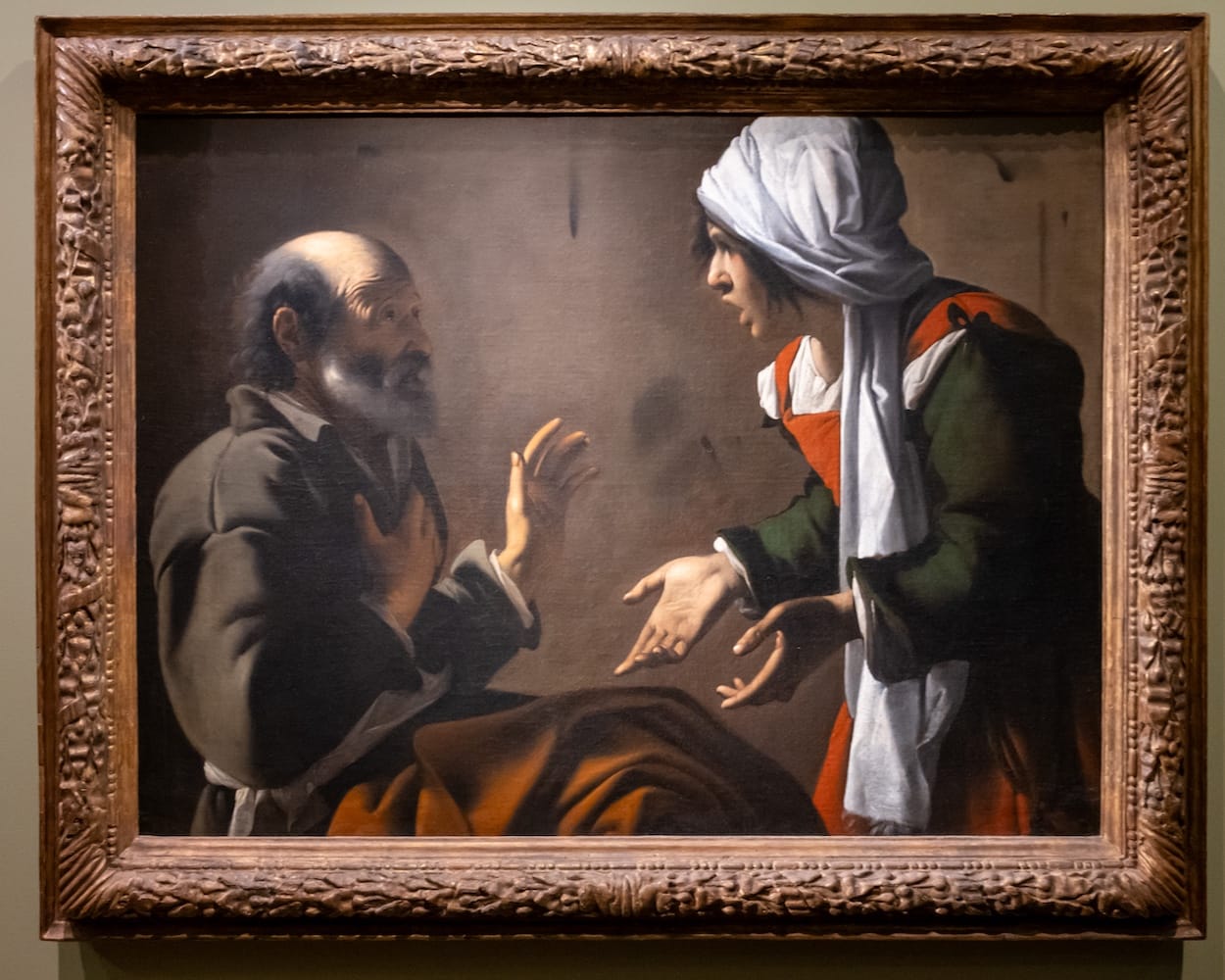
The Musée Jacquemart-André is a wonderful museum with a special atmosphere. Unfortunately, even though the number of visitors is restricted the rooms still feel cramped. To enjoy the works on show you really have to visit early morning on a less popular day and time and not on Friday evening, like I did.
Georges de La Tour is at the Musée Jacquemart-André until 25 January 2026.
Links
Artemisia Gentileschi at the Musée Jacquemart-André.
Masterpieces from the Galleria Borghese at the Musée Jacquemart-André.