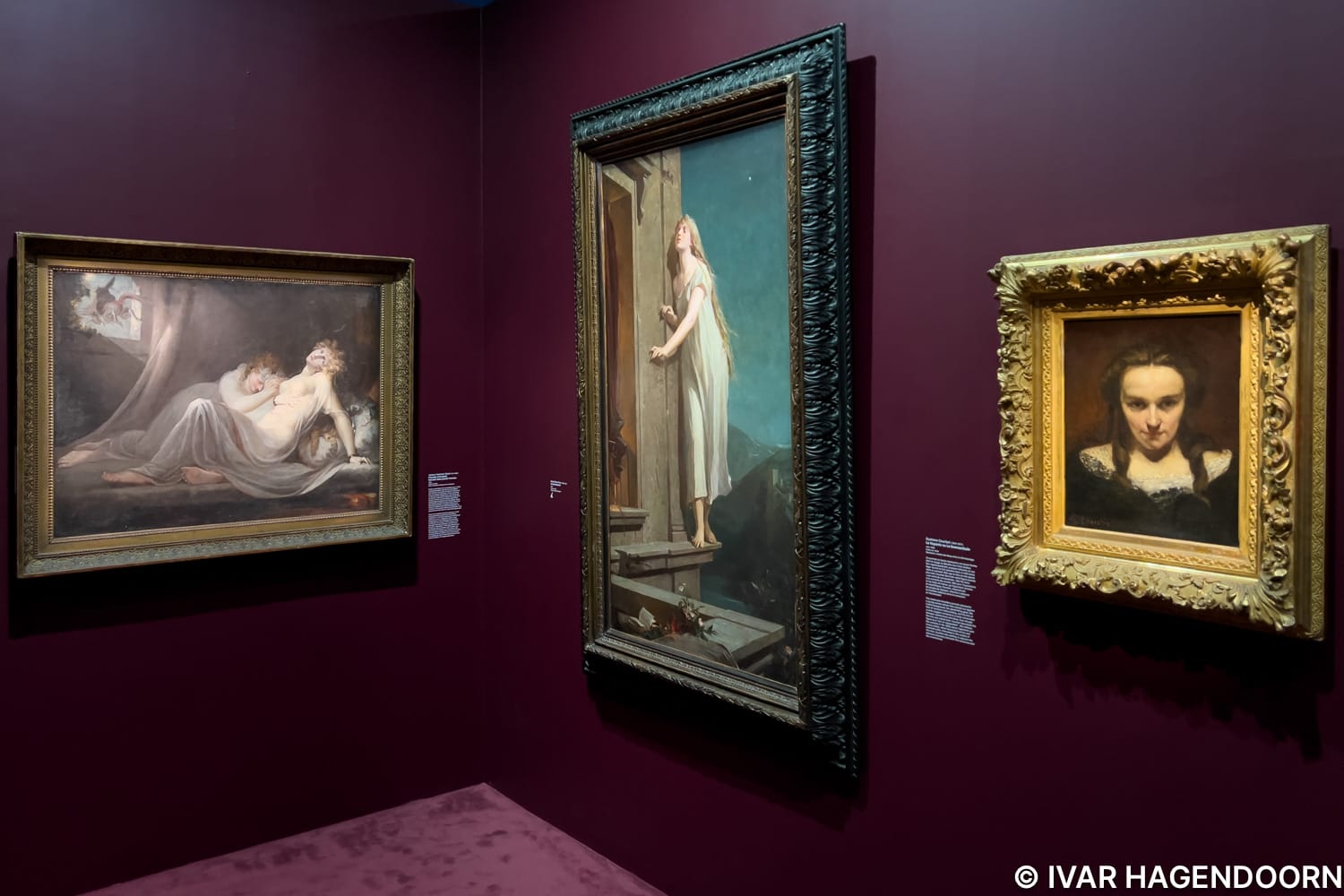
The Musée Marmottan Monet in Paris has organized another fascinating thematic exhibition, this time exploring the rich iconography of sleep and dreams across centuries of art history. Co-curated by neurologist and science historian Laura Bossi alongside collections director Sylvie Carlier, the show assembles 130 works spanning paintings, sculptures, drawings, and scientific documents from institutions including the Musée d'Orsay, the Louvre, and the Reina Sofía Museum in Madrid. The exhibition concentrates primarily on the period between the Enlightenment and the First World War, an era when sleep became the subject of artistic, philosophical, and scientific inquiry.
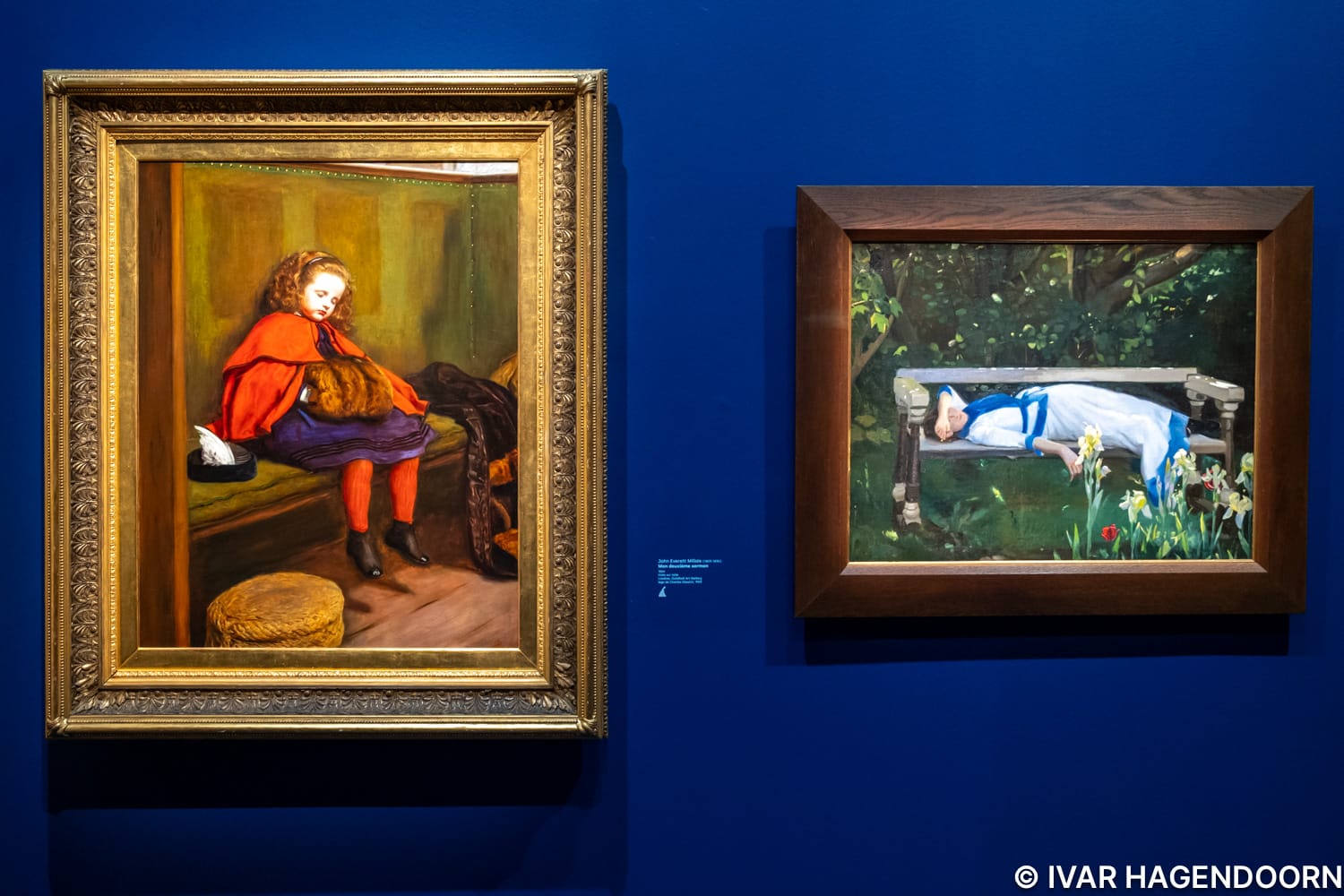
Unfolding across eight thematic sections, the exhibition guides visitors through sleep's multifaceted dimensions—a realm suspended between tranquility and disquiet, knowledge and mystery. The journey commences with serene depictions of repose as blissful escape, exemplified by Michael Ancher's "La Sieste", portraying a young woman taking a nap on a garden bench and John Everett Millais’s painting of a young girl dozing off during a sermon, “Mon deuxième sermon” (My Second Sermon) (1864). From there, the narrative delves into deeper symbolic territory where sleep intertwines with dreams, desire, mortality, and anxiety. Arturo Martini's sculpture "La Pisana”, a nude figure captured mid-dream, commands the gallery's center, embodying the sensual and serene dimensions of unconsciousness.
One of the joys of exhibitions like this is discovering works by artists which would otherwise remain hidden inside museum archives, such as "Le cauchemar" (1846) by Ditlev Blunck and "Jeune fille endormie" (1878) by Federico Zandomeneghi and seeing works that are rarely shown together, such as Jupiter and Antiope as depicted by Rembrandt, Ingres and Picasso.
The exhibition illuminates how the scientific understanding of dreams evolved during the nineteenth century through the pioneering work of Alfred Maury and the Marquis d'Hervey de Saint Denys, whose work influenced Freud’s The Interpretation of Dreams, originally published in 1899. These practitioners reframed dreams as revelations of the past rather than prophecies of the future—windows into the buried depths of the unconsciousness.
The exhibition spans life's entirety, from the peaceful sleep of newborns to the haunting specter of mortality. Contemporary works punctuate the historical narrative, including Paula Rego's illustration for Jean Rhys's "Wide Sargasso Sea”, which hangs in the introductory room, and Kiki Smith's "Sleep Walker" (2001) bearing the inscription: "she thought if she just could keep her mind moving through her stillness she could awaken."
The show culminates in a recreation of the bedroom itself—that intimate sanctuary of birth, love, illness, and death. Delacroix's graphite-and-watercolor study of an unmade bed, also deployed as the catalogue cover, evokes both elegant drapery and a certain troubling restlessness. Throughout, the exhibition argues that our unwaking lives possess value equal to our waking ones, being morally as well as biologically essential. I am reminded here of Tombe de sommeil, by the French philosopher Jean-Luc Nancy, who thought of sleep as a resource for beginnings, for new beginnings; a vigil for a tomorrow to which we ask nothing more than its arrival.
We spend nearly a third of our existence asleep, yet this fundamental human experience has long been overlooked; "L'Empire du Sommeil" finally grants it the spotlight it deserves.
L'Empire du Sommeil is at the Musée Marmottan Monet in Paris until 1 March 2026.