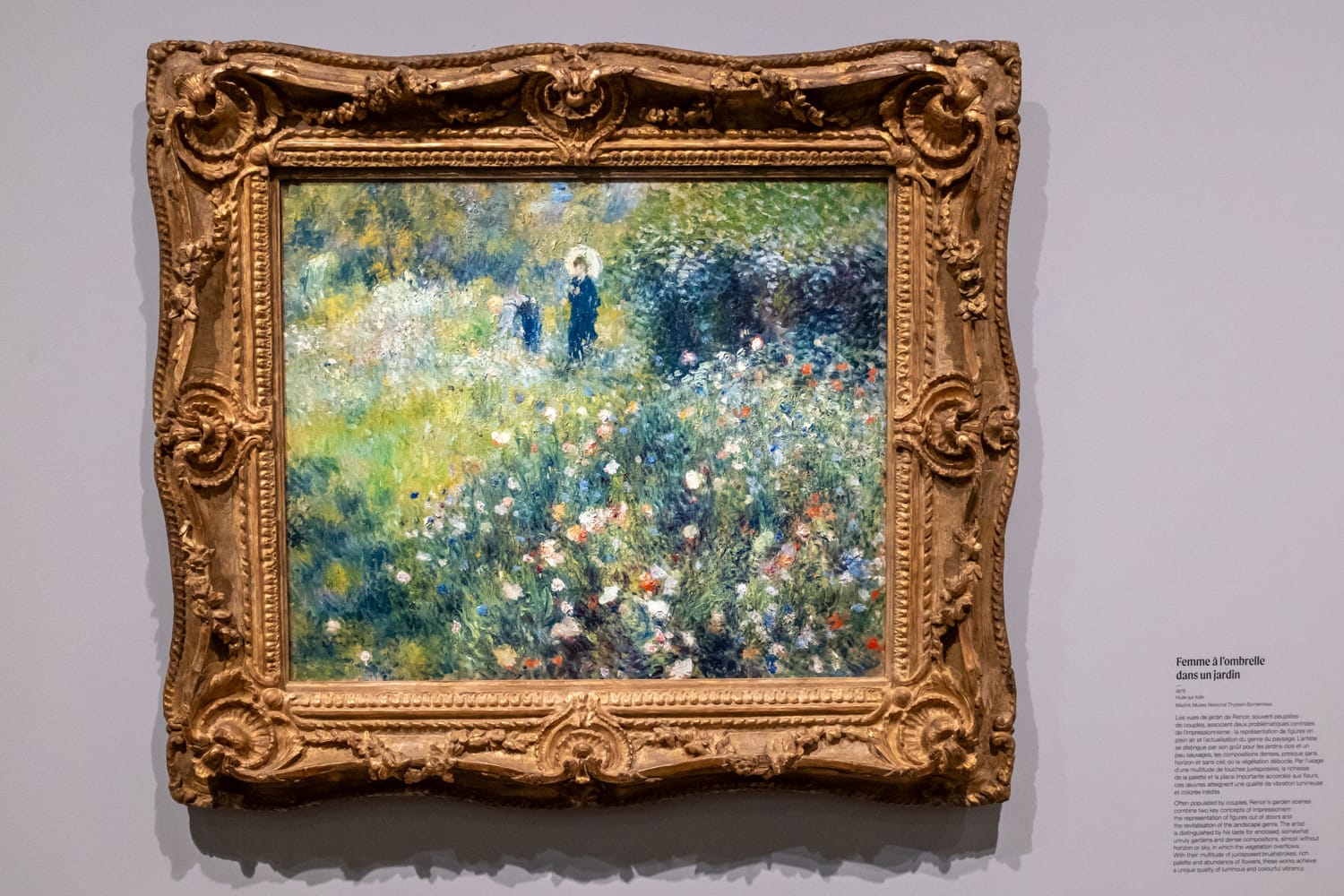
It took me years to warm to the work of Renoir — I always found his work too gentle, too lovely — but now that is precisely the quality that I appreciate. What is not to like about a colorful painting of a field of flowers in full bloom?
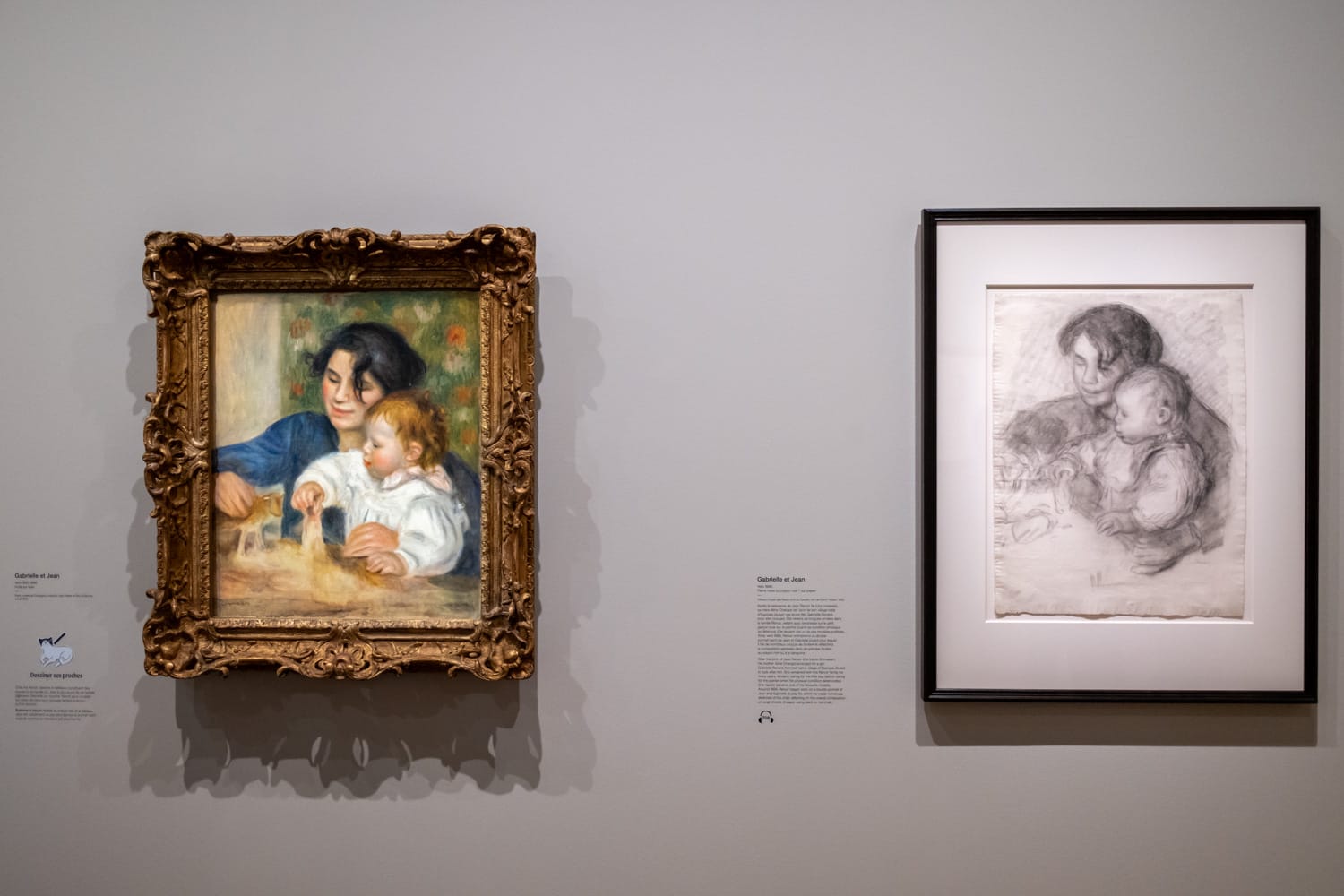
The Musée d'Orsay, staging its first-ever Renoir retrospective, has organized what amounts to a revisionist exhibition of the painter. Two complementary displays — roughly sixty canvases from his first two decades and a hundred drawings spanning his entire career — recast Pierre-Auguste Renoir (1841-1919) as the great chronicler of modern life and leisure. His humble origins matter here: the son of a tailor and a seamstress, apprenticed at thirteen to paint porcelain, he trained at the École des Arts Décoratifs before entering the École des Beaux-Arts in 1861.
That biography inflects his subjects in revealing ways. Where Degas scrutinized laboring bodies, from laundresses to weary café dwellers, Renoir turned toward Paris’s many parks and its open-air cafés where Parisians went to eat, drink and dance whenever the weather allowed. The sun always shines in his work and his subjects appear at ease. Does this make him frivolous? Hardly. As Paul Perrin, co-curator of the exhibition, explains, Renoir stands firmly in the tradition of Courbet, Caillebotte and Manet, the great 19th century painters of modern life, but his is a joyful, more outgoing and exuberant modernity: couples, gatherings, meals, outings and dances. Love, broadly construed — romance, friendship, the very fabric of sociability — becomes his enduring subject. Renoir's painting, in this reading, asks how a society coheres through shared pleasure.
Renoir was well aware of the prejudice he courted: a joyful painting, he admitted, struggles to be taken as a great one. Still, he insisted, the world produces enough sorrow without an artist manufacturing more.
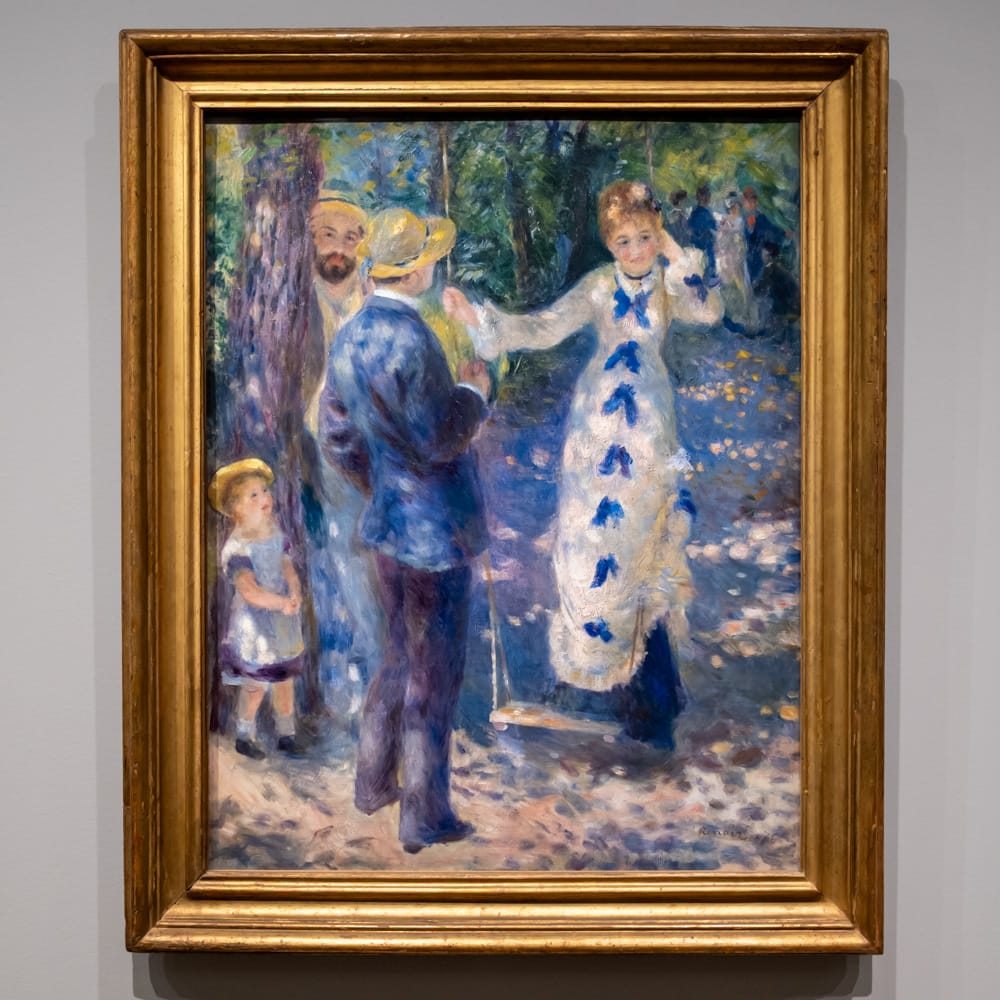
Renoir and Love at the Musée d'Orsay. What's not to like?
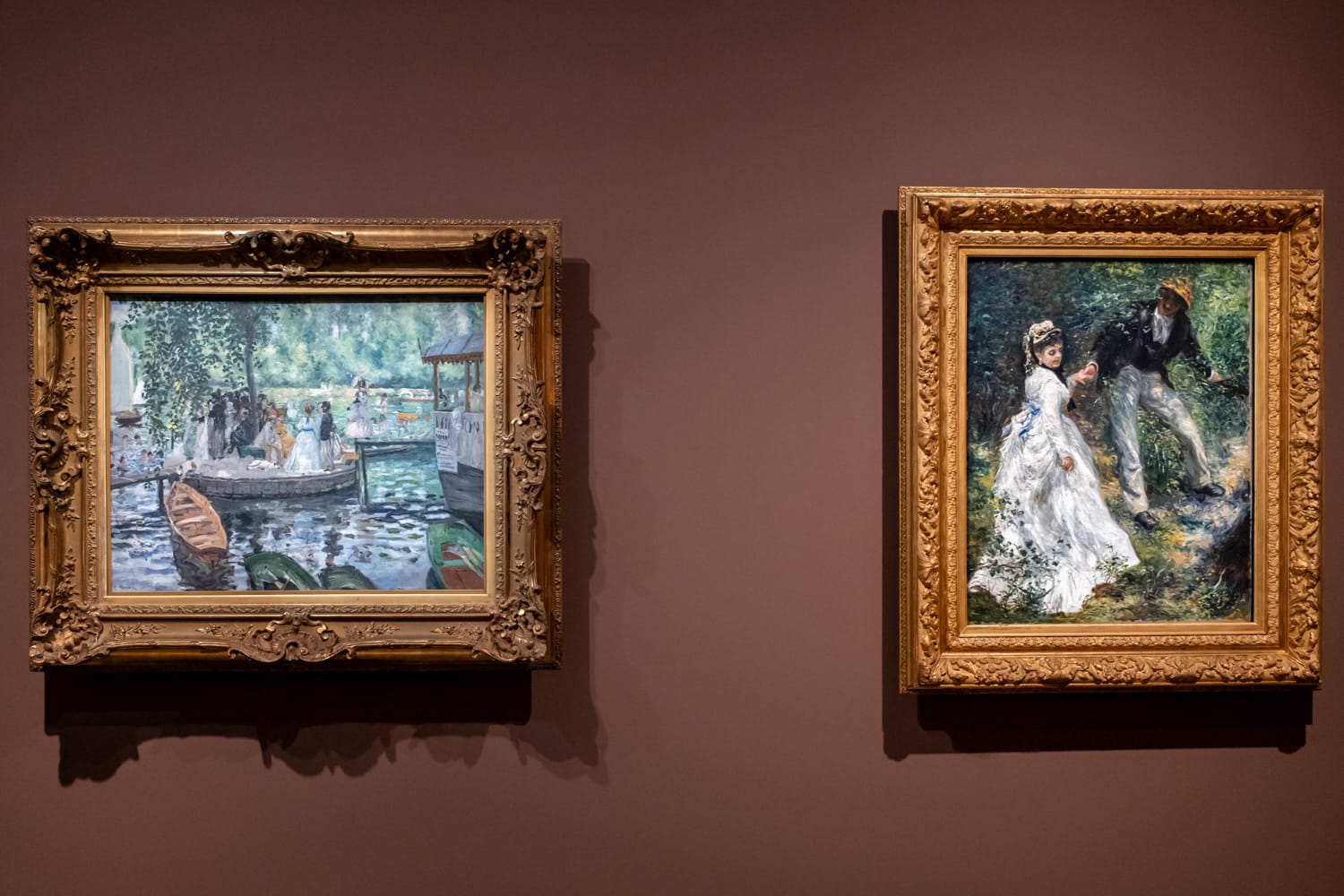
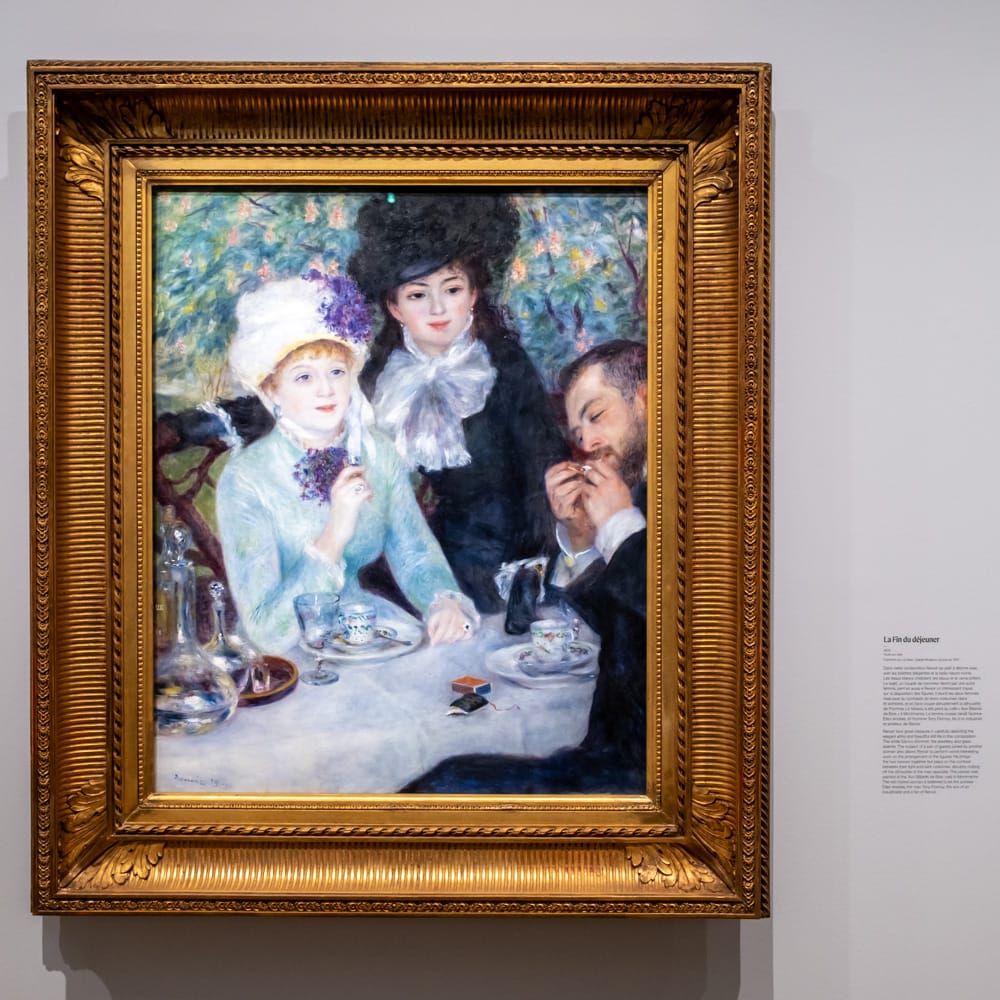
Like the Henri Rousseau exhibition currently at the Musée de l’Orangerie, the organizers of the exhibition were able to secure some exceptional loans, including the monumental “Le Déjeuner des canotiers” (1881) from the Phillips Collection in Washington D.C., “La Promenade” (1870) from the J. Paul Getty Museum in Los Angeles, the wonderful “La Grenouillère” (1869) from Stockholm's Nationalmuseum, “La Fin du dejeuner” (1879) from the Städel Museum in Frankfurt and “La danse à Bougival” (1883) from the Museum of Fine Arts in Boston, which is hung alongside the Musée d’Orsay’s own “Danse à la campagne” (1883) and “Danse dans la Ville” (1883).
This is quite possibly the largest Renoir exhibition of the decade and you may have to wait ten or fifteen years for the next major retrospective.
Renoir et l'amour. La modernité heureuse (Renoir and Love. A Joyful Modernity) is at the Musée d’Orsay in Paris until 19 July 2026. The exhibition will travel on to the National Gallery in London, where it will be on view from 3 October 2026 until 31 January 2027 and from there to the Museum of Fine Arts in Boston.
Related Posts
Paris 1874. Inventer l'Impressionisme at the Musée d'Orsay.
Manet/Degas at the Musée d'Orsay.
John Sargent Singer at the Musée d'Orsay.
L'art est dans la rue at the Musée d'Orsay.