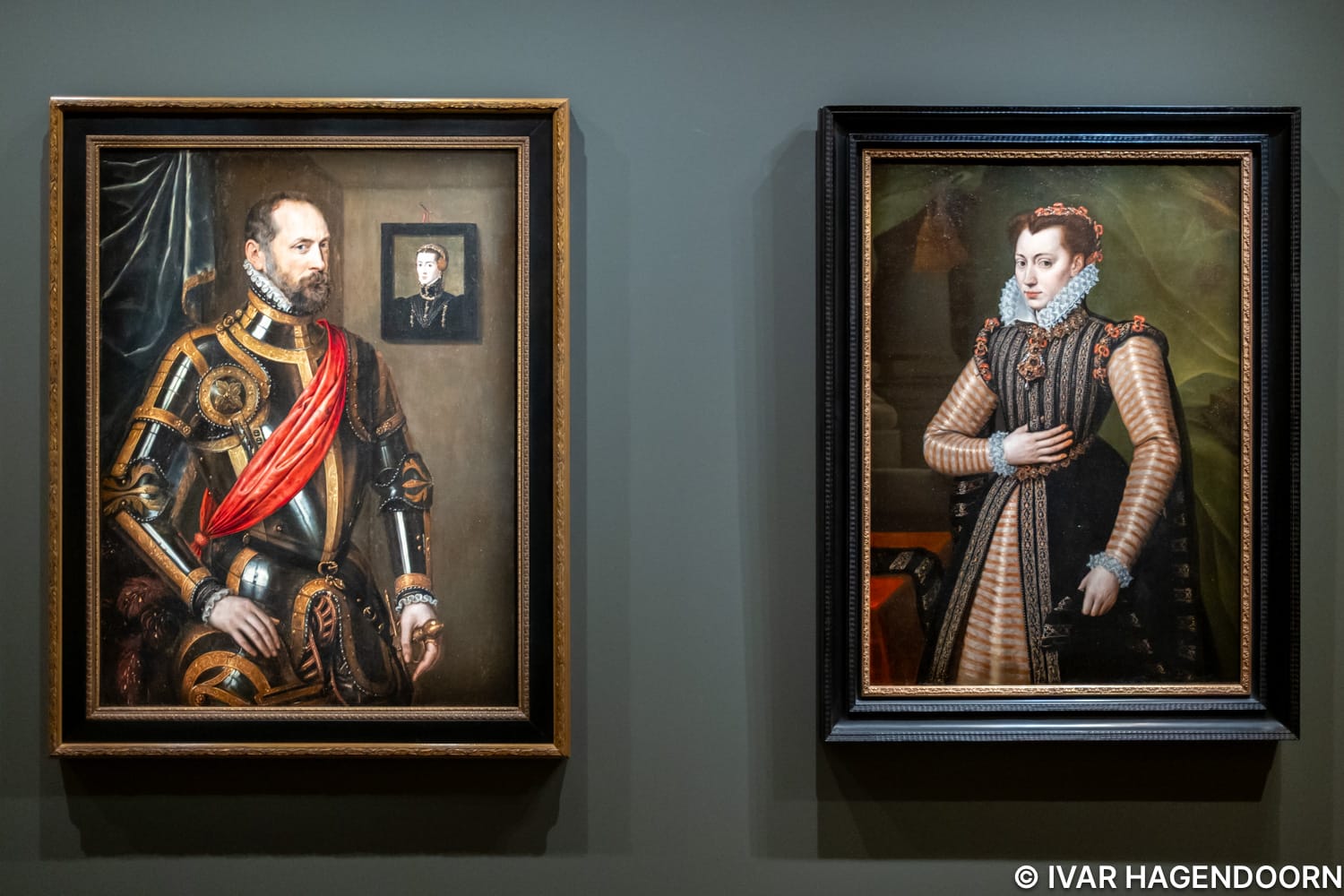
The Musée Jacquemart-André in Paris has organized an exhibition, "Baroque Splendors. From El Greco to Velázquez", with some forty paintings on loan from the Hispanic Society of America in New York. The Society's headquarters, a museum and research library devoted to Spanish, Portuguese, and Latin American art, is currently undergoing renovations and so its treasures, including canvases by Velázquez, El Greco, and Zurbarán among others, could travel abroad. Upon reading about the exhibition I added the Hispanic Society of America to my list for my next trip to New York. But since I don’t know when that will be, and because there is no harm in seeing the same paintings twice, I paid another visit to the Musée Jacquemart-André. It was surprisingly quiet when I visited, or at least much more quiet than during my previous visits. Of course, I was happy that I had the exhibition almost to myself, but it’s also a shame, because there are some real gems on show (and the air-conditioned rooms provided some reprieve from the oppressive heat outside).
The Hispanic Society Museum & Library was founded by Archer Milton Huntington (1870–1955), one of America’s greatest philanthropists, who nurtured an abiding passion for Hispanic civilization. He learned Spanish and Arabic, journeyed repeatedly to Spain, and established the Society in 1904. His fortune, however, traced back to his father-in-law Collis Potter Huntington, a Connecticut farm boy turned railroad magnate who amassed staggering wealth. Over the course of fifty years, Huntington dedicated his life and family resources to forming one of the world’s great collections of Hispanic art and literature. He didn’t want to compete with Spanish and Latin American institutions, so he only acquired works that were already on the market.
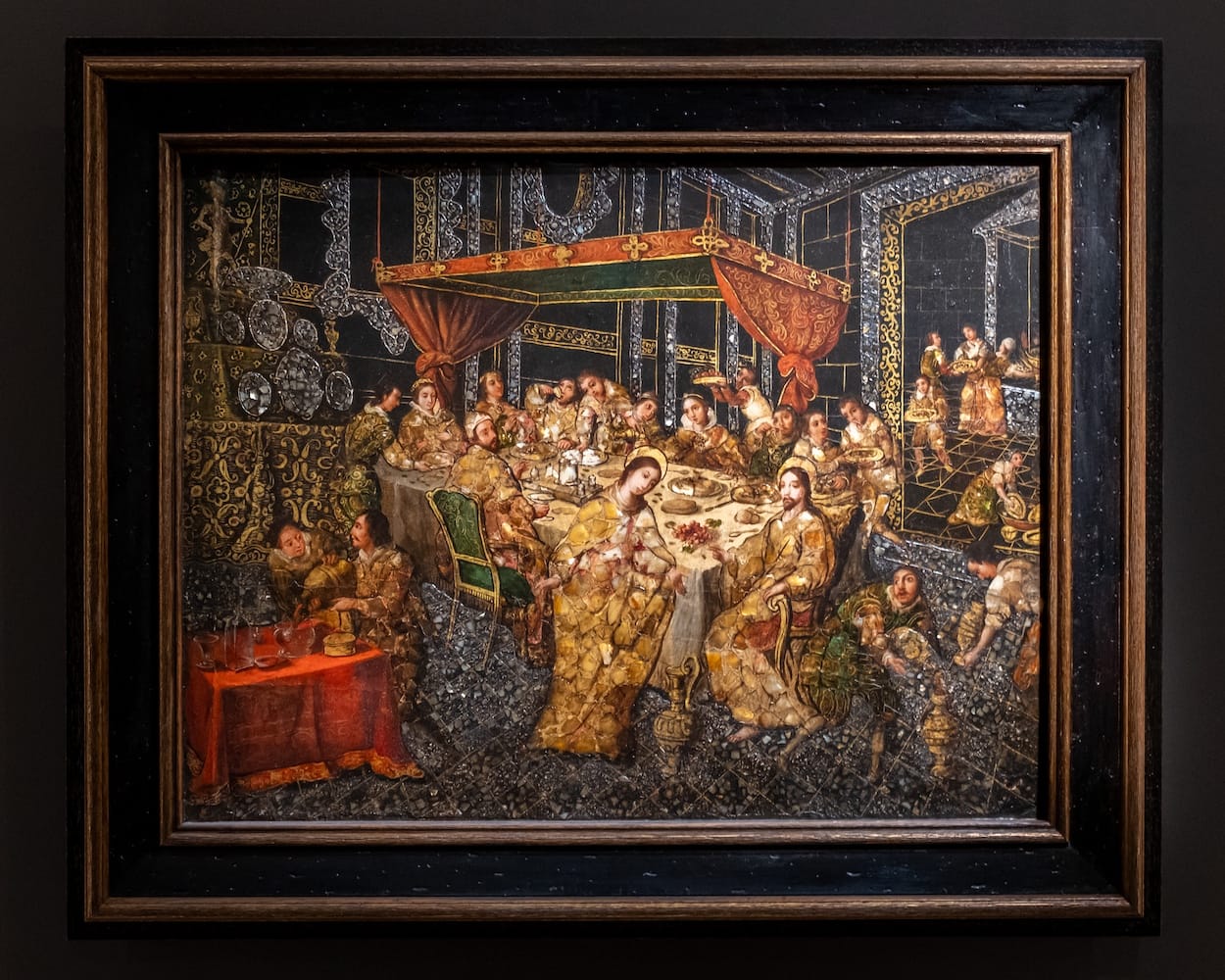
The exhibition centers on the seventeenth century, a period of artistic, literary, and intellectual flourishing in Spain. It opens with a room with some wonderful stately portraits by Diego Velázquez, Antonio Moro and Jooris van der Straeten, a Flemish painter known as Jorge de la Rúa in Spain. Next is a room with works by Luis de Morales and El Greco. The latter's austere "Head of Saint Francis", glimpsed in tight profile within an oval frame, proves the most arresting of the lot, although it is unknown whether it is whole or merely a fragment. The real surprise comes in the next room, which brings together three so called “enconchados”: oil paintings on wood inlaid with shimmering mother-of-pearl, by Mexican and Peruvian painters. Nicolás de Correa's “Wedding Feast at Cana” (1696) is a dazzling painting and a wonderful example of cross-cultural synthesis.
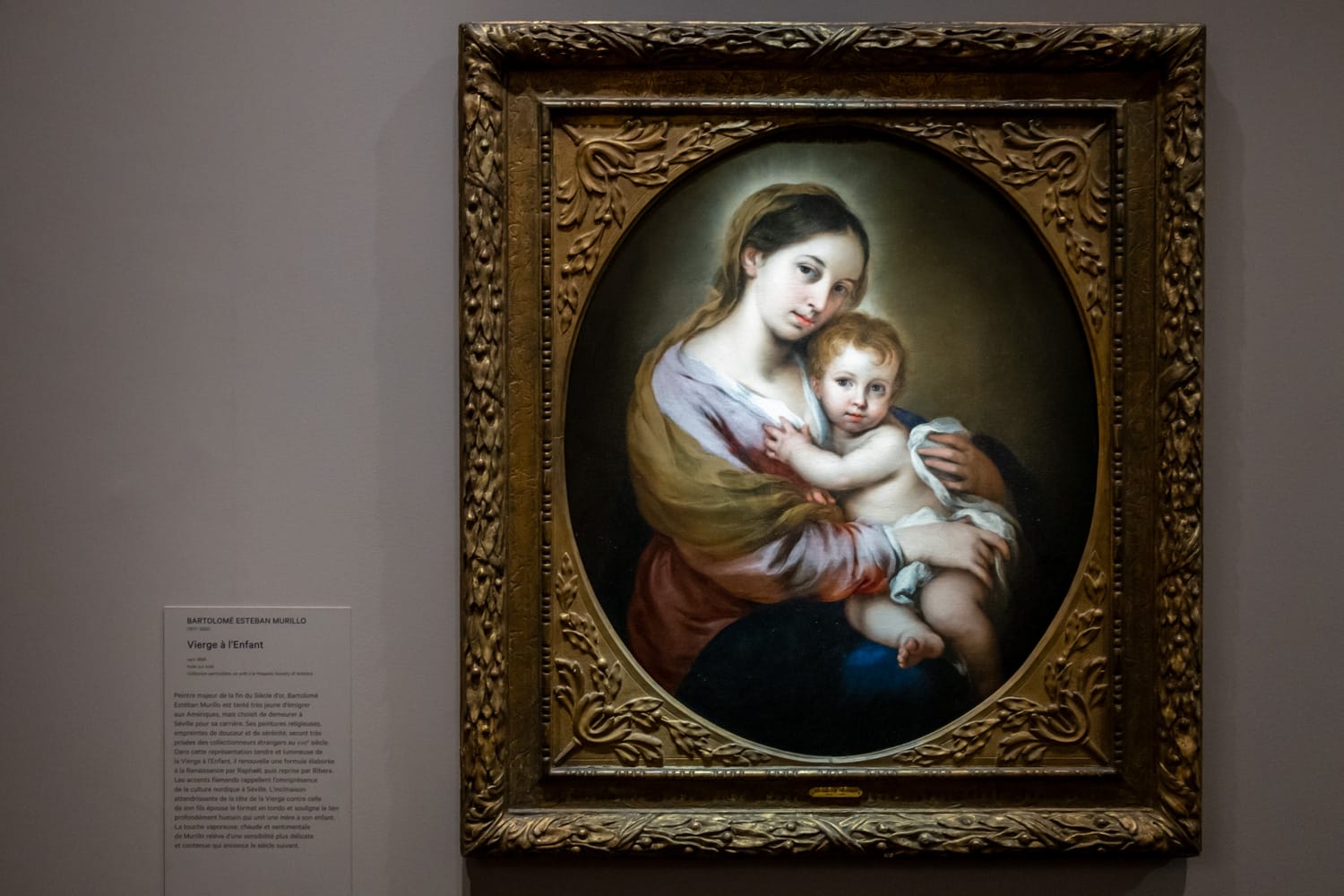
The final two rooms include a beautiful, enigmatic portrait of a young girl by Velázquez, a copy of his “Buffon with a Dog” by John Singer-Sargent, two glorious canvases by Zurbarán and an intimate virgin with child by Bartolomé Estéban Murillo, among others.
The forty or so works on show at the Musée Jacquemart-André are but a modest sampling, drawn from a sprawling collection of more than eighteen thousand pieces. I am somewhat ashamed to admit that I had never heard of the Hispanic Society of America and was unaware of its world-renowned art collection, otherwise I would have visited it on one of my trips to New York. It is now high on my list for my next trip and when the renovation is completed.
Splendeurs du baroque. De Greco à Velazquez is at the Musée Jacquemart-André in Paris until 2 August 2026.
Related Posts
Artemisia Gentileschi at the Musée Jacquemart-André.
Masterpieces from the Galleria Borghese at the Musée Jacquemart-André.
Georges de la Tour at the Musée Jacquemart-André.