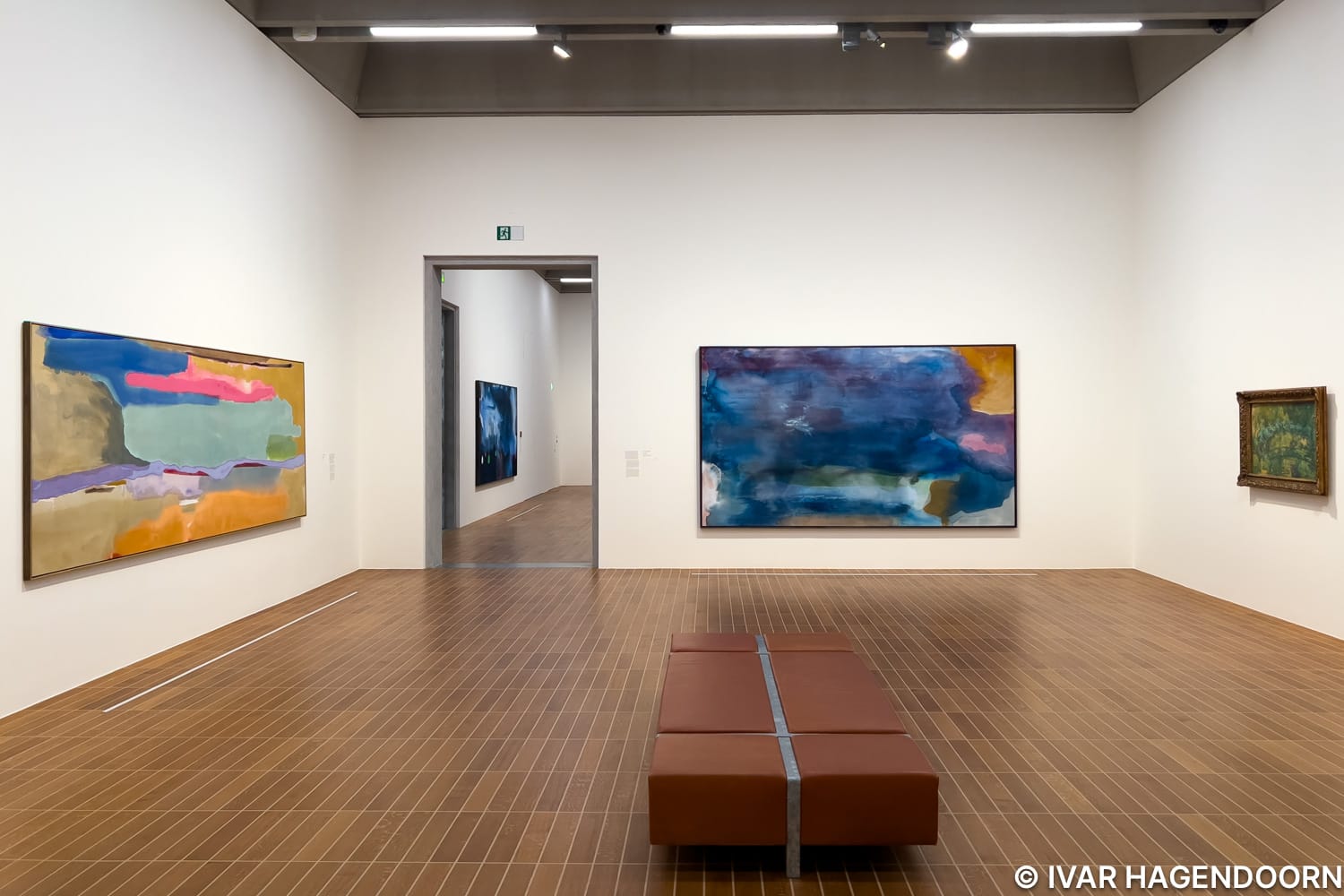
I didn’t have time to visit the Helen Frankenthaler retrospective at the Palazzo Strozzi when I was in Florence, in October 2024. I had scheduled one day to visit the Uffizi Gallery and the afternoon on the day of my arrival and the morning on the day of my departure for strolling around Florence and visiting some of the churches that I hadn’t had time for when I first visited Florence. With only a couple of hours to spare I had to choose between the Helen Frankenthaler retrospective and an exhibition about utopias in architecture and urbanism at the Villa Bardini. This time around I once again faced a difficult decision. I really wanted to see the Emil Ferris exhibition at the Cartoonmuseum Basel and "Testimonies to the Near Future", the Cao Fei retrospective at the Kunstmuseum Basel | Gegenwart. But with only four hours before my train would depart I had to choose between the Helen Frankenthaler exhibition and “The First Homosexuals. The Birth of New Identities 1869–1939” at the Kunstmuseum Basel. Having missed Helen Frankenthaler in Florence I opted for the former, despite the rave reviews for the First Homosexuals exhibition.
Compared with her compatriots Jackson Pollock, Robert Rauschenberg and Jasper Johns, not to mention Andy Warhol, Helen Frankenthaler is relatively unknown, especially in Europe. And yet she too revolutionized painting. In 1952, the then twenty-three-year-old Helen Frankenthaler unrolled a broad expanse of canvas, thinned her oil paint with turpentine until it ran like ink, and worked it from every side: pouring straight from the bucket, coaxing the pigment outward with sponges, brushes, and other tools that were not part of the standard painter’s kit. The paint sank into the canvas, fusing with the weave into a single substance, a method that came to be called soak stain painting. Frankenthaler titled the result "Mountains and Sea". Six months on, Kenneth Noland and Morris Louis saw the canvas in her studio and grasped at once that a new chapter had opened. They took up the technique and were duly hailed as the inventors of color field painting. But the invention was Frankenthaler’s, and she continued experimenting with it until her death in 2011.
Raised in an upper-middle-class household in New York that nurtured her artistic gift at an early age, Helen Frankenthaler attended the finest art schools and, at a graduation exhibition, met the much older critic Clement Greenberg, who became her partner and her passage into the New York art world. Friendship with Jackson Pollock and Lee Krasner soon followed. While both she and Pollock painted on the floor Frankenthaler’s approach to painting was less methodical and more experimental, she sometimes even flipped the canvas and continued on its back.
Within years of her first gallery shows Helen Frankenthaler was recognized as one of the central figures of postwar American art and one can only admire her for holding her ground in the male-dominated New York art scene. It is therefore all the more striking that her work is relatively unknown, forgotten perhaps, in Europe. At least, I don’t recall seeing her work in any of the museums that I regularly visit, but that may be my fault.
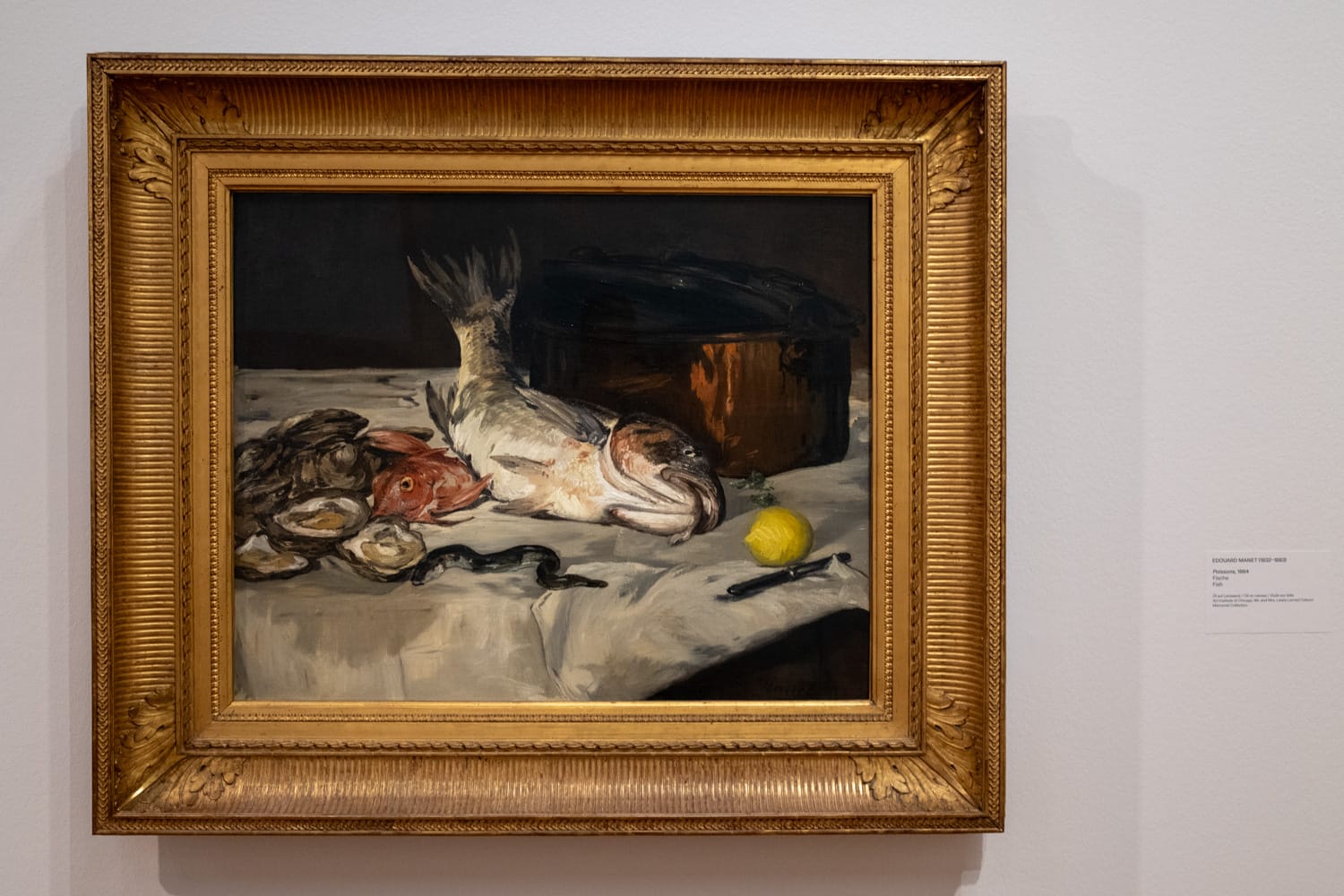
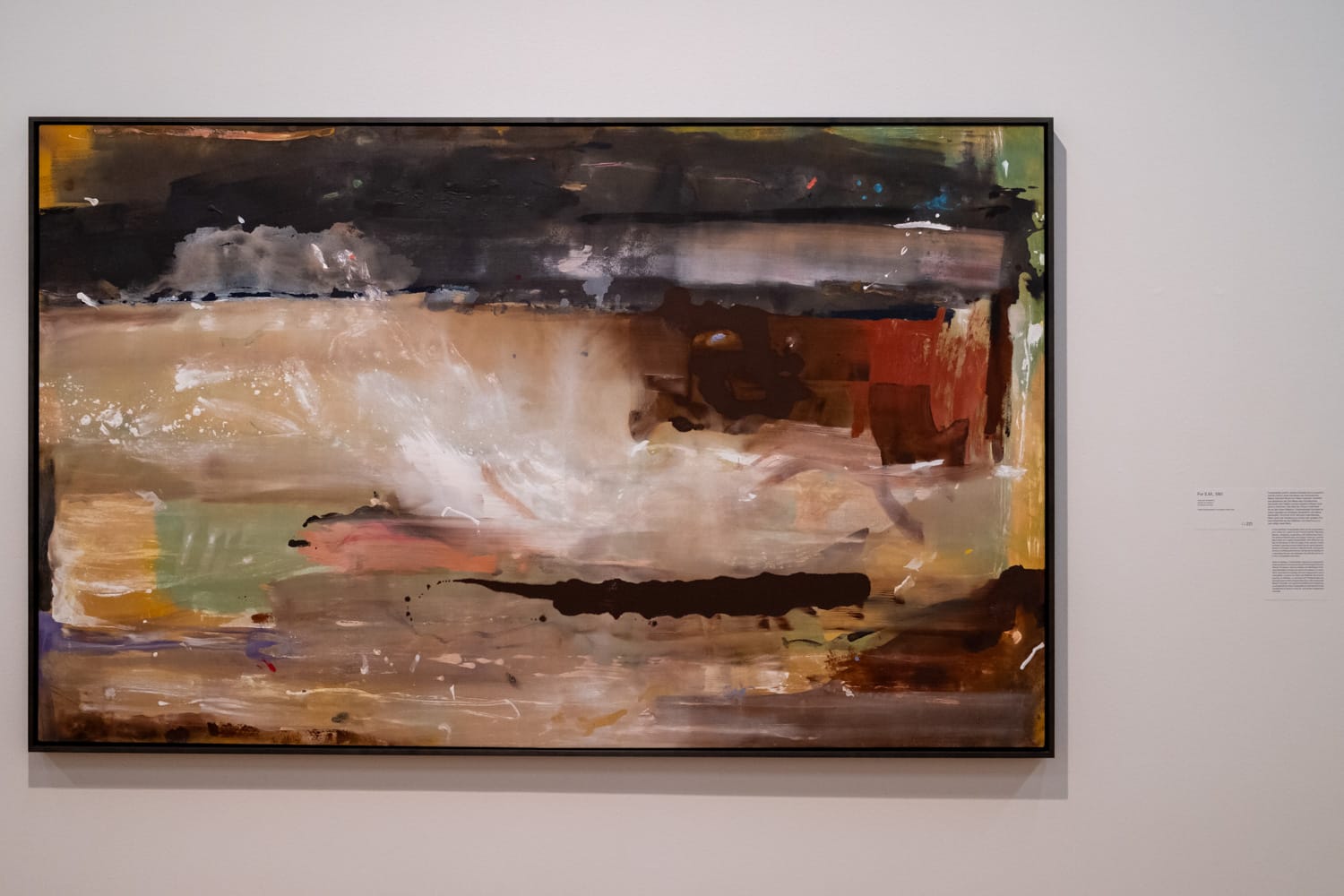
Édouard Manet (left) and Helen Frankenthaler (right)
Having missed the retrospective at the Palazzo Strozzi in 2024, I was delighted to now see a generous selection of her work at the Kunstmuseum Basel. The exhibition is an explosion of colour and a feast for the eyes. The exhibition is organized chronologically. Inevitably in a career as long as Frankenthaler’s there are highs and lows. Frankenthaler painted her best works in the 1950s, 60s and 70s. In the 1980s she began creating “history” paintings, inspired by works by artists such as Titian, Courbet, Manet and Mondrian. The Kunstmuseum Basel has gone out of its way to pair these paintings with the works that served as inspiration. However, in most cases the original is by far the more interesting painting, a notable exception is Frankenthaler's rendition of a still life by Manet (pictured above).
Towards the end of her life Frankenthaler redeemed herself with some large-scale stand-alone canvases, such as the magnificent “Star Gazing” (1989). One of my favourite paintings in the show, “Salome” (1981), is actually not included in the exhibition galleries, but is installed at the entrance to the Kunstmuseum Basel’s collection of American art.
The exhibition is accompanied by a richly illustrated catalogue available in both German and English.
Helen Frankenthaler is at the Kunstmuseum Basel until 23 August 2026.