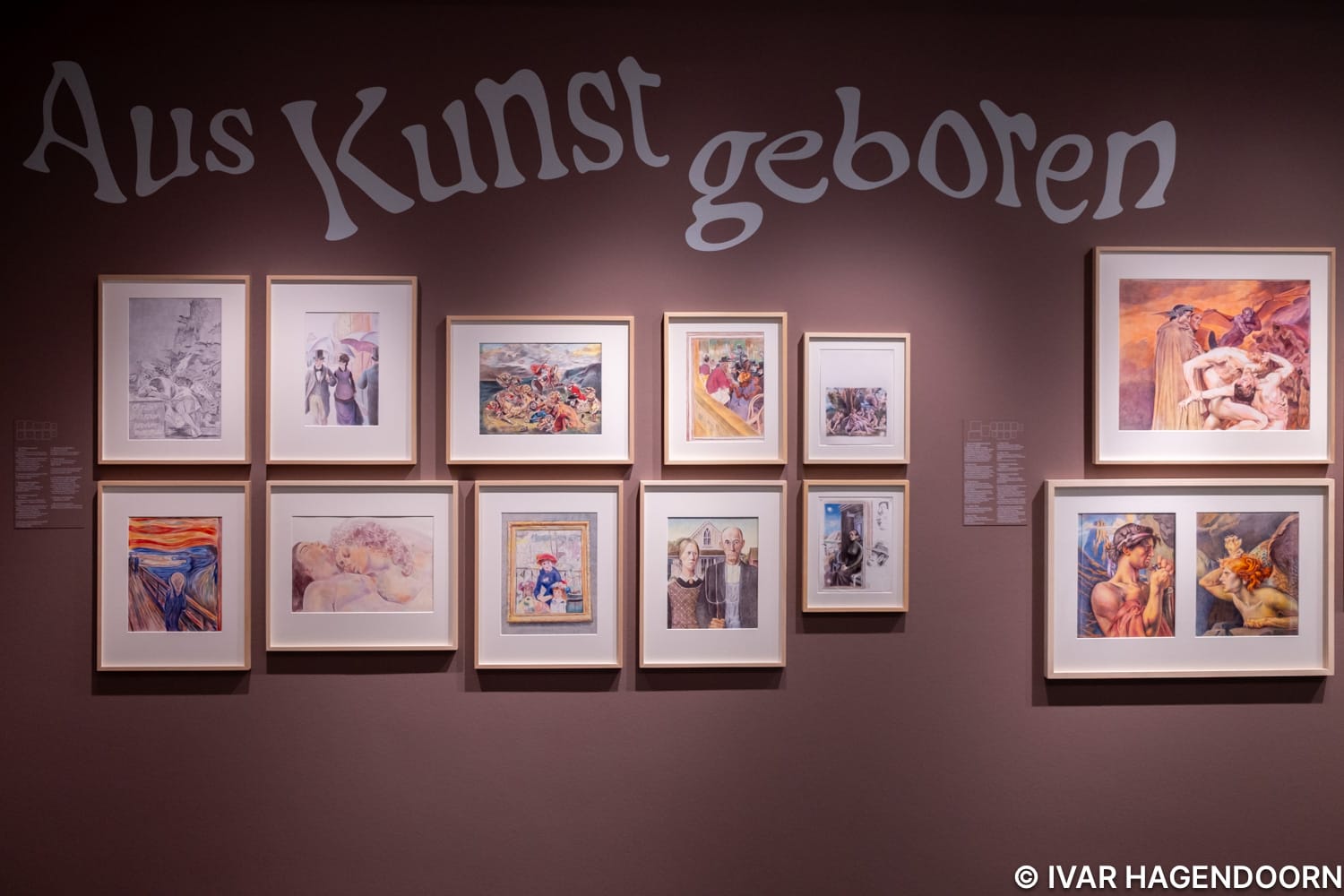
“Between Selves”, the Emil Ferris exhibition at the Cartoonmuseum Basel, is an absolute joy from start to finish, bringing together scores of original drawings (a number of them unpublished), preparatory sketches and objects drawn from the artist's personal archive.
Emil Ferris (b. 1962) rose to fame with her debut graphic novel “My Favorite Thing Is Monsters” (2017), which went on to win multiple awards, including the Fauve D'Or at the 2019 Angoulême International Comics Festival, and is generally considered one of the best comics of the 21st century.
The year is 1968. The book follows 10-year-old Karen Reyes, who lives with her mother and her brother Deeze in a townhouse in Chicago, as she investigates the death of her beautiful and mysterious neighbour Anka Silverberg. Karen is fascinated by art and comic book monsters and imagines herself as one. As readers we only get to see Karen as she sees herself: a werewolf dressed as a private detective in a raincoat. As the story unfolds we learn that Anka Silverberg was a Holocaust survivor with a profoundly traumatic past. We also learn that Karen’s brother Deeze is a shadowy character with a weakness for women, which sometimes gets him into trouble, who deeply loves his sister and teaches her how to draw. He frequently takes her to the Art Institute of Chicago where Karen copies some of the artworks in her notebook, which are included in the novel. Towards the end of the novel Karen’s mother dies, leaving her in the care of her brother Deeze.
Volume 2 of “My Favorite Thing Is Monsters” (2024) further explores Karen’s coming-of-age as she discovers her queer identity and continues her investigation into the death of Anka Silverberg and her life in Nazi Germany. It ends with a cliffhanger, which made me look forward to Volume 3.
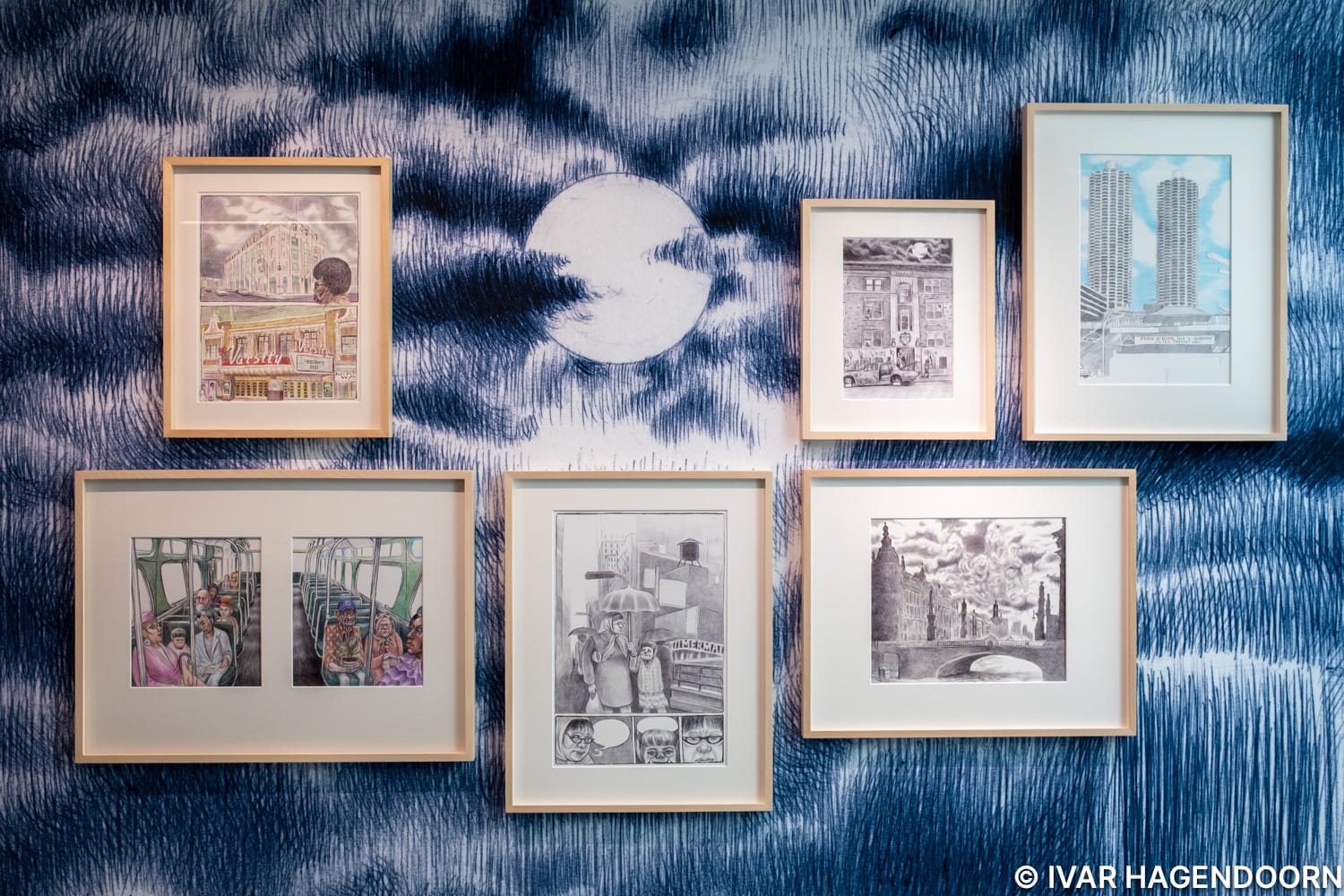
The two volumes of “My Favorite Thing Is Monsters”, which together comprise close to 800 pages, take the form of a gifted child's diary, drawn entirely in lined spiral notebooks with a Bic ballpoint. Some pages are in black-and-white, others are in color.
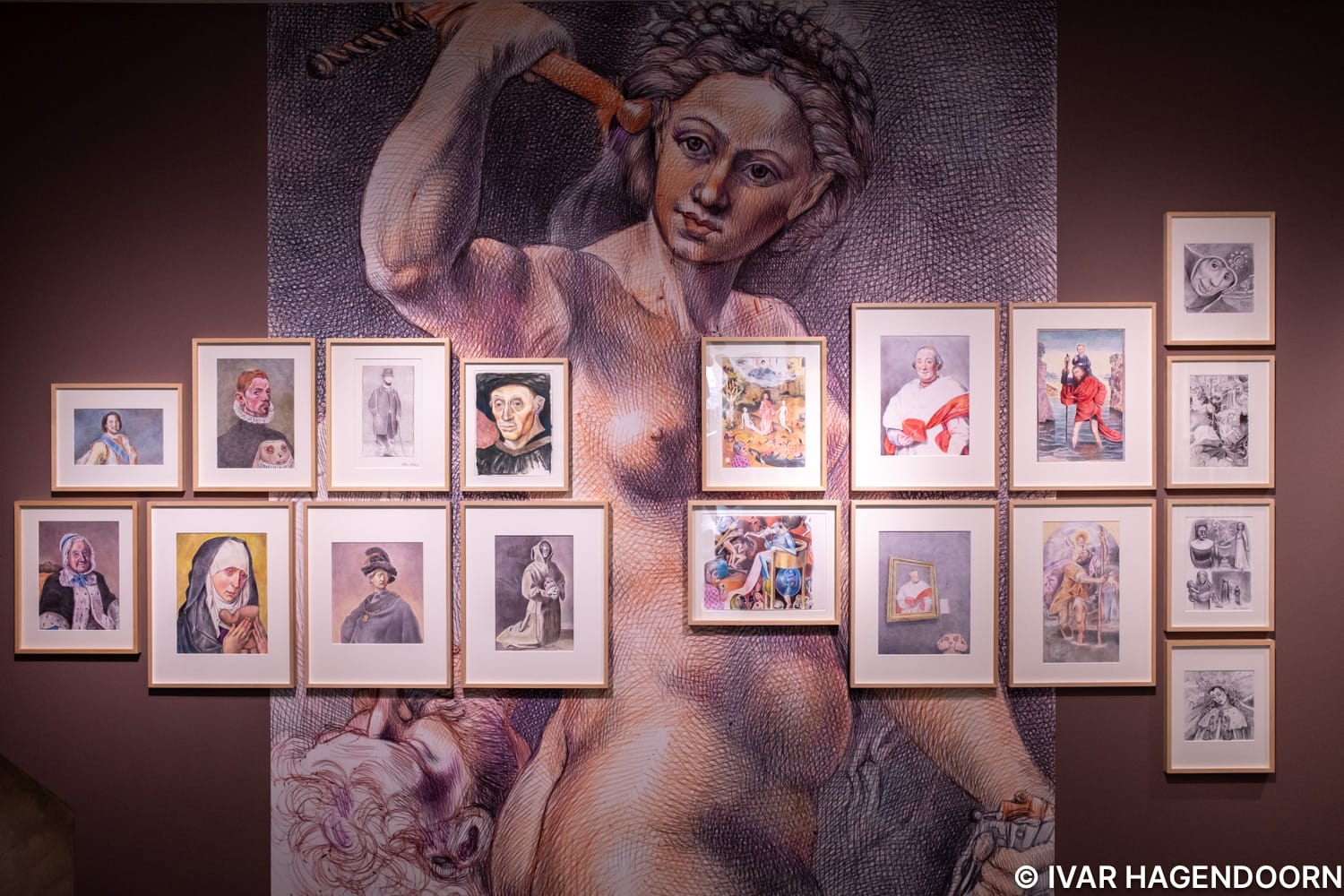
What makes “My Favorite Thing Is Monsters” unique are its frequent references to art history. The book doubles as a tour of Ferris's favorite artworks, invoking the Italian Renaissance, borrowing from the Spanish and Flemish schools, and sounding the depths of gothic, expressionist, symbolist, impressionist, surrealist and realist painting. Ferris has an excellent eye for detail and in her reproductions, or rather recreations, she brings out hidden motifs in the original. Above all she delights in the female body, voluptuous and unflinching in its gaze: Judith, Mona, virgin, witch, mother, wife, lesbian, powerful across the whole span of art and literature. It was a tremendous joy to see a generous selection of original drawings, some of which didn’t make it into the book.
As a child, Ferris dreamed of being a monster and traveling through time. Art let her have it both ways. The pages of “My Favorite Thing Is Monsters” gather historical horrors, the inserted story of Anka unfolds amid a Europe seized by Nazism, alongside personal ghosts such as the criminals prowling the streets of 1960s Chicago, and the petty villains of daily life: bullies, racists and homophobes, whom she renders as dog-headed creatures and cockroaches.
“My Favorite Thing Is Monsters” is a visually rich and intellectually dense graphic novel that rewards slow reading. Ferris works without a script and each page and image follows from the next according to Ferris’s own visual logic. The novel is also rich in symbols that invite interpretation: gardens, plants, cellars, attics and of course, monsters.
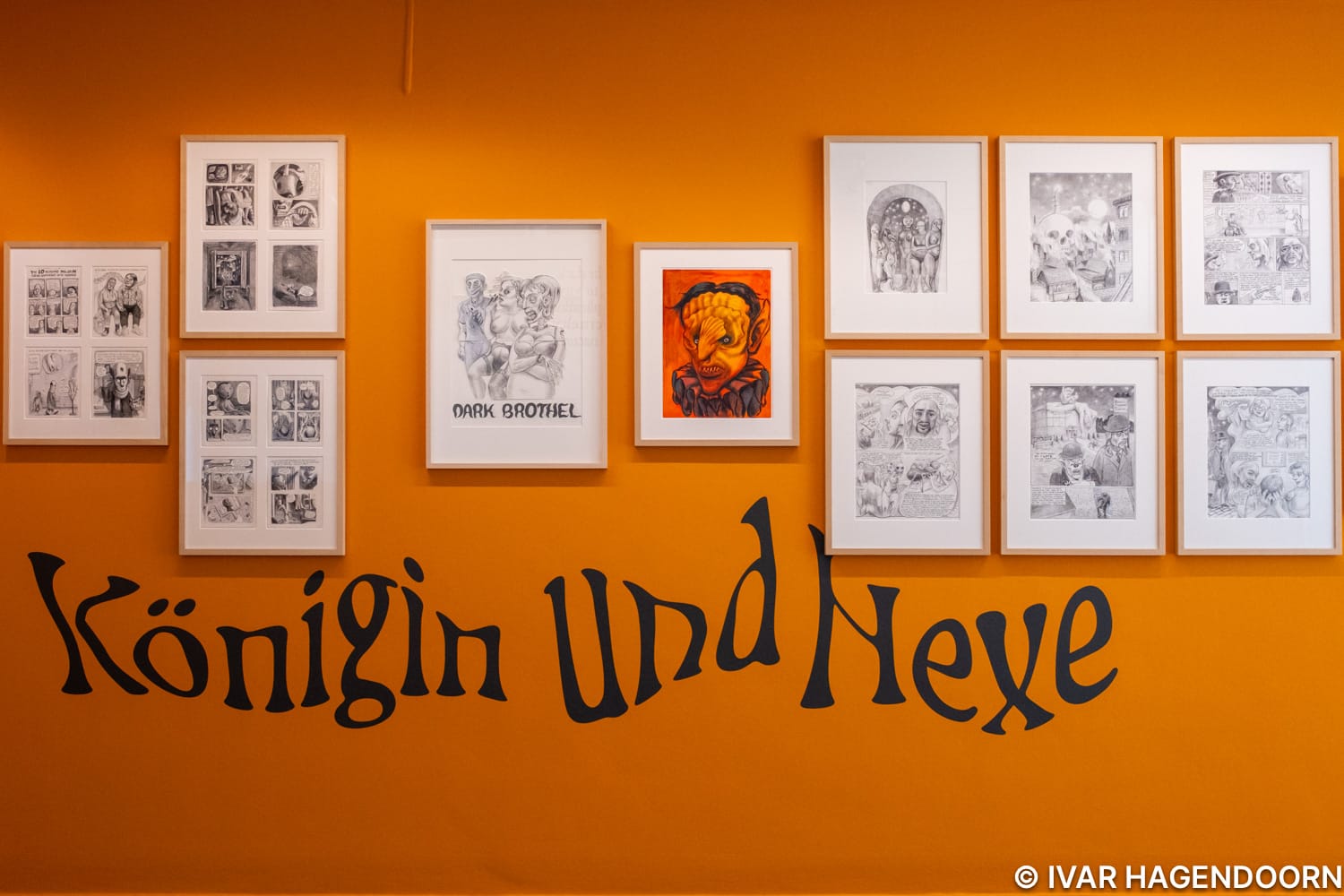
In many cultures and myths the monster is a creature at the margins, defined by its abnormalities. Monsters violate categories, and cultures use them to mark where categories lie. The centaur, the mermaid, the sphinx and the werewolf straddle boundaries considered fundamental: that between human and beast, living and dead, male and female. Whatever doesn’t fit a classification system is treated as dangerous or impure, which is why monsters are often employed to endorse morality: the Minotaur, for example, is the fruit of a forbidden union. On a cosmic scale the monster stands for the chaos that order must overcome: Marduk splits Tiamat to build the sky, Ra fights Apep to secure the sunrise, Thor meets Jörmungandt, Yahweh subdues Leviathan and so on. Because they mark boundaries, monsters also absorb whatever a society wishes to exclude or expel: adversaries are often depicted as subhuman and accused of monstrous acts. Female power draws monstrous form with particular consistency: Medusa, Lamia, Lilith, Baba Yaga, Lady MacBeth, the list goes on and on. The monster therefore tells us what a culture cannot bear to acknowledge about itself, wrapped in a guise that permits the acknowledgement to be disavowed.
Yet the relationship is nearly always ambiguous, the Minotaur seduces and repels, Frankenstein originally had a gentle heart, which is why monsters are not just frightening, some also serve as protectors: the Chinese dragon brings rain and imperial legitimacy, guardian lions flank temple gates, gargoyles repel evil by out-uglying it. Karen Reyes’s imaginary disguise as a werewolf similarly functions as a shield against the hostile outside world. The modern era has extended this ambivalence into outright sympathy: Frankenstein’s creature is more articulate and more wronged than his maker. To identify with the monster rather than the mob is now a recognizable moral position, and one common among artists. In that sense “My Favorite Thing Is Monsters” is a thoroughly modern novel. Ferris’s monster is no more the other than the self (I borrowed this phrase from the exhibition leaflet).
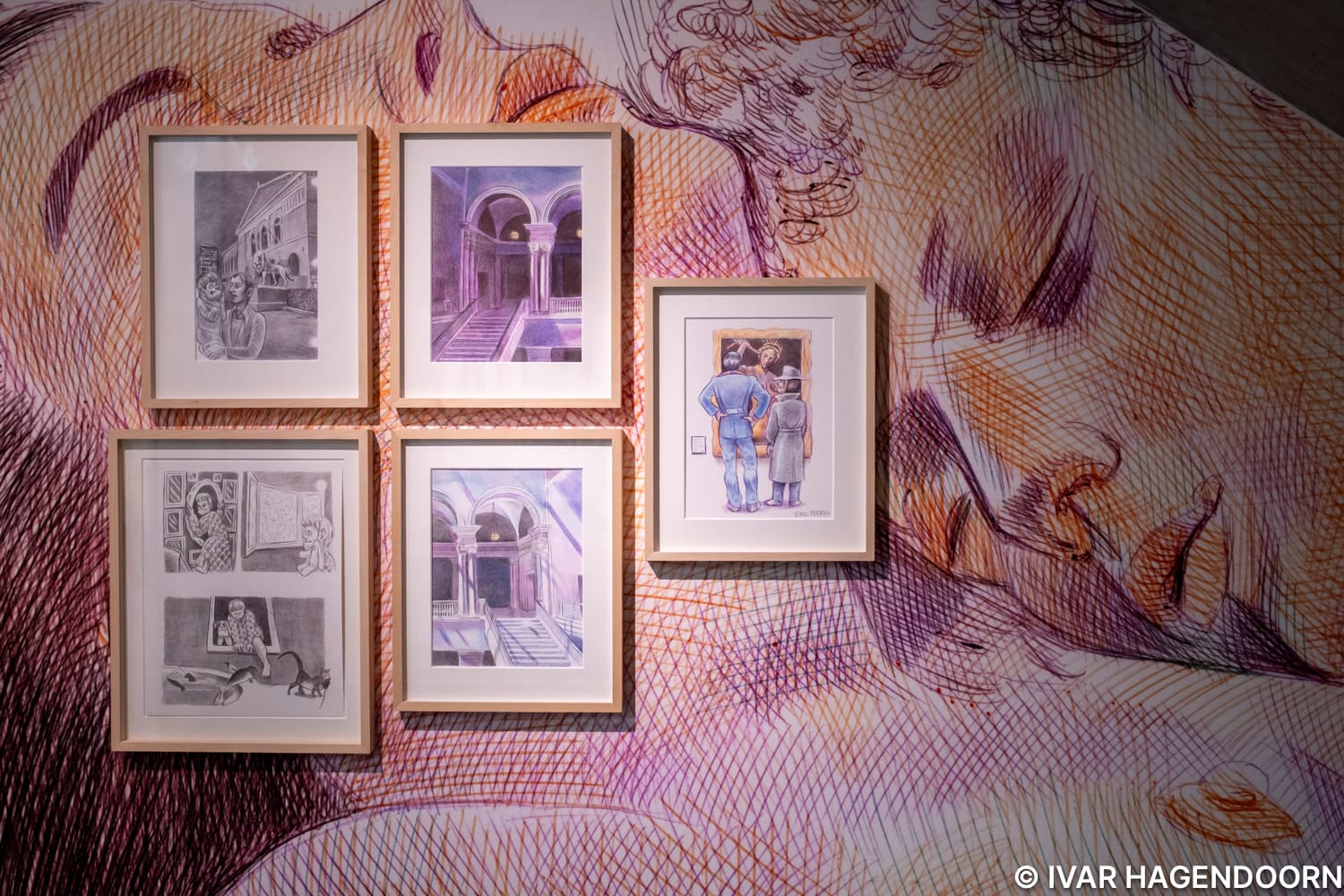
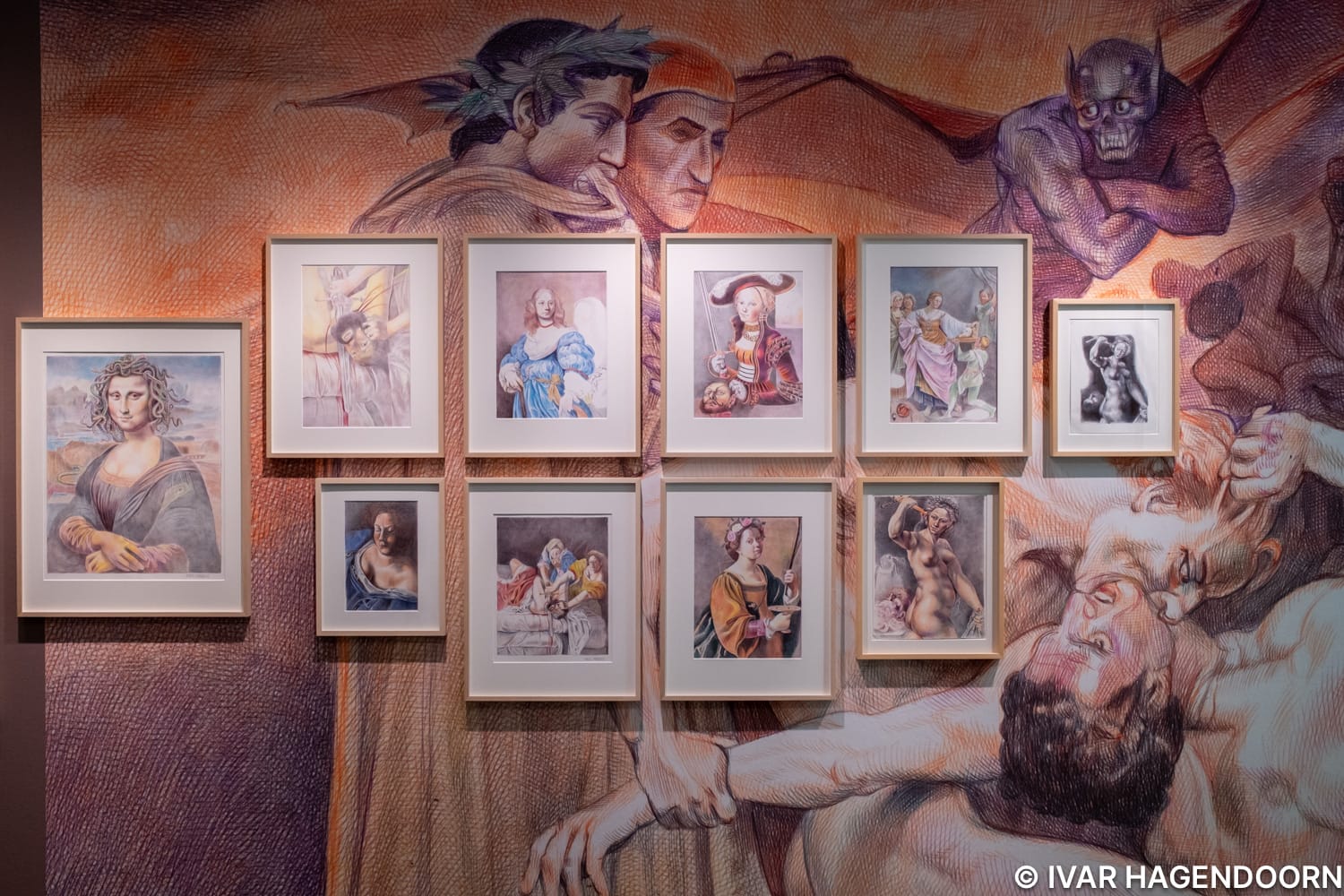
“Between Selves” is a must-see exhibition for comic book fans. Of course, it helps if you’ve read “My Favorite Thing Is Monsters”, but if you haven’t I can almost guarantee that you want to after visiting the exhibition. In an interview on the occasion of the exhibition opening Emil Ferris also had some good news for fans: Blemmy, Karen Reyes’s headless toy monster, a reference to the akephaloi or Blemmyae in ancient mythology, will get a book of his own. She is also working on a prequel, which will focus on the life of Anka Silverberg.
Emil Ferris. Between Selves is at the Cartoonmuseum, Basel until 15 November 2026.
Related Posts
Richard McGuire. Then and There. Here and Now at the Cartoonmuseum Basel.