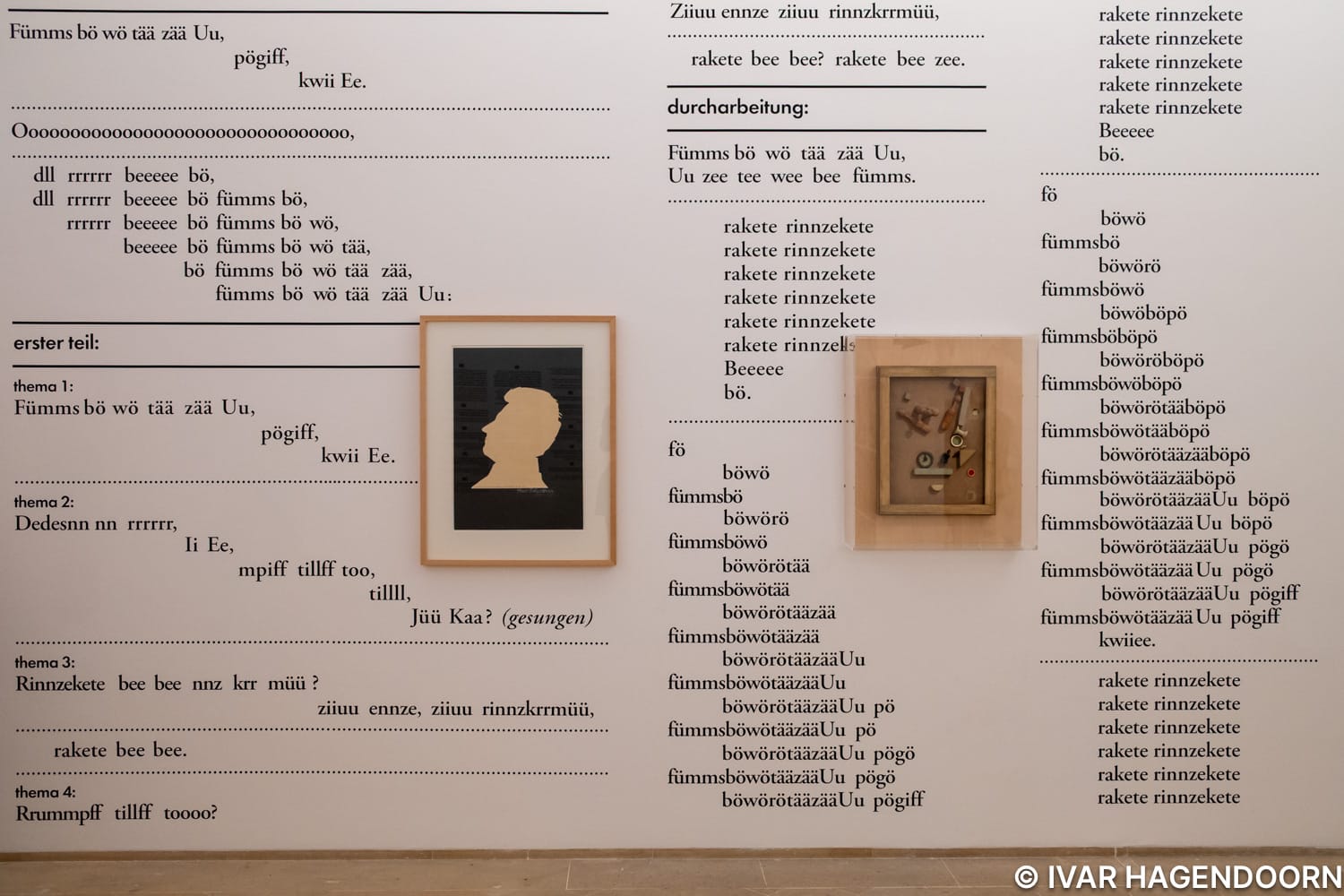
I don’t recall ever visiting a solo exhibition dedicated to Kurt Schwitters, so I rejoiced when I read that the Musée Picasso had organized a retrospective of his work.
Kurt Schwitters (1887–1948) resists any clearly defined label, he was affiliated with Der Sturm, Dada and Constructivism but belonged to neither movement, and the Musée Picasso’s sweeping exhibition makes that resistance its central theme. More than 300 works and documents spanning painting, sculpture, collage, architecture, photography, typography, and poetry. Why choose between landscape, portraiture, and geometric abstraction? Throughout his long career Schwitters drifted freely between figuration and abstraction, framed his photographs at close range or from afar, and shaped sculptures that alternately evoke human forms and reject resemblance altogether. His collages turn the debris of daily life, such as newspaper snippets, museum tickets, stamps and wine labels, into narrative fragments. His poetry dismantles grammar, yet in performance his Ursonate rises into something like chant or hymn.
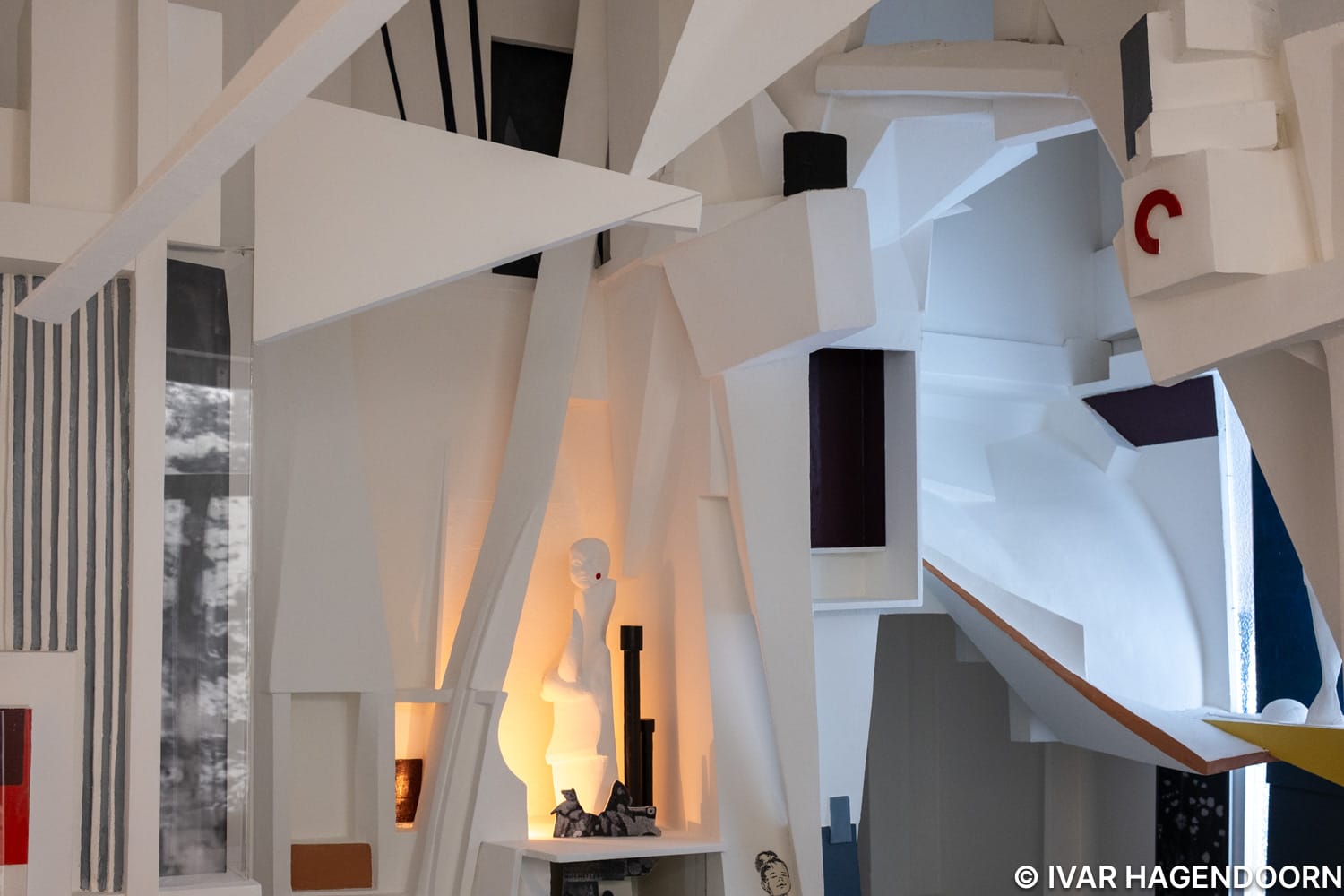
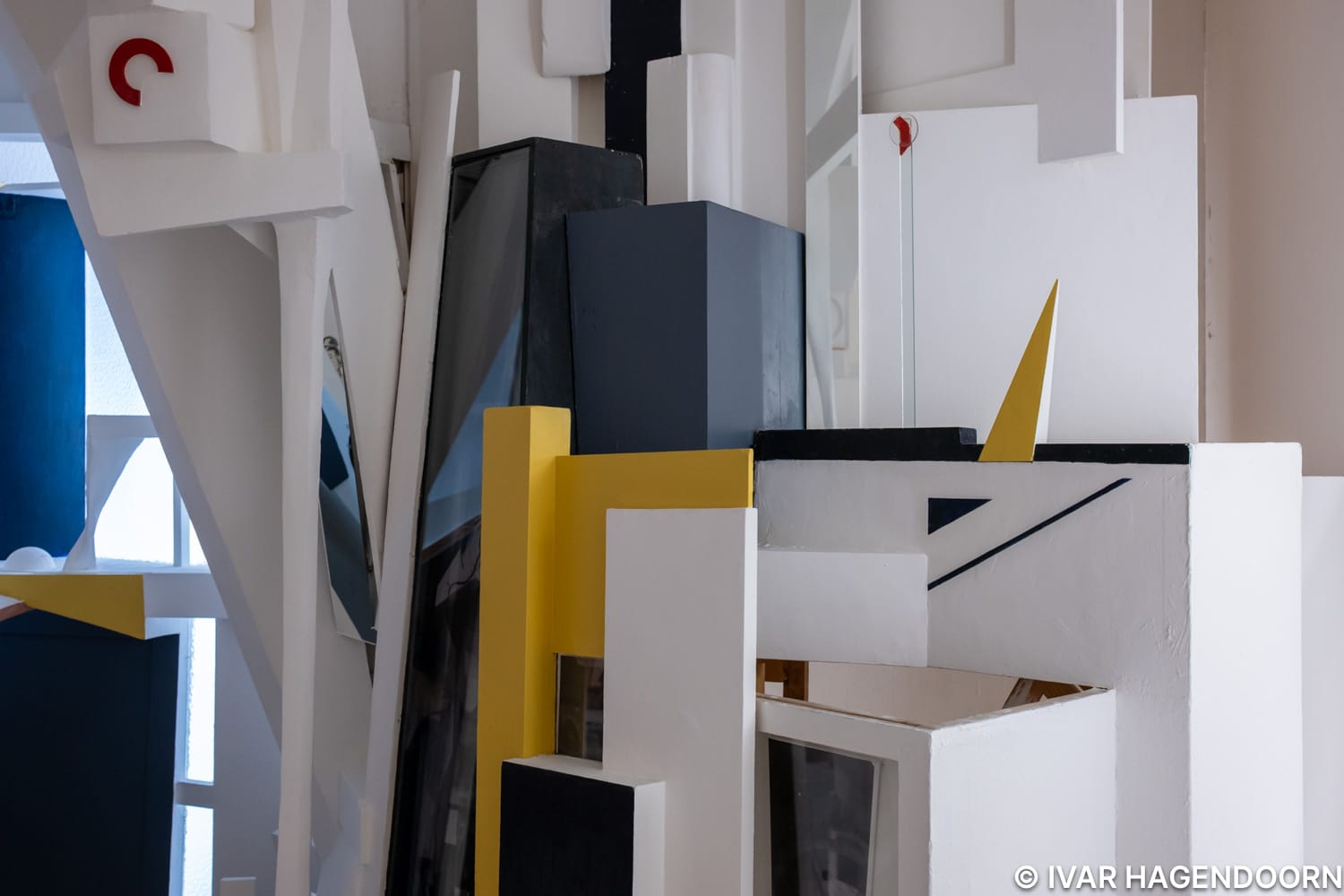
Kurt Schwitters, Merzbau at the Musée Picasso
One of the highlights of the exhibition is a reconstruction of Merzbau: a cave like room filled with skewed partitions and wooden wedges, which Schwitters originally built inside his Hannover home. The installation would eventually spread across the house into other rooms. Allied bombs destroyed the house and the installation in 1943, leaving only three photographs from the early 1930s. It reminded me of the early work of Frank Gehry, Eric Owen Moss and Morphosis.
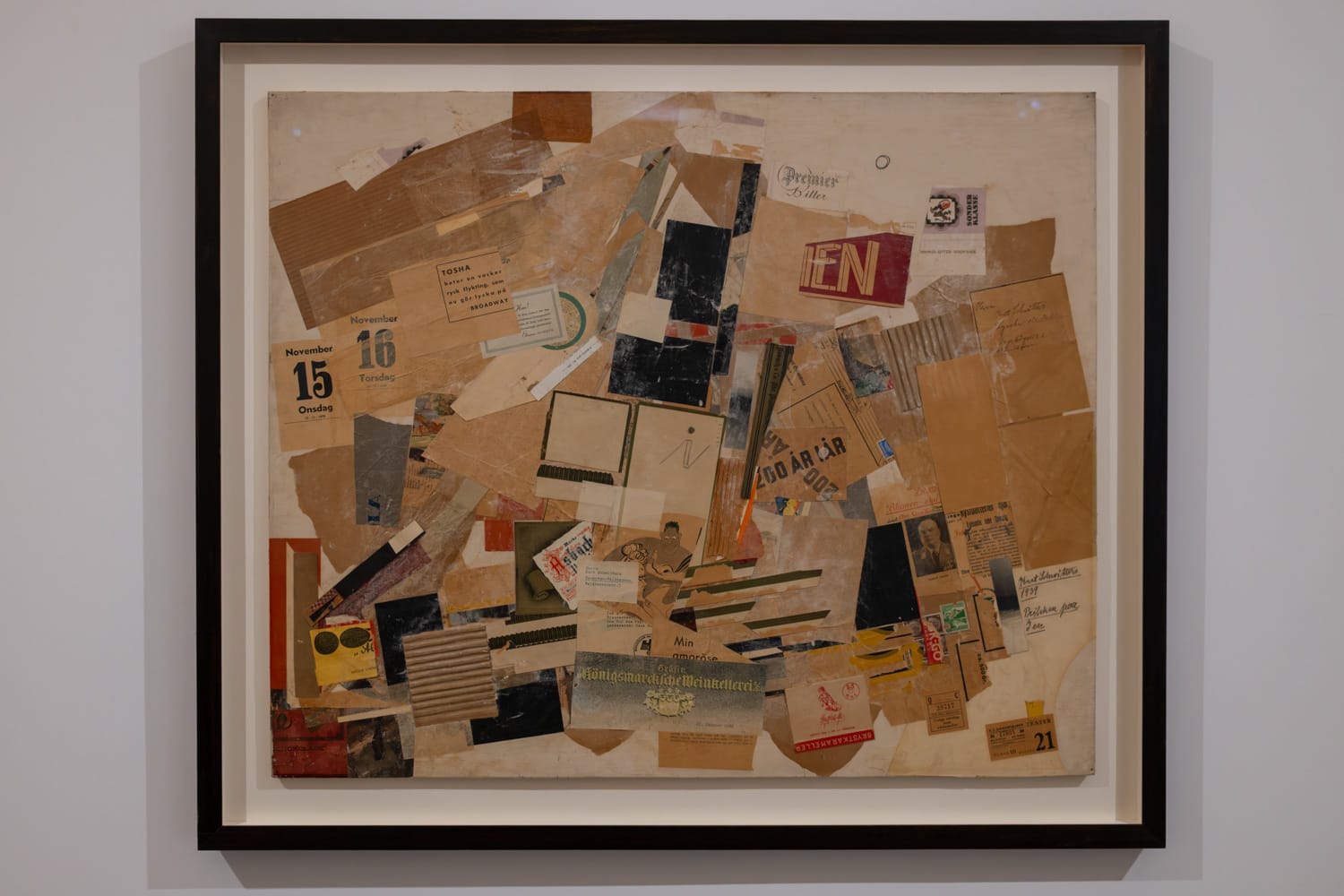
Kurt Schwitters studied at the Dresden Academy of Fine Arts, alongside Otto Dix and George Grosz, from 1909 to 1915. He was conscripted in 1917 but exempted on medical grounds. When the war had ended Germany lay in tatters. To many artists, including Schwitters, the old forms no longer sufficed and something new had to be created out of the fragments of the past. Schwitters took this literally, as he began making collages out of found objects. Nearly every fragment in his collages carries meaning: an address hints at autobiography, a newspaper clipping points toward world politics, and torn advertisements, labels, bus tickets, and ledgers accumulate into a portrait of a mercantile, bureaucratic world he despised.
Schwitters participated in most of Europe’s interwar avant-gardes, acting as both protagonist and slightly detached chronicler. In the late 1920s, influenced by his friendship with El Lissitzky, his work took a Constructivist turn. When the Nazis branded his work degenerate in 1933, Schwitters took refuge in Norway, settling there in 1937 and painting fjords and flowers for local buyers who had little appetite for his avant-garde assemblages and collages. I enjoyed seeing some of the photos that he took around Norway. I concur: Norway’s austere landscape with its fjords and glaciers is fascinating and inspiring. The German invasion of 1940 forced Schwitters to escape to Scotland, where he was imprisoned for more than a year because of his German citizenship. After the war he settled in the Lake District where he tried to revive his artistic career, but he died in January 1948.
Unlike Picasso, Duchamp or Mondrian, Kurt Schwitters did not create any instantly recognizable masterpieces. Yet his collages continue to inspire, from Jamie Reid’s cut-and-paste graphics, which defined the visual identity of 1970s punk, to David Carson’s experimental designs for Ray Gun magazine in the early 1990s.
Kurt Schwitters. Le chaos-monde 1918-1948 is at the Musée Picasso in Paris until 7 February 2027.