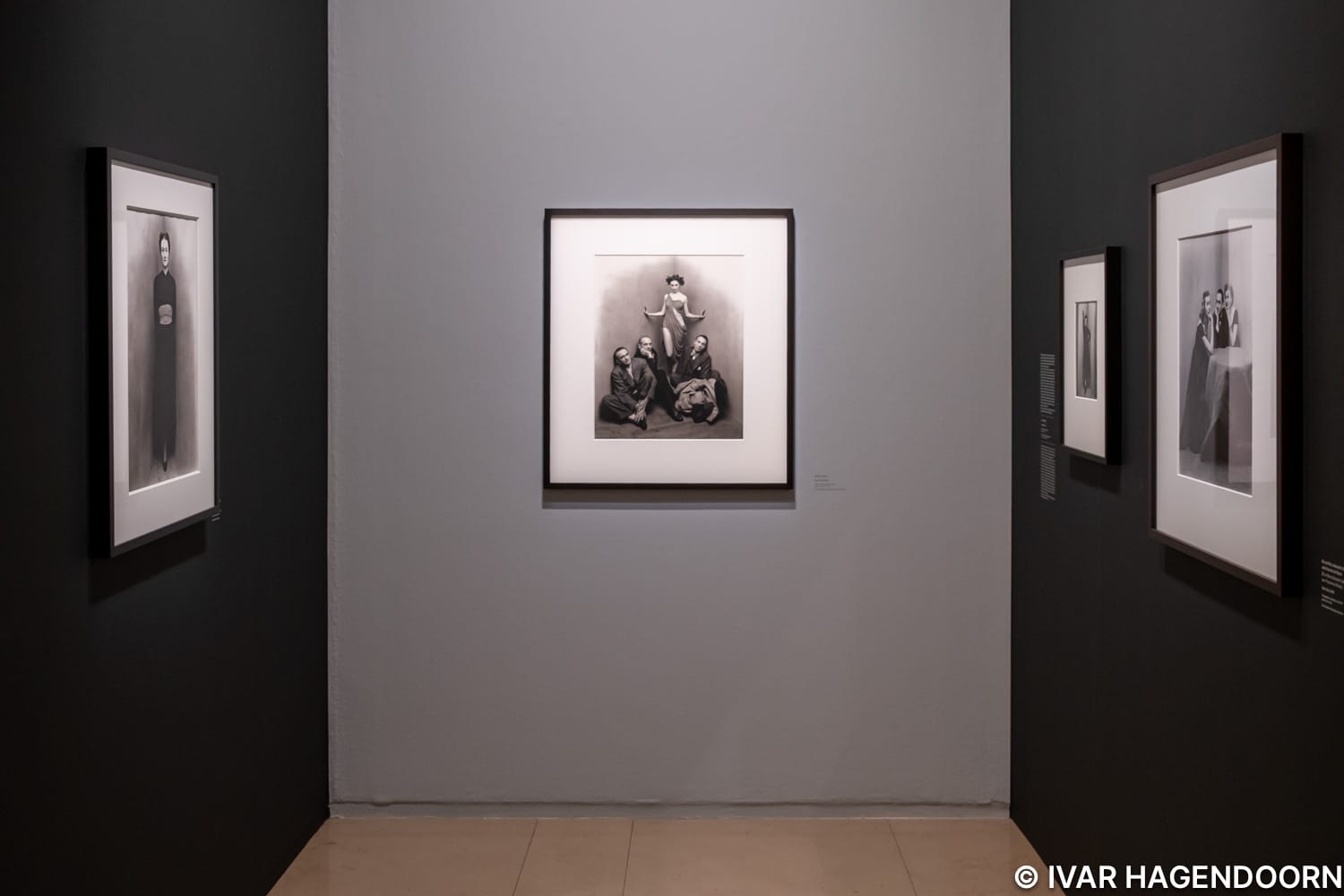
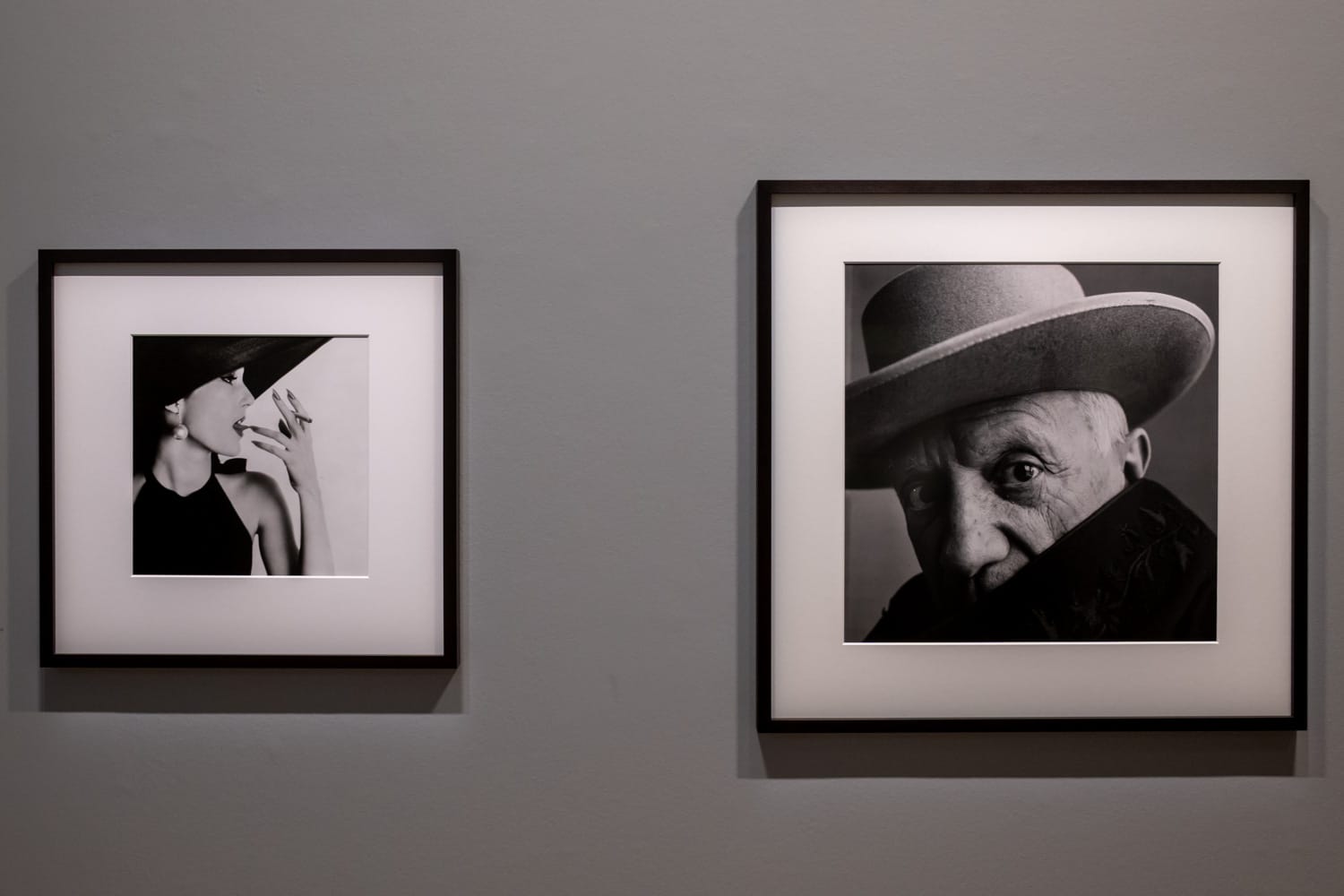
To mark its thirtieth anniversary the Maison Européenne de la Photographie in Paris has organized an Irving Penn retrospective focusing on his work for Vogue magazine. The show gathers more than 100 original prints from the museum’s own holdings and from the Irving Penn Foundation in New York and the Issey Miyake Foundation in Tokyo. Penn worked with Vogue for over 60 years, from his first commission in 1943 to his last in 2009, the year he died at the age of 92.
Irving Penn was born in New Jersey in 1917 to Russian-Jewish immigrants and studied art in Philadelphia. Like many artists at the time he aspired to be a painter—he would continue painting throughout his life believing it to be "real" art—but ended up a photographer, because it offered a steady income and creative opportunities. Following a stint as a graphic designer at Harper’s Bazaar he moved to Vogue where its art director encouraged him to take up photography. Penn’s command of composition and his ability to strip every image down to its essentials soon made him the magazine’s leading fashion photographer.
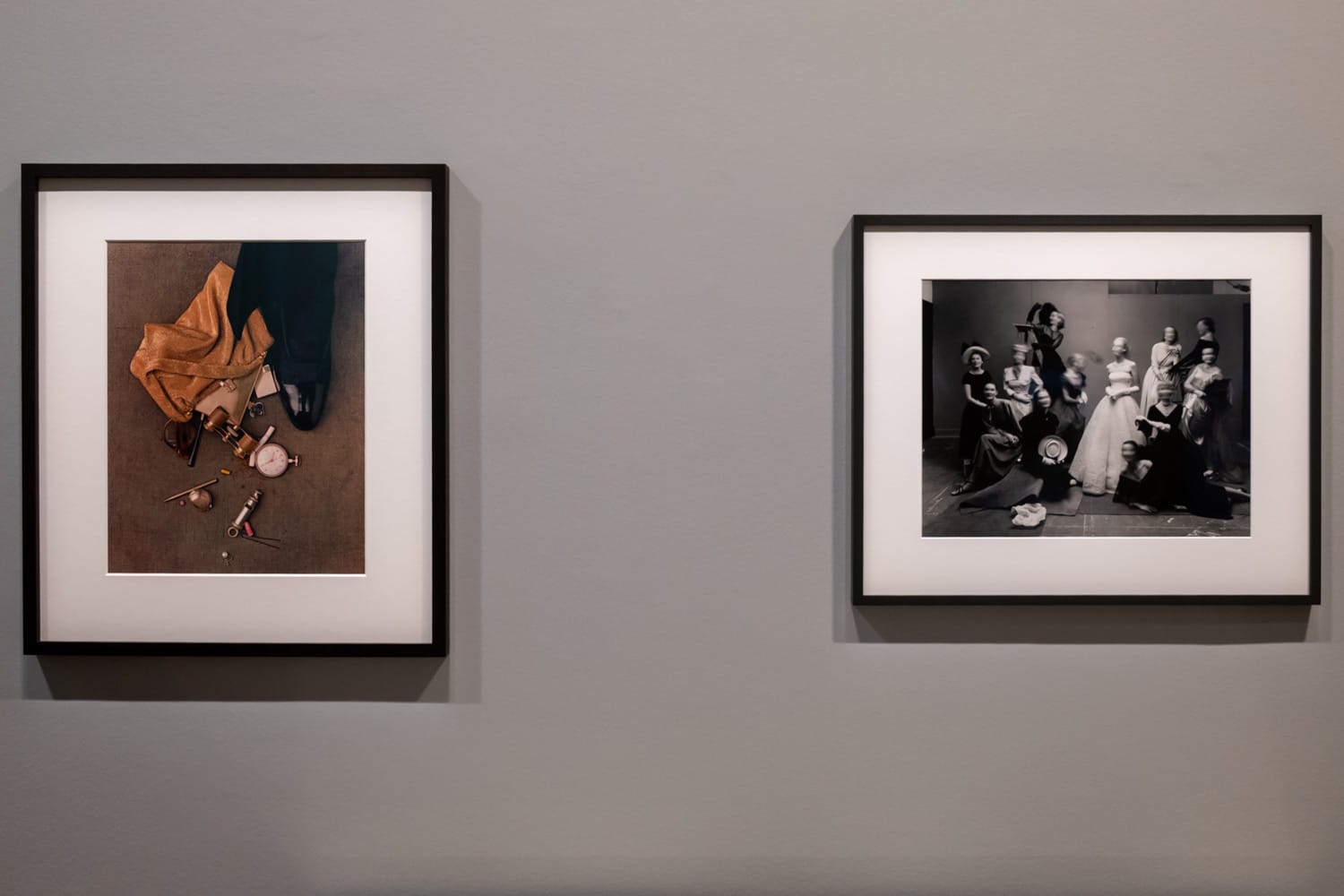
The exhibition is organized chronologically, but you can, of course, start your visit in any room of your choice. The exhibition opens with a group portrait Penn made in 1947 featuring the era’s twelve most sought-after models. He deliberately chose a long exposure. As a result the costumes are mostly in focus, but the faces are blurred, giving the photograph a ghost-like quality. It testifies to the magazine's artistic vision that they chose this photograph for publication. At that same sitting Penn met Lisa Fonssagrives, a trained dancer who worked as a model. She married Penn in 1950 and features in many of his finest photographs. That same year Penn shot his first black-and-white cover and hung a worn theater curtain behind his sitters so nothing would distract from the clothes. When Dior’s New Look revived haute couture after the war, Penn turned the usual arrangement around: fashion houses like Balenciaga and Chanel would send their garments to his Paris studio instead of summoning him to their showrooms. At the time Vogue offered its associated photographers considerable artistic freedom, and Penn’s assignments went well beyond fashion to include editorial features and even recipes.
In 1948, Irving Penn traveled to Peru on assignment for Vogue magazine. After the assignment, he stayed in Peru and traveled on to Cuzco where he set up a simple studio inside a Victorian-style building. Locals from across the region, arriving for the Christmas holiday festivities, showed up at his studio to have their family portrait taken, not knowing that the person behind the camera was a celebrated photographer from New York. Over the course of three days, Penn made over 2000 photographs, 11 of which were published by Vogue magazine the following year. The series is one of my favorites by Penn. I love the famous photo of the two little children holding hands. In subsequent years, using the same setup inside a portable tent, Penn would take photos around the world, from Morocco to Papua New Guinea and Nepal. Bored with fashion he also created a series of photographs of tradespeople: butchers, carpenters, plumbers, mechanics and so on with the same attention to detail as in his fashion work.
Issey Miyake has long been one of my favorite fashion designers—I’ve also used some of his designs as costumes for one of my choreographies—and I enjoyed seeing a large selection of the photographs Penn made of his designs, about half of which are not included in my copy of Issey Miyake Photographs by Irving Penn. In 1986, following an editorial for Vogue that caught Issey Miyake’s attention, Penn began shooting Miyake’s seasonal collections. A short animation documents Penn’s and Miyake’s unique collaboration. As a testament to their mutual trust, Miyake dispatched a curated selection of garments to New York each season, allowing Penn to photograph them and return the prints to Tokyo without the two ever meeting.
When I visited "Penn and Fashion", I was unaware that Remember Me—the photography exhibition currently on view at the Bourse de Commerce—also features an extensive Irving Penn retrospective titled "The World According to Penn". Although there is some overlap with "Penn and Fashion", the latter showcases numerous works that were entirely new to me, including several vibrant color photographs Penn captured of John Galliano and Christian Lacroix’s extravagant designs just a few years before his death. Thus, if you enjoyed either exhibition, I highly recommend making time for the other as well.
Penn and Fashion is at the Maison Européenne de la Photographie in Paris until 17 January 2027.
Related Posts
Remember Me at the Bourse de Commerce.
Irving Penn at the Grand Palais.
Exteriors. Annie Ernaux and Photography at the Maison Européenne de la Photographie.
Boris Mikhailov. Ukrainian Diary at the Maison Européenne de la Photographie.