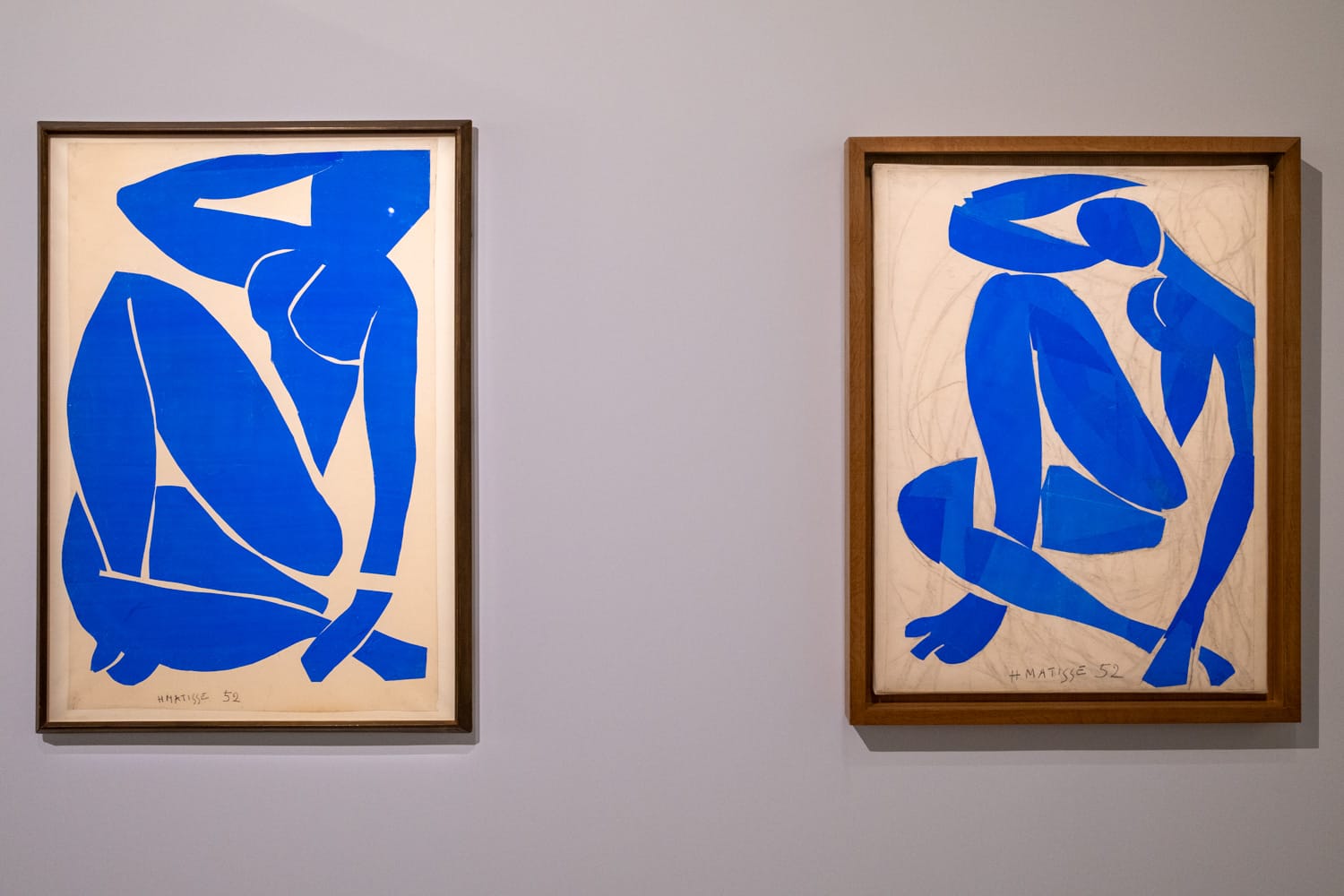
The Grand Palais, in collaboration with the Centre Pompidou, has organized a magnificent exhibition devoted to Matisse's final years, the period between 1941 and 1954. Curated by Claudine Grammont, the former director of the Musée Matisse in Nice, the show gathers more than 300 works borrowed from collections around the world, several displayed publicly for the first time. In recent years I have visited several Matisse exhibitions, at the Musée de l'Orangerie, the Musée d'Art Moderne de Paris and the Fondation Louis Vuittion, and yet this show feels revelatory, because it dismantles a stubborn cliché: the notion that an artist's creative fire slowly dims in his or her final years. In the case of Matisse, what unfolds instead is a flowering, a restless and audacious reinvention.
The story begins with catastrophe. In January 1941, at the age of seventy-one, Matisse underwent grueling surgery for intestinal cancer and emerged, against his own expectation, alive. He called what followed his "second life". Confined largely to a wheelchair, often working from bed, he refused convalescence as an excuse for retreat. He drew prodigiously, painted when his body would allow it, and devised ingenious workarounds such as brushes lashed to long poles so he could paint directly on the walls of his Hôtel Regina apartment in Nice. Wartime France pressed in around him: the Gestapo seized his wife and daughter for resistance activities, the Nazis branded him "degenerate", yet he refused to flee or to exhibit under occupation.
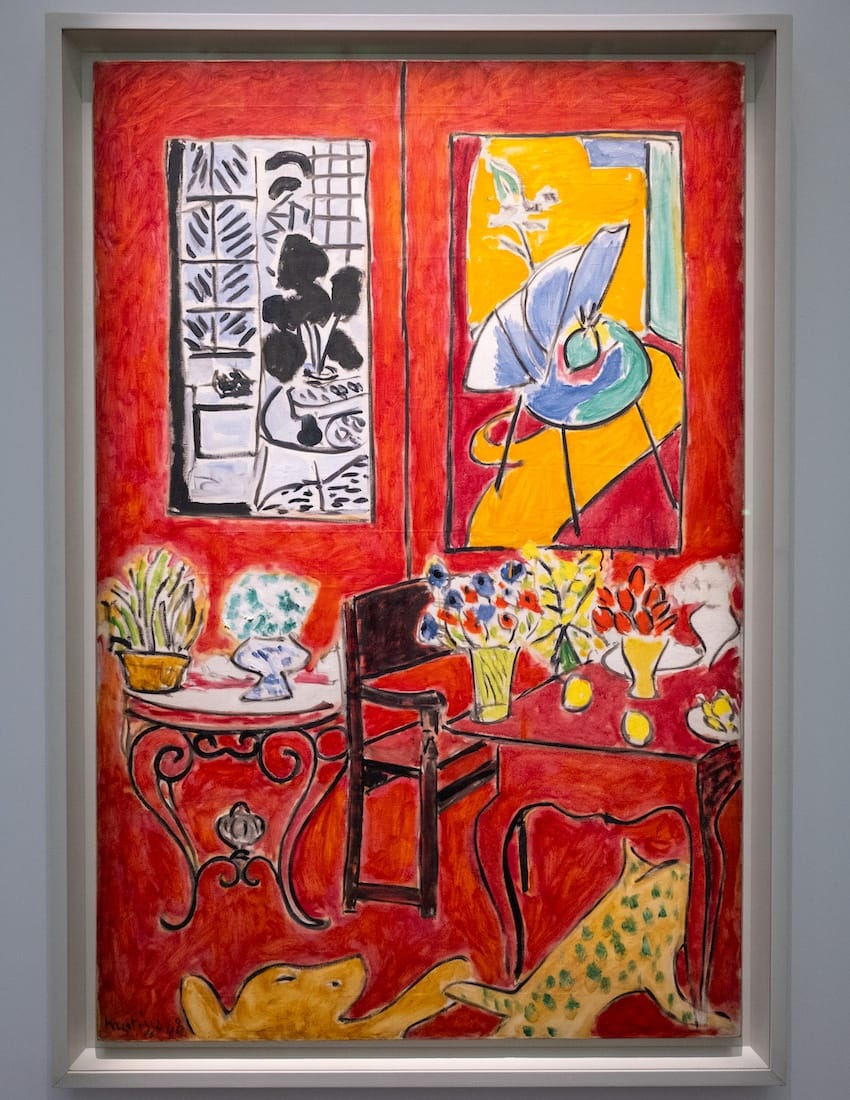
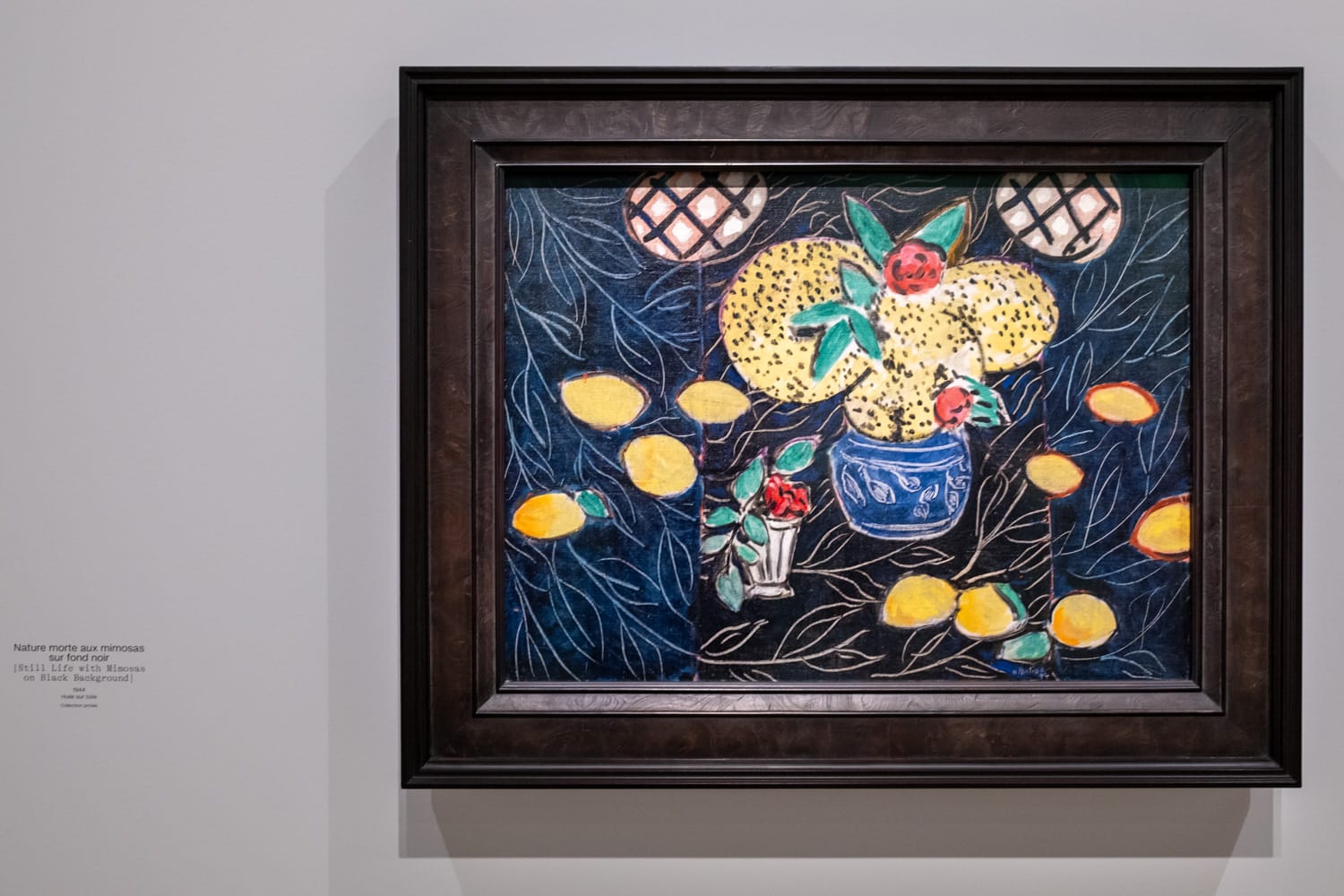
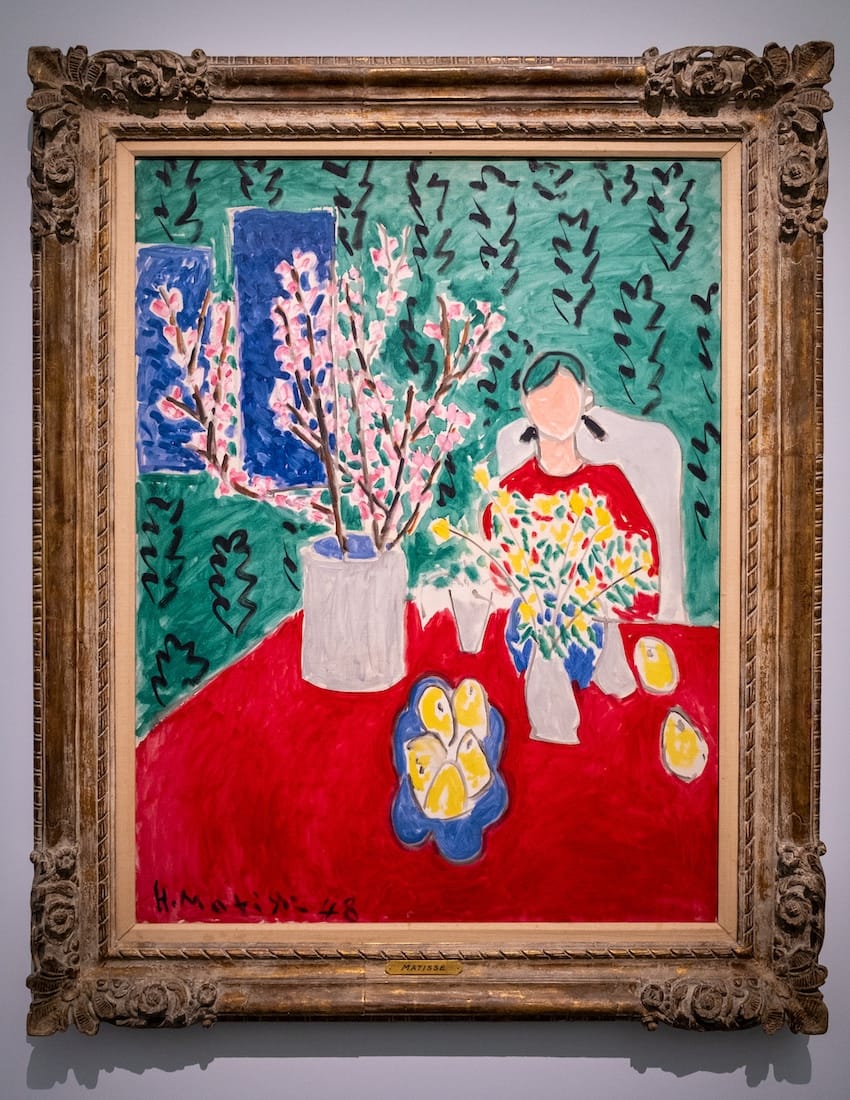
A persistent misconception holds that only the paper cutouts captivated the aging Matisse. The exhibition decisively rebuts this. Twenty-seven paintings, including the luminous Vence Interiors of 1947-48, eleven of them reunited here, prove that he never abandoned painting. These canvases pulse with the same chromatic ferocity as the cutouts; they quote his earlier work, summoning the “Red Studio” (1911) and absorbing memories of past loves and travels. Painting and collage, far from succeeding one another, fed each other in a continuous exchange.
The cutouts themselves constitute a quiet revolution. By slicing into already-painted gouache sheets, Matisse drew within color rather than around it, thereby collapsing the age old quarrel between line and hue. Seventy-nine of these paper cutouts have been assembled, an unprecedented gathering: “The Snail” (1953) from Tate Modern, “Memory of Oceania” (1953) from MoMA, “The Sheaf” (1953) from the Los Angeles County Museum of Art, “Acanthus” (1953) from the Fondation Beyeler, “Creole Dancer” (1950) from the Musée Matisse in Nice, and the amazing four “Blue Nudes” (1952), never before hung side by side, and which I only knew from reproductions. Rare film footage shows the artist wielding dressmaking scissors with startling fluency, his motions extending the gesture of pencil and brush.
Throughout the upper galleries, organic forms — corals, stars, twisting nudes — proliferate into something close to enchantment. What astonishes is not the simplicity itself but the labor it concealed: the decades of training, the daily struggle against a failing body, the discipline that made spontaneity possible. “I hope that, however old we live to be, we die young”, Matisse said in 1950, four years before his death. The exhibition makes the wish look fulfilled.
As I contemplated the works in the final room, a group of French school children aged six or seven who had been given a guided tour of the exhibition walked past, their hands locked, and as they were leaving one little girl shouted “Merci Monsieur Matisse!”. Thank you Mr. Matisse indeed.
Matisse. 1941 - 1954 is at the Grand Palais in Paris until 26 July 2026.
Related Posts
Matisse at the Musée de l'Orangerie.
Matisse. The Red Studio at the Fondation Louis Vuitton.
Matisse and Marguerite at the Musée d'Art Moderne de Paris.
Matisse, Derain and Friends at the Kunstmuseum Basel.