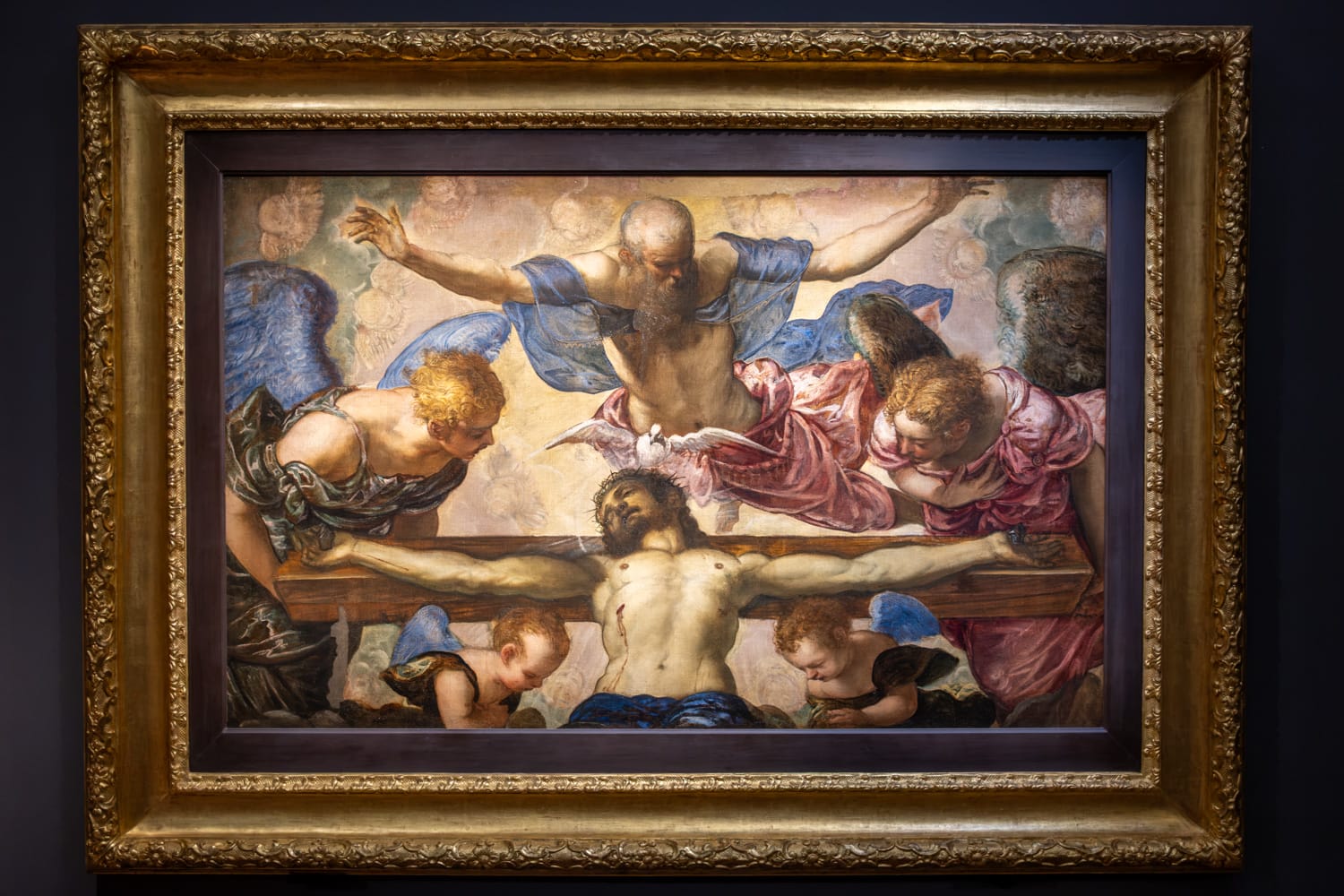
I visited the Tintoretto exhibition at the Musée Jacquemart-André in Paris the morning after demonstrations against the cost of living spiralled out of control. It felt a bit odd to be admiring these Renaissance masterpieces while outside some fires were still smouldering. It reminded me how lucky we are that we can still view these paintings, almost five centuries after they were created, and how lucky I am that I’m in a position to travel to Paris and visit this and other exhibitions.
Jacopo Robusti, called Tintoretto after his father’s dyeing trade, was one of the three great Venetian painters of the sixteenth century, alongside Titian and Veronese. His paintings are characterized by dramatic lighting, dynamic movement and vertiginous spatial effects, as in the amazing "Trinity" (1565), on loan from the Musei Reali di Torino. Whether in his portraits or his biblical scenes, Tintoretto always sought to convey emotional intensity.
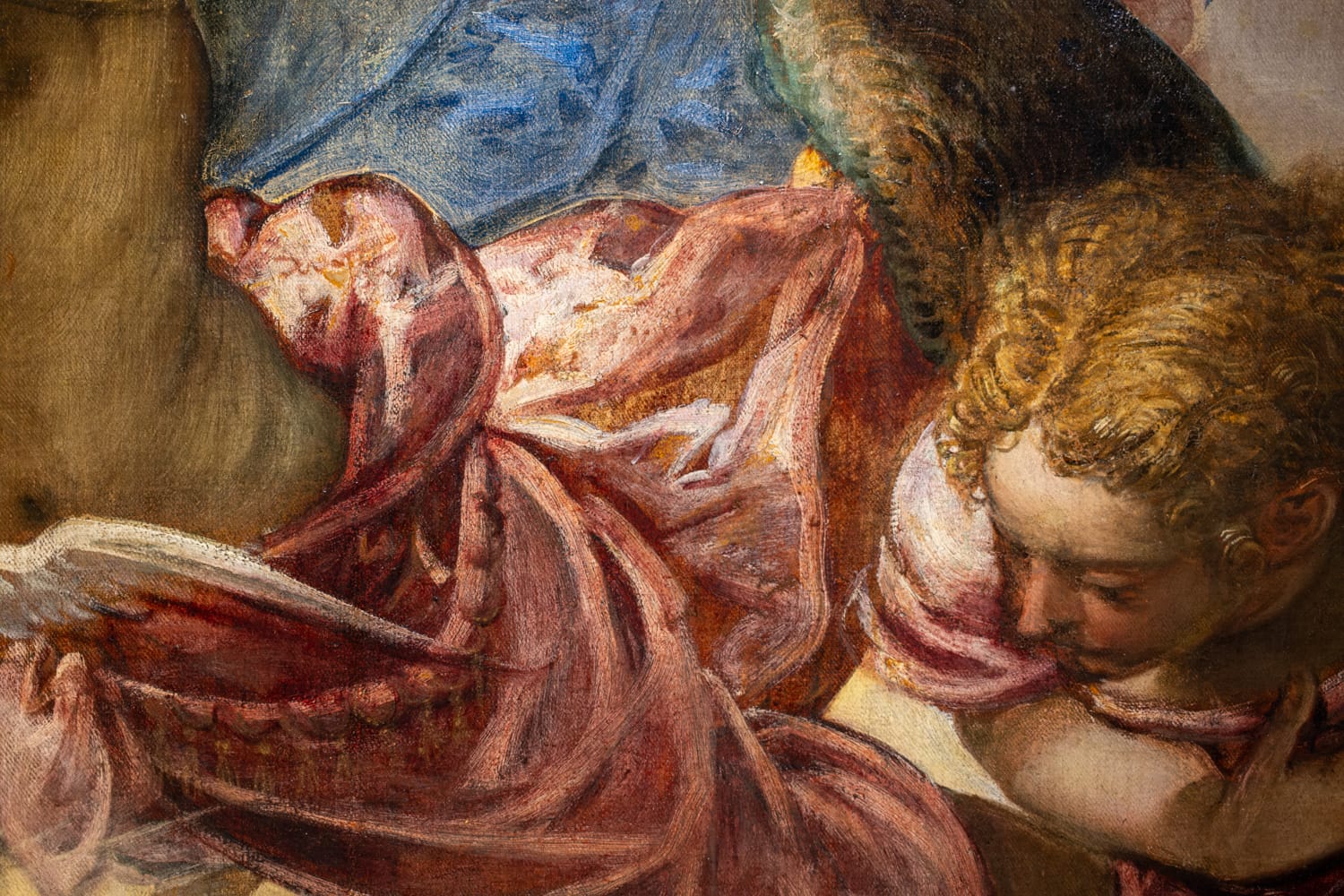
The exhibition “Timeless Tintoretto” makes no claim to be a retrospective, since his monumental cycles, above all his paintings for the Scuola Grande di San Rocco, cannot leave Venice; instead, it gathers some thirty or so paintings and drawings from French and Italian museums into a compact anthology, which together demonstrate Tintoretto’s genius. During his lifetime Tintoretto was renowned for the dazzling speed, or prestezza, with which he painted, a quality his contemporaries hailed as a gift or condemned as a failing. Tintoretto handled oil almost like watercolor, leaving his strokes visible and favoring suggestion over imitation.
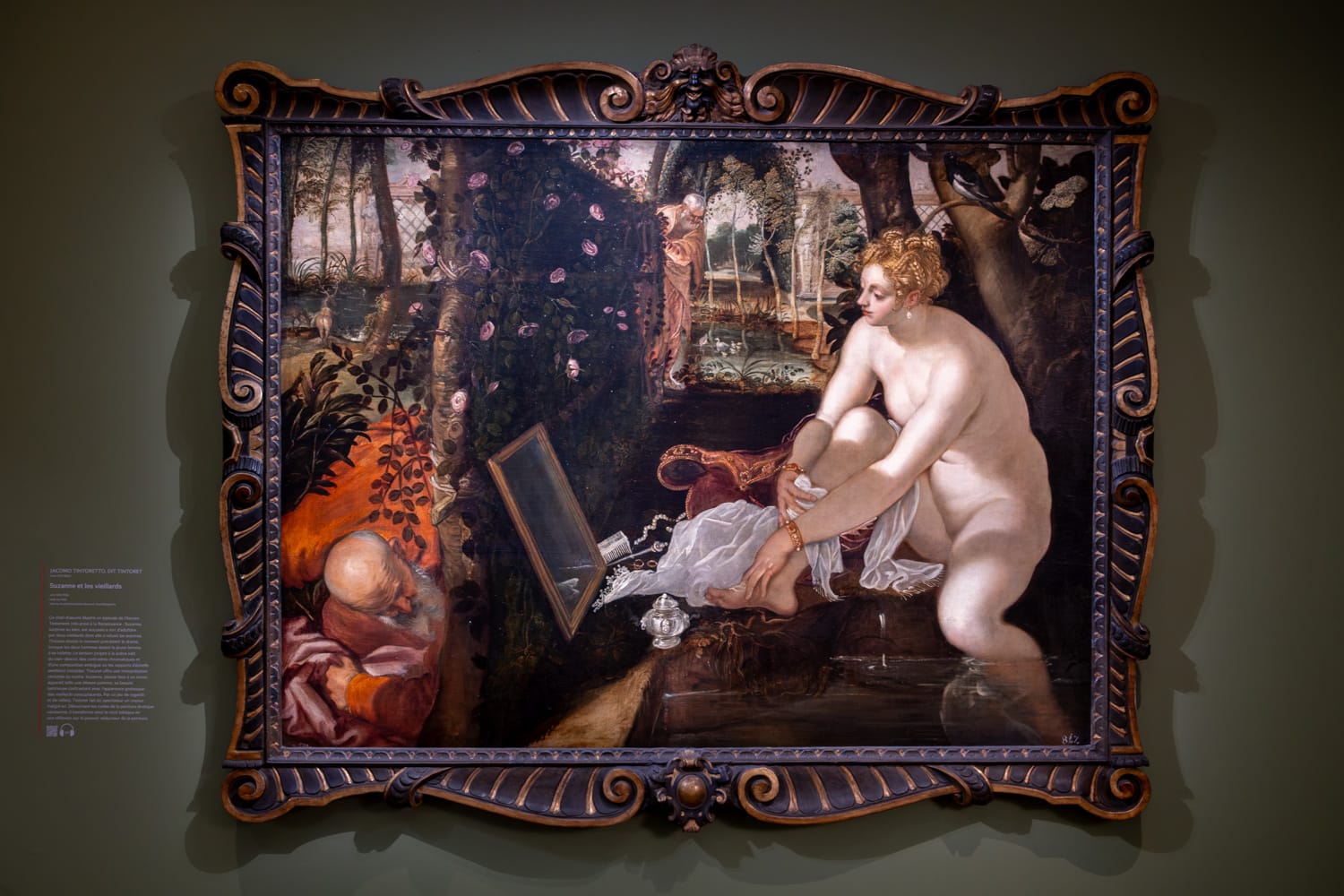
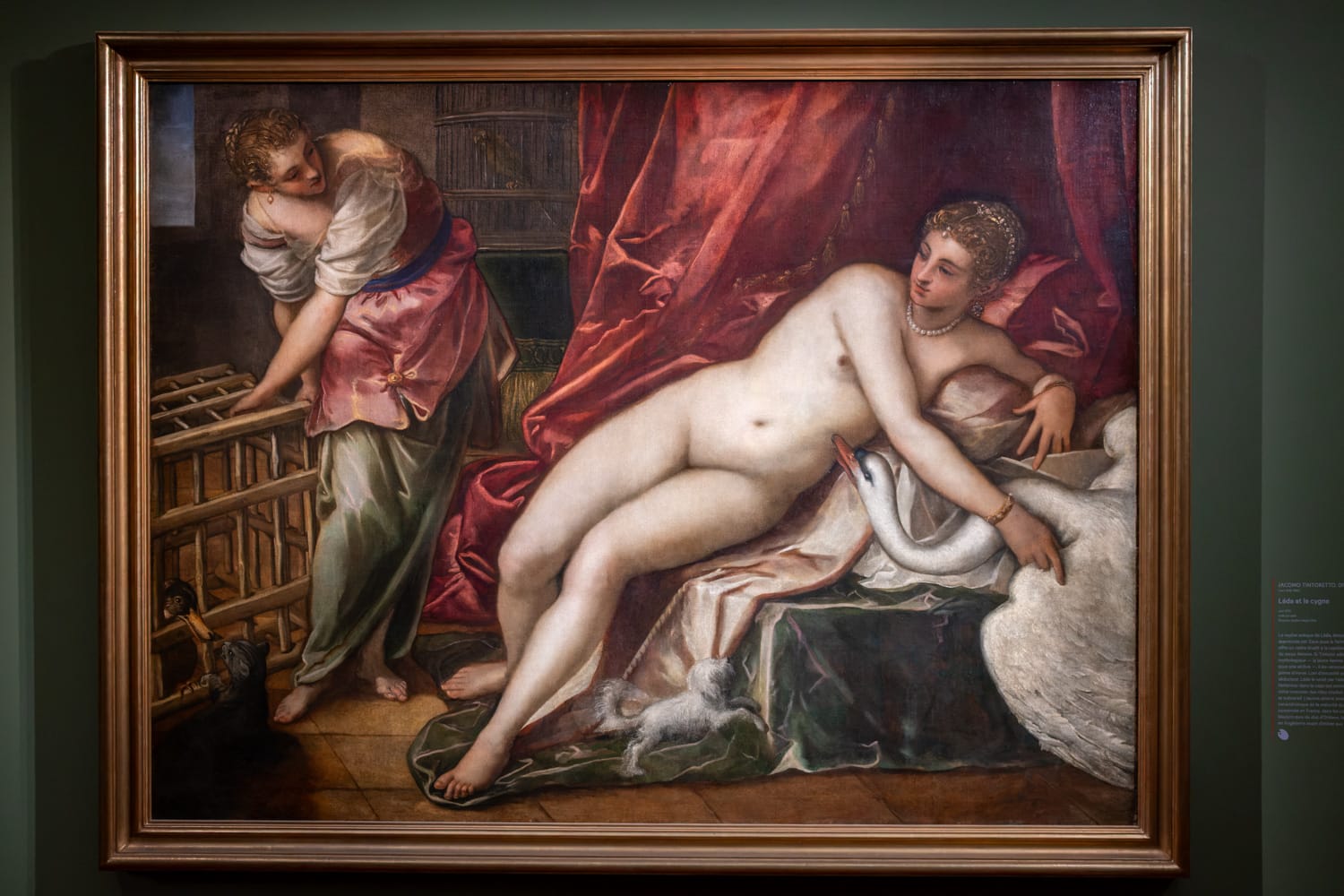
A highlight of the exhibition are three large canvases depicting mythological and biblical scenes, which reward close scrutiny. In Tintoretto’s version of "Leda and the Swan" (1578) a servant stands ready with a cage to capture Jupiter, disguised as a swan, a subtle metaphor for taming male desire. In his “Susanna and the Elders” (1555-56) male desire becomes an object of irony, with one of the elders approaching Susanna on all fours, displaying his bottom just like the deer in the background. With its mirrors and reflections Tintoretto draws attention to the act of seeing, turning the viewer into a voyeur.
The exhibition ends with several paintings by Tintoretto’s nineteenth-century French admirers: Ingres, Delacroix, Manet and Cézanne. It is a bit unfair to put Manet’s copy of Tintoretto’s "Self-Portrait" (1588) from the Louvre, painted when he was 22, next to the original, which Tintoretto painted when he was 70. It is a good portrait, but it pales next to the original.
Possibly one of the strangest works in the exhibition is "Orpheus Imploring Pluto" (1541-42). With its wild, colorful swirling brush strokes it almost looks like a painting by Vincent van Gogh or Edvard Munch. I wonder what Tintoretto's contemporaries thought of it.
The upstairs rooms at the Musée Jacquemart-André often feel a bit cramped, especially when it gets crowded, but it has the advantage of forcing you to view the paintings from up close, which is impossible at Venice’s Scuola San Rocco or Palazzo Ducale. If you happen to be in Paris I highly recommend adding this exhibition to your itinerary. Fridays the Musée Jacquemart-André is open until 22:00.
Éternel Tintoret (Timeless Tintoretto) is at the Musée Jacquemart-André in Paris until 24 January 2027.
Related Posts
Baroque Splendors at the Musée Jacquemart-André.
Artemisia Gentileschi at the Musée Jacquemart-André.
Georges de la Tour at the Musée Jacquemart-André.
Masterpieces from the Galleria Borghese at the Musée Jacquemart-André.